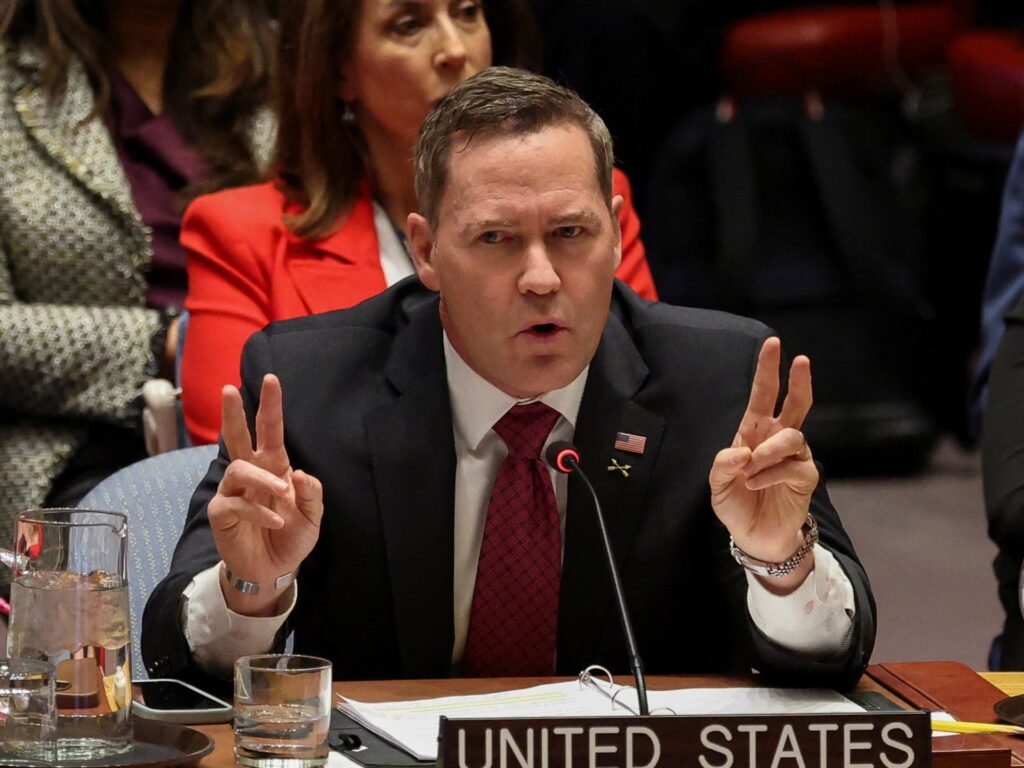
In a striking address to the United Nations Security Council, the United States Ambassador to the UN delivered a sharp denunciation of Venezuelan leader Nicolas Maduro, asserting that he is an “illegitimate so-called president” and explicitly stating that Maduro is not recognized as a head of state by the United States.
This declaration came amid ongoing international disputes regarding the legitimacy of Maduro’s presidency in Venezuela. Relations between the US and Venezuela have been fraught with tension for years, particularly since the contested elections that brought Maduro to power following the end of Hugo Chávez’s tenure.
The US Ambassador emphasized that Maduro’s claim to the presidency lacks authenticity and legal validity, underscoring the US government’s non-recognition stance. This pronouncement serves to isolate Maduro further on the global stage, with the US acting decisively to delegitimize his leadership.
The Security Council meeting saw heated discussions regarding the political crisis in Venezuela, with various member states expressing differing views on the country’s governance and legitimacy. While some countries continue to recognize Maduro as Venezuela’s official head of state, the US and its allies have backed opposition figures, labeling Maduro’s administration as authoritarian and illegitimate.
Maduro’s government has faced significant pressure due to economic turmoil, political unrest, and international sanctions. The US position seeks to reinforce diplomatic and economic measures aimed at promoting a transition in Venezuela’s leadership to a more democratically accepted authority.
Analysts note that the US Ambassador’s remarks at the UN represent not only a diplomatic stance but also a strategic attempt to rally international support against Maduro. By framing Maduro as not a legitimate head of state, the US aims to justify continued sanctions and potentially more robust international intervention.
Venezuelan state media have condemned the US statements, calling them interference in domestic affairs, while opposition leaders in Venezuela have welcomed the US position as validation of their claims.
This announcement at the UN Security Council marks a notable moment in the ongoing saga surrounding Venezuela’s political crisis. As the international community remains divided, the US reinforces its commitment to opposing Maduro’s regime and supporting alternative leadership.
The future of Venezuela remains uncertain, with humanitarian challenges and political instability continuing to affect millions of Venezuelans. The US declaration is a critical point in the broader geopolitical contest over Venezuela’s future governance and international relations.