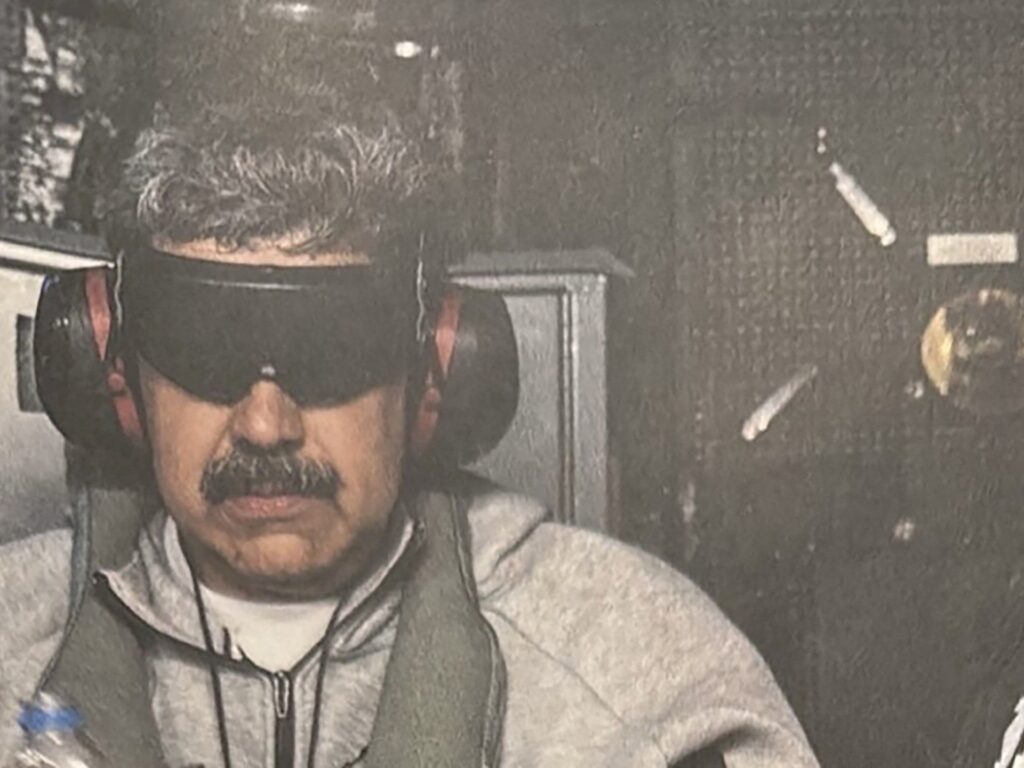
Nicolas Maduro Moros, born on November 23, 1962, in Caracas, Venezuela, has traversed a remarkable and tumultuous path from his working-class roots to the highest office in the nation. His journey embodies the complex political landscape of Venezuela, marked by fervent populism, economic upheaval, and profound division.
Maduro’s early life was far removed from the corridors of power. Growing up in a modest neighborhood, he became involved in political activism at a young age. His professional career began as a bus driver for the Caracas Metro, a period that deeply shaped his understanding of the struggles faced by ordinary Venezuelans. It was during this time that he emerged as a prominent trade union leader, advocating for workers’ rights and honing his organizational skills. This experience laid the groundwork for his eventual entry into mainstream politics.
His political trajectory took a decisive turn with the rise of Hugo Chávez. Maduro was an early and ardent supporter of Chávez, a figure who would become his mentor and the architect of Venezuela’s Bolivarian Revolution. Their relationship, forged in the crucible of leftist ideals and anti-establishment sentiment, was instrumental in Maduro’s ascent. Following Chávez’s failed coup attempt in 1992, Maduro became a key figure in the nascent Fifth Republic Movement (MVR), the political party that would eventually propel Chávez to the presidency.
With Chávez in power, Maduro’s star continued to rise. He served in various capacities, including a member of the National Assembly from 2000 to 2006, and then as Minister of Foreign Affairs from 2006 to 2013. In this crucial role, he became Chávez’s trusted diplomat, representing Venezuela on the international stage and fostering alliances with like-minded nations. His loyalty and perceived pragmatism earned him Chávez’s ultimate trust, leading to his appointment as Vice President in 2012.
When Hugo Chávez succumbed to cancer in March 2013, Maduro was handpicked as his successor. He swiftly assumed the interim presidency and subsequently won a narrowly contested special election in April 2013, promising to continue the Bolivarian Revolution and uphold Chávez’s socialist legacy.
However, Maduro’s presidency has been defined by unprecedented challenges and increasing authoritarianism. Almost immediately, Venezuela began to grapple with a severe economic crisis, exacerbated by plummeting oil prices, hyperinflation, chronic shortages of food and medicine, and a collapse of public services. Critics accuse his government’s mismanagement, corruption, and adherence to failed socialist policies as the primary drivers of this humanitarian catastrophe.
Politically, Maduro has faced immense domestic opposition and international condemnation. Accusations of electoral fraud, human rights abuses, and the systematic dismantling of democratic institutions have become hallmarks of his administration. His government’s response to protests has often been met with force, leading to numerous casualties and mass arrests. The establishment of the controversial National Constituent Assembly in 2017, widely seen as a move to bypass the opposition-controlled National Assembly, further solidified perceptions of his authoritarian grip on power.
Internationally, Maduro’s regime has been isolated, with many countries, including the United States and several Latin American nations, refusing to recognize the legitimacy of his re-election in 2018. Sanctions have been imposed, and a significant portion of the global community has called for a return to democratic rule and respect for human rights in Venezuela.
Nicolas Maduro’s journey from a humble bus driver to an embattled president illustrates a nation’s profound political and economic struggles. His tenure remains a highly contentious chapter in Venezuelan history, marked by unwavering loyalty to Chávez’s ideology, escalating economic hardship for his people, and a steady erosion of democratic freedoms.