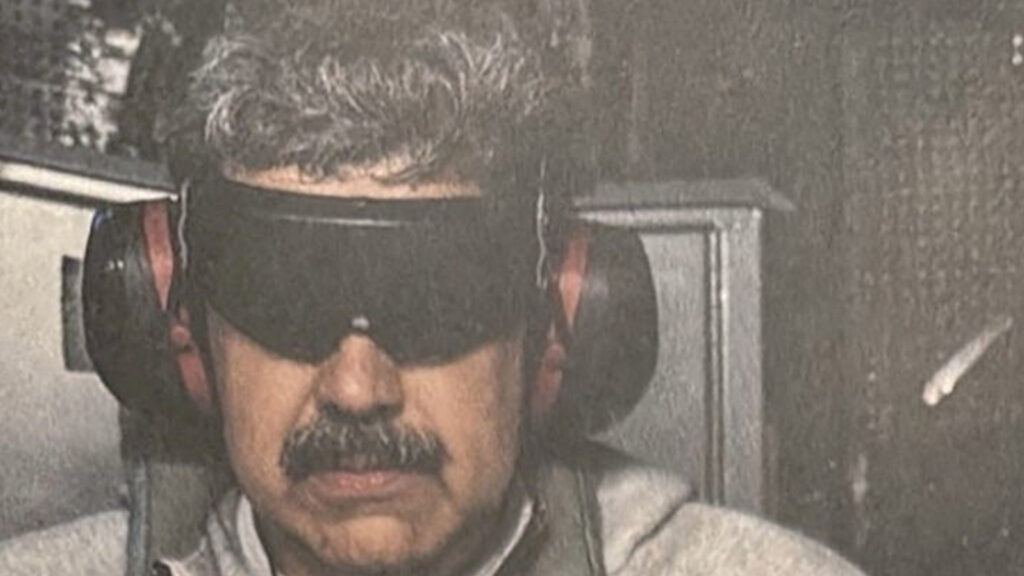
The global political landscape was abruptly jolted by a highly provocative image posted by former U.S. President Donald Trump, depicting Venezuelan President Nicolas Maduro bound and blindfolded. The image, which quickly went viral across various social media platforms, immediately elicited a wave of shock, widespread outrage, and robust condemnation from international bodies, political leaders, and human rights organizations around the globe.
Critics were swift to decry the visual as deeply irresponsible, dangerously inflammatory, and a potential incitement to violence, highlighting the severe repercussions such a display could have in an already volatile region. The image appeared without any official context or explanation from Trump himself regarding its origin or the intent behind its dissemination.
Venezuela has been embroiled in a protracted political and profound economic crisis for several years, with Maduro’s legitimacy as president consistently challenged by a significant portion of the international community and a large segment of his own populace. The United States, particularly under the Trump administration, has been an outspoken critic of Maduro’s government, imposing numerous sanctions and openly backing opposition figures within the country.
The digitally altered image, devoid of any authentic source, graphically showed Maduro in a highly vulnerable, dehumanizing, and compromising pose. Such an image, regardless of its factual basis or satirical intent, instantly raised profound alarms among diplomatic circles and peace advocates about its potential to incite further violence, destabilize an already fragile nation, and severely undermine any existing or future diplomatic efforts aimed at resolving the Venezuelan crisis peacefully.
Swift and unequivocal condemnation followed the controversial post. The United Nations expressed deep concern over the propagation of imagery that could be easily interpreted as endorsing or encouraging violence against a sitting head of state. Leaders from various Latin American nations, many of whom have differing political alignments with Maduro, universally condemned the image as setting a dangerous precedent that could dangerously escalate regional tensions.
Many international observers and political analysts pointed out that depicting a political leader in such a graphic and humiliating manner, even a highly controversial one, unequivocally crosses a fundamental line in international discourse and could be widely seen as a blatant affront to international law, diplomatic norms, and basic human dignity. While Trump did not explicitly state his specific intent behind sharing the image, it largely aligned with his long-standing hardline stance against Maduro’s regime, which he has consistently labeled as authoritarian, illegitimate, and corrupt.
Critics speculated that the post was a deliberate provocation aimed at further delegitimizing Maduro’s authority and rallying anti-Maduro sentiment, potentially with little regard for the broader implications for regional stability or the well-being of the Venezuelan people. The incident sparked a vigorous global debate on the ethical role and fundamental responsibilities of political leaders, especially those with significant international influence, in disseminating potentially inflammatory or inciting content online.
Profound concerns were widely raised about the continuing erosion of traditional diplomatic norms and the increasing casualness with which high-stakes political rhetoric and potentially dangerous imagery are broadcast on various social media platforms, often with alarmingly little accountability for the severe real-world consequences that can ensue. The controversial image added yet another complex layer of animosity and distrust to the already fraught relations between the United States and Venezuela, undoubtedly making any future diplomatic engagement or de-escalation efforts even more challenging and unlikely.
Historically, images depicting captured, humiliated, or endangered leaders have often preceded or accompanied periods of intense political upheaval, widespread civil unrest, and violent conflict. The uncontrolled circulation of such provocative imagery in the current digital age carries amplified risks, given its rapid and often irreversible dissemination and its dangerous potential to be misinterpreted, manipulated, or actively weaponized by various state and non-state actors alike.
In conclusion, the shocking photo of an allegedly abducted and blindfolded Nicolas Maduro, prominently shared by Donald Trump, transcended a mere social media post; it quickly evolved into a significant focal point for critical discussions on political responsibility, international ethics, the profound impact of digital media, and the inherently dangerous power of visual propaganda in our interconnected world. The widespread and forceful condemnation underscores a global consensus that even in the face of deep and seemingly intractable political disagreements, certain fundamental lines regarding respect for human dignity, the prevention of incitement to violence, and the maintenance of international peace must not, under any circumstances, be crossed. The incident leaves a lasting and troubling mark on the already contentious narrative surrounding Venezuela’s future and the very conduct of international political discourse.