In a dramatic turn of rhetoric, former President Donald Trump has asserted that the United States would ‘run’ Venezuela following what he described as Nicolas Maduro’s seizure of power. The controversial statement, made recently, suggests a highly interventionist stance by the U.S., promising to manage the South American nation until a ‘safe, proper and judicious transition’ can be facilitated.
Trump’s remarks come against a backdrop of long-standing political and economic turmoil in Venezuela, a nation grappling with hyperinflation, widespread shortages, and a significant humanitarian crisis that has prompted millions to flee. The international community has largely condemned Maduro’s regime, with many nations, including the U.S., refusing to recognize the legitimacy of his re-election in 2018, citing irregularities and a lack of democratic transparency. The U.S. has previously imposed stringent sanctions on Maduro’s government and state-owned oil company PDVSA, aiming to pressure him out of office and support opposition leaders.
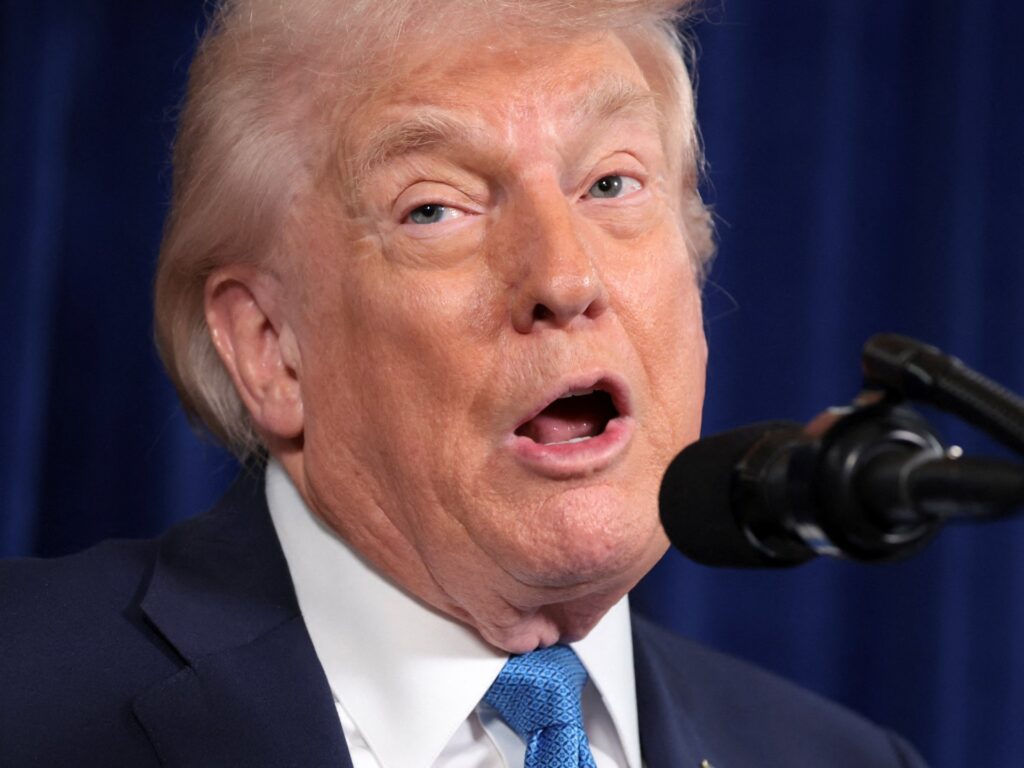
During his address, Trump emphasized his belief that the U.S. has a role to play in stabilizing Venezuela. “We will run the country until such time as we can do a safe, proper and judicious transition,” he stated, outlining a vision that goes significantly beyond traditional diplomatic pressure or economic sanctions. This declaration, if pursued, would represent a profound shift in U.S. foreign policy, potentially involving direct administrative control over a sovereign nation.
The implications of such a policy are vast and complex. Critics are likely to swiftly condemn the idea as a blatant violation of international law and national sovereignty, invoking historical precedents of U.S. intervention in Latin America that have often led to prolonged instability and resentment. Supporters, however, might argue that the severe humanitarian crisis and the alleged authoritarian nature of Maduro’s rule necessitate extraordinary measures to restore democracy and alleviate suffering.
Such a pronouncement is also likely to spark intense debate within the international community. Regional organizations like the Organization of American States (OAS) and the Lima Group, which have been active in seeking a resolution to Venezuela’s crisis, would need to consider their stance on a potential U.S. administrative role. Furthermore, countries with significant geopolitical interests in Latin America, such as China and Russia, which have supported Maduro’s government, would undoubtedly react strongly to any perceived direct U.S. intervention.
Domestically, the proposal could divide public opinion, with questions arising about the practicalities, costs, and ethical considerations of such an extensive undertaking. The resources required for a comprehensive administrative takeover, coupled with the potential for military involvement, would present a substantial challenge to U.S. foreign policy and its commitment to non-interventionist principles.
As Venezuela continues to navigate its profound crisis, Trump’s assertive declaration introduces a new, highly contentious dimension to the international efforts to resolve the country’s plight. The path forward remains fraught with uncertainty, with the prospect of direct U.S. stewardship raising profound questions about sovereignty, international norms, and the future of Venezuelan democracy.