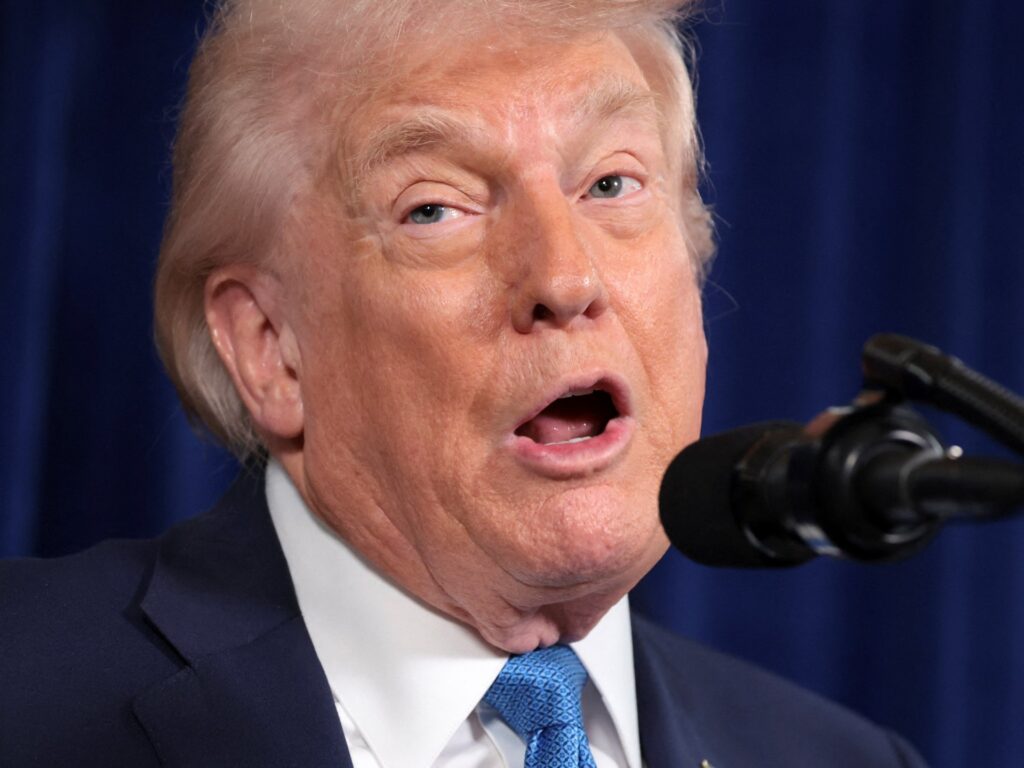
In a striking declaration that has sent ripples across international diplomatic circles, former US President Donald Trump announced that the United States would “run” Venezuela following the recent actions by Nicolas Maduro, who is widely seen as having seized power. Trump’s assertive statement outlines an unprecedented interventionist stance, suggesting a direct US role in governing the South American nation until a democratic transition can be safely and properly orchestrated. His remarks signal a significant escalation in rhetoric concerning the ongoing political and humanitarian crisis plaguing Venezuela for years.
The former President articulated a vision where the US would oversee the country’s operations with a clear objective: “until such time as we can do a safe, proper and judicious transition.” This pronouncement comes amidst a deeply fractured political landscape in Venezuela, where Maduro’s legitimacy as leader has been heavily contested by a significant portion of the international community and his own populace. The country has been mired in profound economic collapse, hyperinflation, and a mass exodus of its citizens, leading to one of the largest refugee crises in recent global history.
Trump’s statement revives a more assertive foreign policy posture reminiscent of his administration’s earlier approach to Venezuela. During his presidency, the US imposed extensive sanctions on Maduro’s government, targeting key officials and the state oil company, PDVSA, in an effort to pressure him out of power. Washington also explicitly recognized opposition leader Juan Guaidó as the interim president, further isolating Maduro on the global stage. This new declaration, however, transcends previous diplomatic and economic pressures, moving towards an explicit commitment to direct governance.
The concept of the United States “running” a sovereign nation, even under the guise of facilitating a democratic transition, raises numerous complex questions regarding international law, national sovereignty, and the potential for geopolitical instability. Critics are likely to swiftly challenge the legality and ethical implications of such a move, while proponents might argue it’s a necessary step to alleviate suffering and restore democracy in a failed state. The international community, including regional bodies like the Organization of American States (OAS), would undoubtedly grapple with the ramifications of such a bold and interventionist policy.
Implementing such a strategy would present immense logistical and political challenges. It would require navigating deeply entrenched political factions within Venezuela, managing a devastated economy, and addressing the dire humanitarian situation. The prospect of foreign administration, even temporary, could also galvanize nationalist sentiment and potentially lead to further internal resistance, complicating any efforts towards stabilization. The long-term implications for US foreign policy and its relationships with Latin American nations would also be profound, potentially setting new precedents for international engagement in complex sovereign disputes.
The future of Venezuela remains highly uncertain, but Trump’s latest declaration injects a dramatic new element into an already volatile situation. His proposal underscores a belief in a robust, direct American role in shaping global democratic outcomes, particularly in its own hemisphere. Whether such a vision could ever materialize or garner sufficient international backing remains to be seen, but it undoubtedly refocuses attention on the persistent crisis in Venezuela and the contentious debate over international intervention.