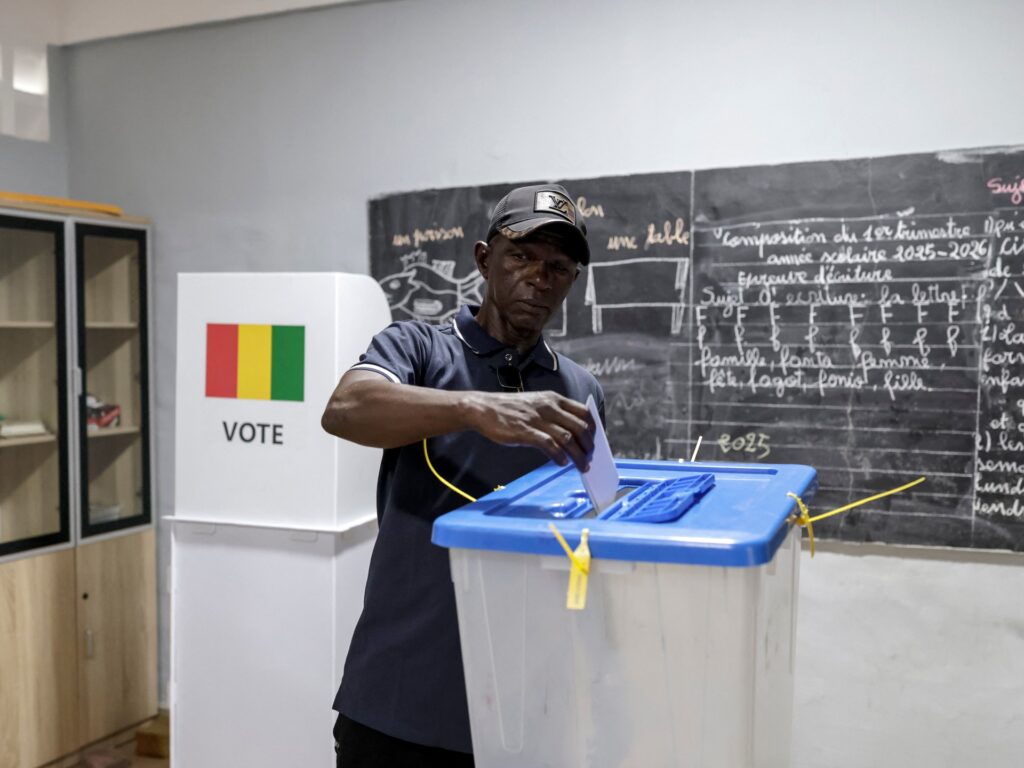
Guinea recently held its first elections since the 2021 military coup that dramatically reshaped the country’s political landscape. The elections are seen as a crucial step in the nation’s return to civilian rule, with military leader Mamady Doumbouya widely anticipated to secure a victory.
Mamady Doumbouya, who led the coup that ousted former president Alpha Condé in September 2021, has since emerged as a dominant political figure. His campaign has been positioned as a promise of stability and reform after years of political unrest and economic challenges faced by Guinea.
However, the electoral process has not been without controversy. Several reports and accusations have surfaced, alleging restrictions on media freedom and limitations imposed on opposition parties. Critics claim that these restrictions have hampered a level playing field for all candidates and have raised concerns about the fairness and transparency of the vote.
Despite these concerns, voter turnout was closely watched as a measure of public sentiment and legitimacy of the process. The outcome of the elections will likely determine Guinea’s political trajectory and its ability to maintain peace and order after the turbulent post-coup period.
International observers have called for calm and respect for democratic principles. The African Union and other regional bodies have emphasized the importance of an inclusive and transparent electoral process to ensure Guinea’s stable transition.
Meanwhile, opposition parties have urged their supporters to remain vigilant and to contest any irregularities identified during the voting and counting processes. The political environment remains tense, as the military-led administration faces the challenge of balancing control with democratic openness.
The international community continues to monitor the situation closely, aware that Guinea’s stability is vital for regional security and economic development. With the military leader expected to win, the focus now shifts to his plans for governance and how he intends to address the country’s socio-economic issues while fostering national unity.
As Guinea navigates this critical juncture, the results of the elections will serve as a litmus test for the country’s democratic institutions and its commitment to a peaceful and prosperous future.