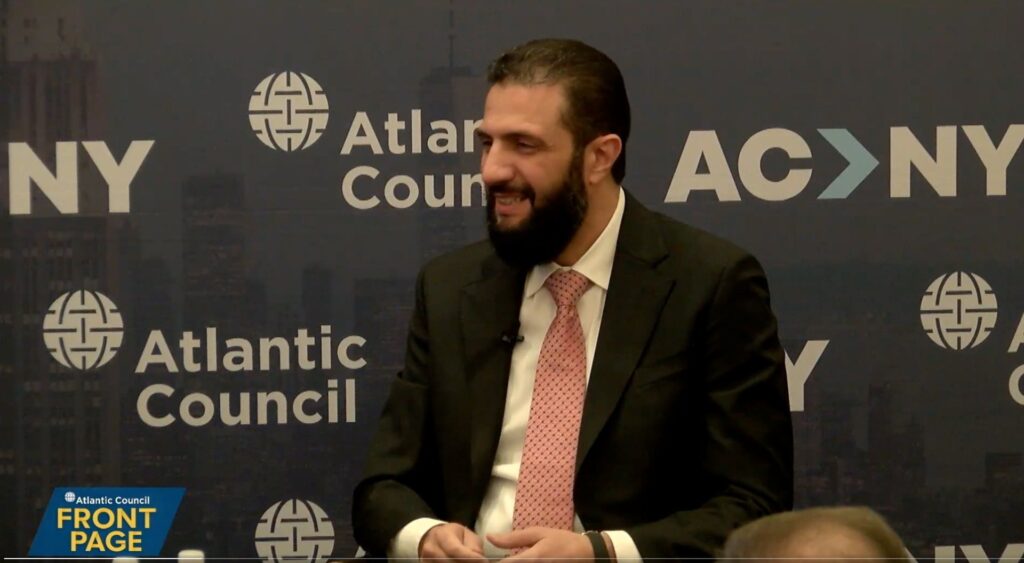
Ahmed al-Sharaa, Syria’s prominent political figure, recently addressed a series of pressing issues concerning Israel’s alleged violations within Syrian territory. Al-Sharaa criticized ongoing Israeli incursions and violations in Syria, highlighting the continued tension and instability these actions foster in the region.
In his remarks, al-Sharaa firmly condemned Israel’s presence and activities on Syrian soil, stressing the importance of Syria’s sovereignty and the illegal nature of Israeli actions, especially concerning the Golan Heights. The Golan Heights, a strategically significant plateau, has been a point of contention ever since Israel captured the area during the 1967 Six-Day War and later annexed it, a move not internationally recognized.
Highlighting international dynamics surrounding the region, al-Sharaa also responded to former U.S. President Donald Trump’s controversial proposal regarding the Golan Heights. Trump’s administration recognized Israeli sovereignty over the Golan Heights in 2019, a significant departure from previous U.S. foreign policy and international consensus.
In an unconventional and pointed response, al-Sharaa suggested that instead of the Golan Heights, Trump should consider giving New Jersey to Israel. This remark was made in a context of criticizing what Syria perceives as unfair and biased international support for Israel, contrasting it with American policies and interests. It served as a metaphorical rebuke of the Trump administration’s recognition and stance on the territorial dispute.
Al-Sharaa’s comments came at a time when tensions in Syria remain high, with multiple external actors involved in the conflict that has persisted since 2011. The issue of Israeli violations is compounded by Syria’s ongoing civil war, where various foreign powers have had a presence or influence.
The international community has largely viewed Israel’s annexation of the Golan Heights as illegal under international law, supported Syria’s claim to the territory, and called for negotiations to resolve the conflict. Despite this, the status of the Golan Heights remains unresolved and continues to be a flashpoint in Middle Eastern geopolitics.
Al-Sharaa’s statements reinforce Syria’s staunch position that any Israeli presence in the Golan is a violation of Syrian sovereignty that should be reversed. His critical remarks about Donald Trump’s proposals also illustrate the broader resentment in Syria and beyond toward shifting U.S. policies perceived as favoring Israeli territorial claims at Syria’s expense.
The complex situation in Syria and Israel’s activities in the region are part of an intricate geopolitical puzzle involving security concerns, historical grievances, and international diplomacy. Regional stability remains elusive, with the Golan Heights epitomizing a symbol of unresolved conflict and competing national narratives.
As the situation develops, al-Sharaa’s vocal condemnation and symbolic proposals will likely continue to influence public discourse and international debate regarding Syria’s territorial integrity and the ongoing Israeli-Syrian conflict. The international community watches closely as tensions persist, hoping for a peaceful resolution but preparing for continued diplomatic challenges.