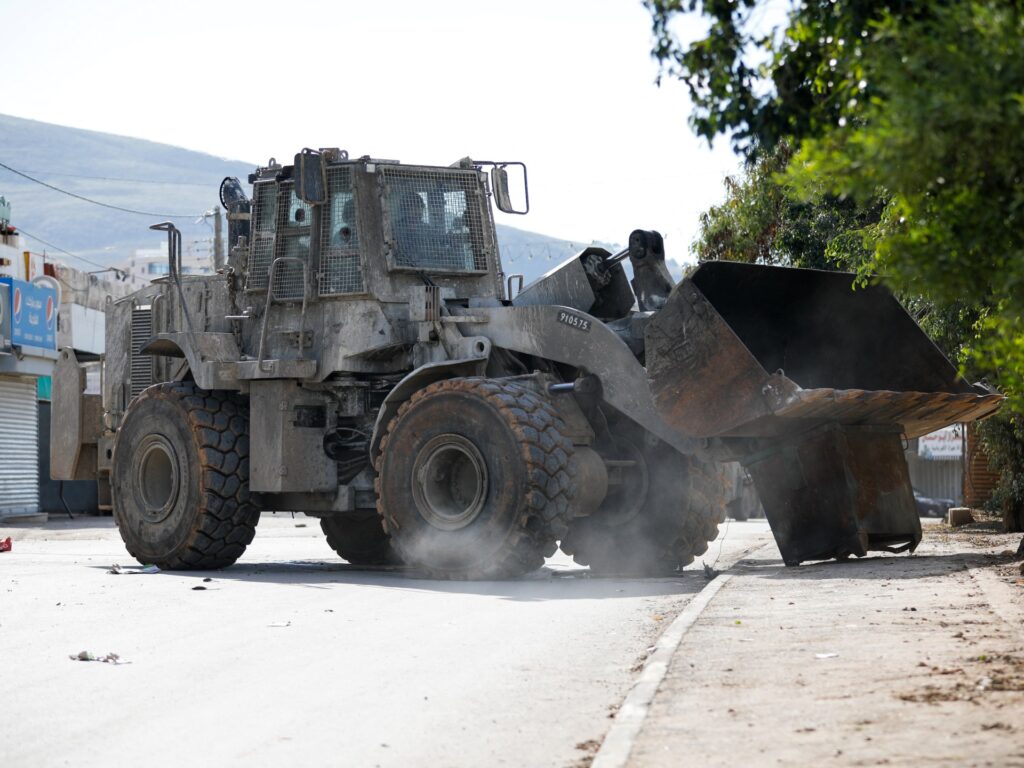
In recent developments in the West Bank, the Israeli military has conducted extensive operations involving storming multiple towns and carrying out demolition activities. These actions have escalated tensions in the already volatile region, drawing sharp criticism from Palestinian officials and international observers alike.
The demolition operations reportedly targeted structures deemed illegal by Israeli authorities. However, Palestinian representatives have vehemently condemned these actions, characterizing them as part of a ‘systematic policy of displacement’. According to Palestinian officials, these measures are not random events but rather a coordinated strategy to uproot Palestinian communities from their ancestral lands.
The towns affected by the Israeli military incursions have experienced disruption to daily life, with many residents displaced and left facing uncertainty about their homes and futures. Human rights groups have expressed concern over the humanitarian impact, emphasizing the broader context of ongoing Israeli settlement expansion and the challenges faced by Palestinians living under occupation.
This wave of demolitions and military presence comes amid a period of heightened tensions across the West Bank. Several sources cite an increase in confrontations between Israeli forces and Palestinian residents, raising fears of an escalation in violence. The international community has called for restraint from all parties and urged a return to dialogue to resolve the underlying issues.
Palestinian officials underscored the urgency of addressing what they describe as deliberate demographic and territorial changes imposed by Israeli policies. They warn that continued demolitions and forced displacement may further undermine prospects for peace and stability in the region.
Meanwhile, Israeli authorities have defended the actions, stating the demolitions are carried out according to legal rulings and security considerations. They assert that these measures are necessary to prevent the construction of unauthorized structures and to maintain law and order.
The situation has drawn widespread attention from media outlets and human rights organizations, highlighting the complex and deeply rooted nature of the Israeli-Palestinian conflict. Advocates for Palestinian rights argue that the demolition operations exacerbate the hardships faced by Palestinians, while supporters of Israeli policies emphasize the importance of security and legal enforcement.
As the West Bank towns grapple with the immediate aftermath of the military operations, the broader implications of these events continue to unfold. The ongoing disputes over land and sovereignty remain central to the broader conflict, with no easy solutions in sight.
The international community faces growing pressure to engage more actively in mediating the conflict and supporting efforts to protect the rights and dignity of all populations involved. Observers call for renewed negotiations and a recommitment to international law to prevent further deterioration of the situation.
In summary, the recent Israeli military storming of West Bank towns and the accompanying demolitions mark a significant development in the region’s dynamics. The condemnation by Palestinian officials as a systematic policy of displacement underscores the deep divisions and challenges that persist. Moving forward, the focus remains on seeking avenues for peaceful resolution, humanitarian support, and respect for human rights amidst ongoing political and territorial disputes.