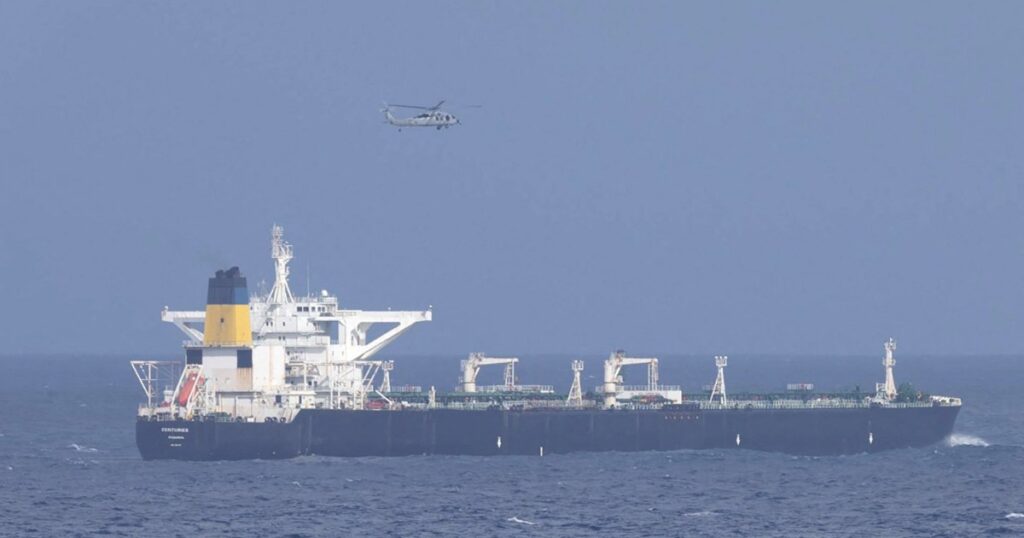
The United States Coast Guard is actively pursuing a third oil tanker off the coast of Venezuela, an official has confirmed. This vessel is reportedly part of a ‘dark fleet’ attempting to evade sanctions imposed on Venezuela. The US has been increasing efforts to monitor and intercept vessels suspected of transporting Venezuelan oil illegally, as part of its commitment to enforcing economic sanctions.
According to officials, the ongoing chase is part of a broader effort to clamp down on illicit operations that undermine the sanctions regime. These vessels often employ tactics such as turning off tracking systems, operating at night, or sailing without lights to avoid detection—hence the term ‘dark fleet.’
The pursuit off the Venezuelan coast highlights the complexities and challenges faced by US authorities in enforcing sanctions against Venezuela’s oil sector. The country’s oil exports have long been a focus of international scrutiny due to the political and economic crisis in the nation under the Maduro administration.
Sanctions against Venezuela aim to curtail the Maduro government’s revenue streams, particularly from the oil industry, which remains a critical lifeline for the regime. The US and its allies have targeted oil shipments to pressure the Venezuelan government toward democratic reforms and respect for human rights.
This ongoing enforcement effort also underscores the risk undertaken by tanker operators and the geopolitical tensions in the region. While Venezuela has some of the largest oil reserves in the world, its ability to export oil has been drastically restricted by international bans.
The dark fleet vessels, typically flagged under various nations, use sophisticated methods to obscure their movements and identity. Such evasive strategies complicate inspections and interceptions, making enforcement a cat-and-mouse game at sea.
Coast Guard officials stated they remain committed to preventing these vessels from circumventing sanctions, emphasizing the importance of maritime security and compliance with international laws. This pursuit marks the third such operation in recent weeks, signaling an intensifying US effort in the Caribbean and Gulf regions.
The US government has increasingly leveraged its naval and coast guard assets to monitor maritime activity near Venezuela, cooperating with regional partners to enhance surveillance and interdiction capabilities.
Energy experts note that despite sanctions, Venezuela continues to seek alternative ways to export its oil, including clandestine shipments facilitated by intermediary countries and multinational networks.
The international community watches closely as the situation evolves, concerned about the potential for escalation and the broader implications for regional stability and energy markets.
This latest pursuit serves as a reminder of the ongoing geopolitical struggle over Venezuela’s vast energy resources and the complex enforcement landscape that arises when economic sanctions confront clandestine operations at sea.