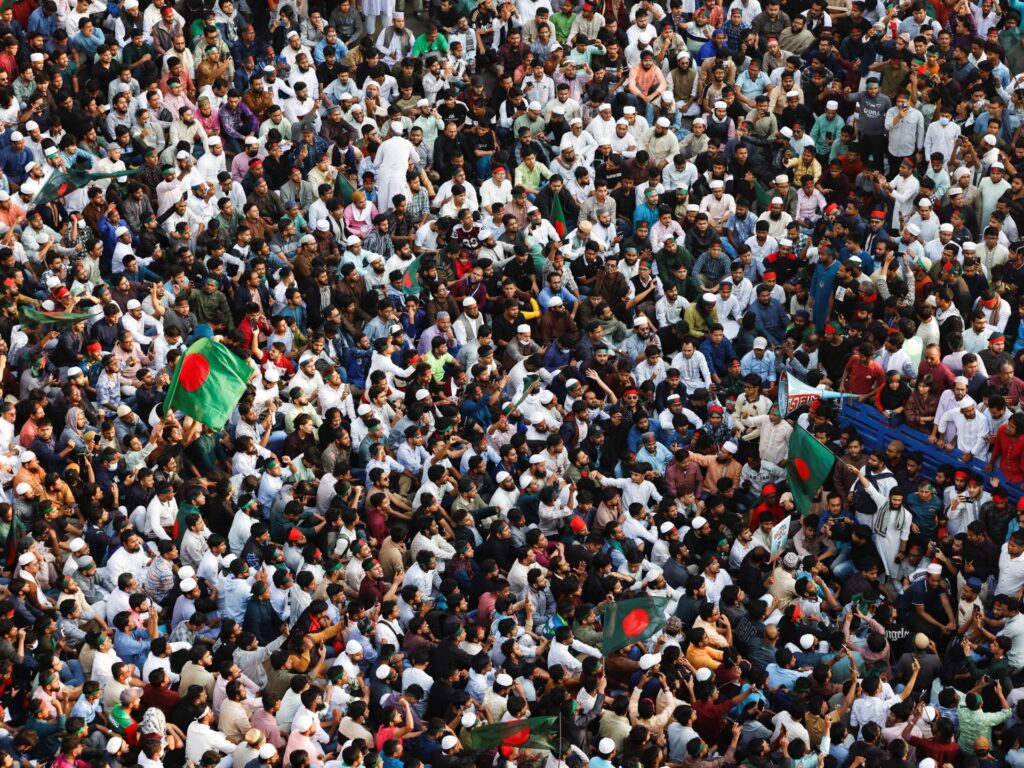
Mass protests have re-emerged in Bangladesh, fueled by widespread outrage over the fatal shooting of a prominent student movement leader. This incident has ignited a fresh wave of demonstrations across the country, as citizens and activists demand justice and accountability. The student leader, known for his influential role in advocating for political and social reforms, was shot in a violent confrontation, sparking immediate public outrage.
The protests began shortly after news of the shooting spread, with thousands taking to the streets in various cities, including the capital Dhaka. Demonstrators are calling for a thorough investigation and swift prosecution of those responsible, accusing law enforcement agencies of failing to protect the rights and safety of activists.
This tragic event highlights ongoing tensions in Bangladesh regarding political freedoms, governance, and human rights. The student leader’s death has become a symbol of resistance against perceived state oppression and a rallying point for groups demanding democratic reforms.
Authorities have responded by imposing curfews in several areas and deploying security forces to manage the unrest. However, protesters remain resolute, continuing their marches despite potential crackdowns. International human rights organizations have also voiced concern, urging the Bangladeshi government to respect peaceful assembly and conduct an impartial investigation.
The killing exacerbates an already volatile situation in Bangladesh, where student movements have historically played a significant role in shaping political discourse. Citizens fear that without justice, political violence may escalate, further destabilizing the nation.
As the nation grapples with this crisis, calls for justice resonate not only within Bangladesh but also across the global community, emphasizing the universal demand for human rights and the protection of activists dedicated to societal progress.