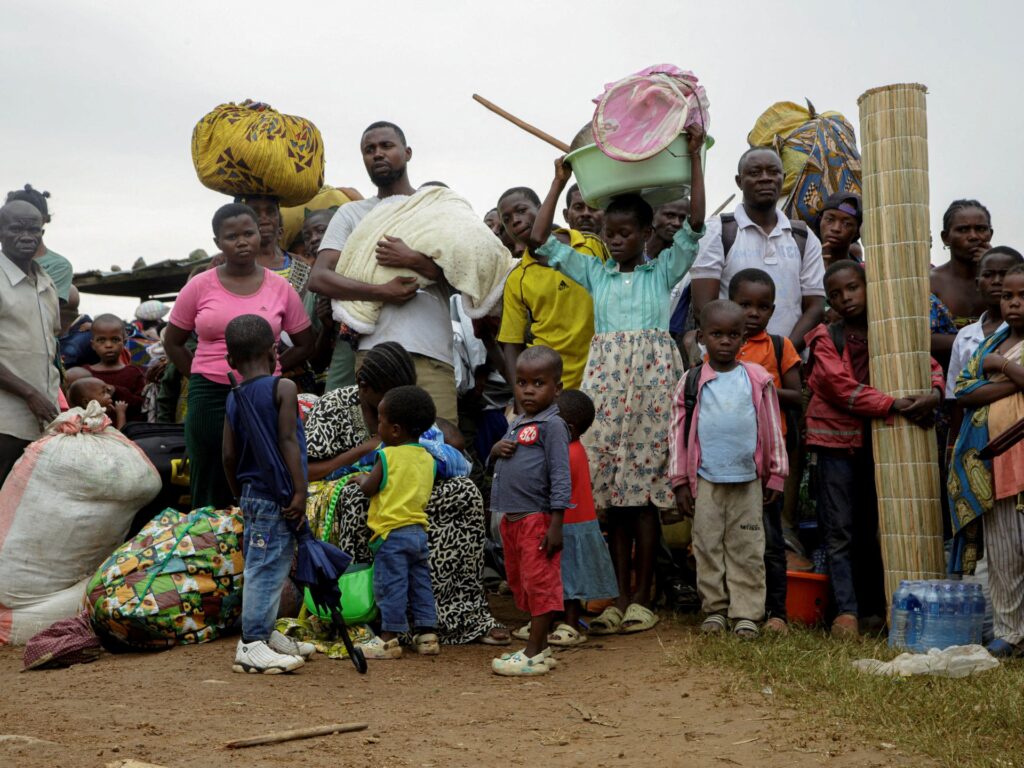
Tens of thousands of people have fled the eastern Democratic Republic of Congo (DRC) to neighboring Burundi following a rebel takeover of a strategically important city. The United Nations refugee agency has reported that large numbers of women and children are arriving at the Burundi border, many “exhausted and severely traumatised” after escaping the violence.
The recent rebel advance, which led to the capture of a key city in the eastern DRC, has triggered a significant humanitarian crisis, forcing countless civilians to seek refuge across the border. The situation has been further complicated by longstanding conflicts in the region, including competition among armed groups and ongoing instability.
The UN refugee agency has expressed deep concern about the urgent needs of those displaced, emphasizing the vulnerability of women and children who have endured arduous journeys and harsh conditions. Many have been exposed to violence, displacement, and disruption of essential services.
Humanitarian organizations are mobilizing resources to provide food, shelter, and medical assistance to the newly arrived refugees in Burundi. At the same time, efforts are underway to address the root causes of the conflict and support peacebuilding initiatives in the region.
Local authorities in Burundi have set up reception centers to accommodate the influx of refugees, but the scale of the displacement presents significant challenges for the country’s infrastructure and resources. The humanitarian community is calling for increased international support to help manage the crisis and protect vulnerable populations.
The situation remains fluid, with ongoing clashes reported in parts of eastern DRC, raising fears of further displacement. International stakeholders are closely monitoring developments and coordinating efforts to stabilize the area and prevent a worsening of the humanitarian emergency.
The crisis underscores the broader issues of instability and violence in eastern DRC, where multiple armed groups vie for control of territory and resources. The international community has repeatedly called for dialogue and peaceful resolution, but progress has been slow.
As the conflict continues to impact civilian populations, urgent and sustained humanitarian assistance is necessary to alleviate suffering and support displaced individuals and families. The resilience of those affected is being tested amidst ongoing insecurity and uncertainty about the future.
In summary, the rebel takeover of a key city in eastern DRC has precipitated a major displacement crisis, with tens of thousands fleeing into Burundi. The international community and humanitarian actors are working together to address the immediate needs of refugees and to seek long-term solutions to the conflict driving the displacement.