Skip to content
June 24, 2026
  • Facebook
  • Twitter
  • Instagram
  • Youtube
  • tiktok
MILLENNIUM NEWS 24/7

MILLENNIUM NEWS 24/7

Bridging The Community’s World Wide

  • Home
  • IP TV LIVE
  • U.S.News
  • LOCAL ELECTION
  • State News
    • Alabama
    • Alaska
    • Arizona
    • Arkansas
    • California
    • Colorado
    • Connecticut
    • Delaware
    • Florida
    • Georgia
    • Hawaii
    • Idaho
    • Illinois
    • Indiana
    • Iowa
    • Kansas
    • Kentucky
    • Louisiana
    • Maryland
    • Massachusetts
    • Michigan
    • Maine
    • Minnesota
    • Mississippi
    • Missouri
    • Montana
    • Nebraska
    • Nevada
    • New Hampshire
    • New Jersey
    • New Mexico
    • New York
    • North Carolina
    • North Dakota
    • Oregon
    • Pennsylvania
    • Rhode Island
    • South Carolina
    • South Dakota
    • Tennessee
    • Texas
    • Virginia
    • Washington
    • West Virginia
    • U.S. Virgin Islands
  • Politics
  • World News
  • Sports
  • Entertainment
  • Weather
  • Business
  • Health News
  • Urban Cultural Programs
  • ADVERTISEMENT
  • About Us
  • Contact us
Live TV

As a new generation rises, tension between free speech and inclusivity on college campuses simmers

Generations of Americans have held firm to a version of free speech that makes room for even the vilest of views. It’s girded by a belief that the good ideas rise above the bad, that no one should be punished for voicing an idea — except in rare cases where the idea could lead directly to illegal action.

Today, that idea faces competition more forceful and vehement than it has seen for a century.

On college campuses, a newer version of free speech is emerging as young generations redraw the line where expression crosses into harm. There’s a wave of students who have no tolerance for speech that marginalizes. They draw lines around language that leads to damage, either psychological or physical. Their judgments weigh the Constitution but also incorporate histories of privilege and oppression.

“We believe in a diverse set of thoughts,” says Kaleb Autman, a Black student at the University of Wisconsin whose group is demanding a zero-tolerance policy on hate speech. “But when your thought is predicated on the subjugation of me or my people, or to a generalized people, then we have problems.”

A new understanding of free speech has been evolving on college campuses for years, marked by the introduction of safe spaces, trigger warnings and a rise in disruptive protests that silence speakers with offensive views. But the Israel-Hamas war and its rhetoric appear to be widening the fault lines and pushing students to demand that university leaders take a side between clashing versions of free speech.

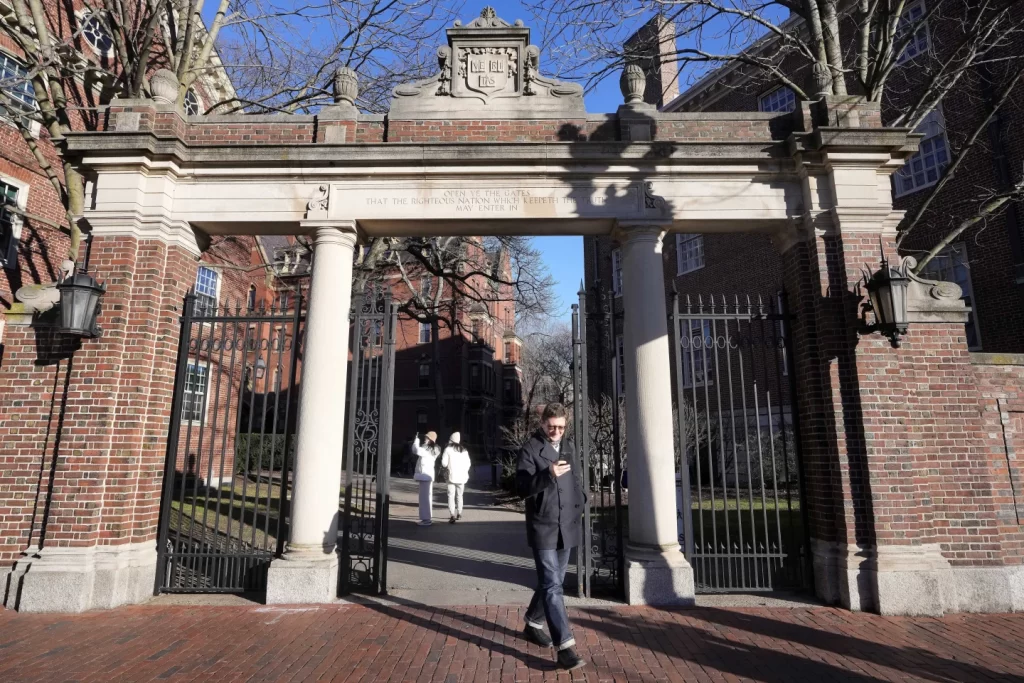
It came to a head in December when leaders of three elite colleges were called to Congress to testify on campus antisemitism. With legalistic flourish, they took a stand for free expression as the Constitution and decades of case law define it, then faced weeks of backlash as opponents called them soft on antisemitism.

The fallout contributed to the Jan. 2 resignation of Harvard University President Claudine Gay, who faced mounting allegations of plagiarism that surfaced after the hearing. Her resignation followed the December ouster of Liz Magill of the University of Pennsylvania, who shifted her position on campus free speech amid the blowback.

Asked on Capitol Hill about balancing free speech and the safety of Jewish students, Magill told lawmakers that Penn’s approach is “guided by the United States Constitution, which allows for robust perspectives.” A day later, amid pressure from donors, she said Penn’s policies needed to be “clarified and evaluated.”

She suggested rules rooted in the Constitution don’t do enough to protect students in a world with “signs of hate proliferating across our campus and our world in a way not seen in years.”

Campuses across the nation have confronted similar tensions amid rising antisemitism and Islamophobia. Debate has raged over whether to police phrases such as “from the river to the sea” and “intifada” — often used as pro-Palestinian chants but lately also seen by some as calls for the genocide of Jews. Columbia University is among several institutions that recently suspended pro-Palestinian student groups, citing their “threatening rhetoric and intimidation.”

Those types of phrases, however some perceive them, are “clearly constitutionally protected,” says Erwin Chemerinsky, a law scholar and dean of the law school at the University of California, Berkeley, which was the cradle of the free speech movement in the 1960s. Yet on all sides of the issue, he says, today’s students want to quash speech they don’t like, regardless of its legality.

“What I always hear now is how, when students are upset or offended, they phrase it as, ‘I feel unsafe.’ And I think it’s so important that we separate out the campus’ duty,” he says. “It’s not our role to make them safe from ideas that they don’t want exposed to. But that line, I think, has gotten blurred.”

About Author

Habib Habib

See author's posts

Post navigation

Previous Republicans push back on Biden plan to axe federal funds for anti-abortion counseling centers
Next Austin ordered strikes from hospital where he continues to get prostate cancer care, Pentagon says

Related Stories

Pakistan’s Strategic Gains from Helping Broker the US-Iran Deal

Pakistan’s Strategic Gains from Helping Broker the US-Iran Deal

US Senate Approves Iran War Powers Resolution: Implications for Trump Administration

US Senate Approves Iran War Powers Resolution: Implications for Trump Administration

Mamdani-Backed Candidates Score Major Primary Victories Over Pro-Israel Democrats

Mamdani-Backed Candidates Score Major Primary Victories Over Pro-Israel Democrats

Entertainment

Prada Collaborates with NASA on Designing Advanced Lunar Mission Spacesuits 1

Prada Collaborates with NASA on Designing Advanced Lunar Mission Spacesuits

Clive Davis helped launch or shape the careers of these music stars, across genres and decades 2

Clive Davis helped launch or shape the careers of these music stars, across genres and decades

Thousands of Kites Soar Over Denmark at Annual Beach Festival 3

Thousands of Kites Soar Over Denmark at Annual Beach Festival

Oliver Tree, the eccentric American musician and comedian, dies at 32 in helicopter crash in Brazil 4

Oliver Tree, the eccentric American musician and comedian, dies at 32 in helicopter crash in Brazil

New York City Welcomes the Summer Solstice with Times Square Yoga 5

New York City Welcomes the Summer Solstice with Times Square Yoga

Giant Lionel Messi Portrait Carved Into Philippine Beach for World Cup 6

Giant Lionel Messi Portrait Carved Into Philippine Beach for World Cup

Movie Review: In ‘Toy Story 5,’ it’s (digital) apocalypse now for toys 7

Movie Review: In ‘Toy Story 5,’ it’s (digital) apocalypse now for toys

Top News

Pakistan’s Strategic Gains from Helping Broker the US-Iran Deal

Pakistan’s Strategic Gains from Helping Broker the US-Iran Deal

Heatwave Havoc Across Europe: A Climate Crisis Unfolding

Heatwave Havoc Across Europe: A Climate Crisis Unfolding

Japan Considers Deploying Naval Forces to Demine Strait of Hormuz After US-Iran Ceasefire

Japan Considers Deploying Naval Forces to Demine Strait of Hormuz After US-Iran Ceasefire

Iranians Cautiously Optimistic Amid Complex US Negotiations

Iranians Cautiously Optimistic Amid Complex US Negotiations

  • Home
  • About Us
  • Facebook
  • Twitter
  • Instagram
  • Youtube
  • tiktok
Editor: Nur M Tofader, Office: 250 Park Avenue, 7th Floor, New York, NY 10177 & Tell: 718 893 0002 (Office), 7188441300, +1212 401 6266, e-mail: Info@millenniuamtv24.com, e-mail: Info@millenniuamnews24.com, Copyright © Millennium News 24/7 | DarkNews by AF themes.