Skip to content
August 11, 2026
  • Facebook
  • Twitter
  • Instagram
  • Youtube
  • tiktok
MILLENNIUM NEWS 24/7

MILLENNIUM NEWS 24/7

Bridging The Community’s World Wide

  • Home
  • IP TV LIVE
  • U.S.News
  • LOCAL ELECTION
  • State News
    • Alabama
    • Alaska
    • Arizona
    • Arkansas
    • California
    • Colorado
    • Connecticut
    • Delaware
    • Florida
    • Georgia
    • Hawaii
    • Idaho
    • Illinois
    • Indiana
    • Iowa
    • Kansas
    • Kentucky
    • Louisiana
    • Maryland
    • Massachusetts
    • Michigan
    • Maine
    • Minnesota
    • Mississippi
    • Missouri
    • Montana
    • Nebraska
    • Nevada
    • New Hampshire
    • New Jersey
    • New Mexico
    • New York
    • North Carolina
    • North Dakota
    • Oregon
    • Pennsylvania
    • Rhode Island
    • South Carolina
    • South Dakota
    • Tennessee
    • Texas
    • Virginia
    • Washington
    • West Virginia
    • U.S. Virgin Islands
  • Politics
  • World News
  • Sports
  • Entertainment
  • Weather
  • Business
  • Health News
  • Urban Cultural Programs
  • ADVERTISEMENT
  • About Us
  • Contact us
Live TV

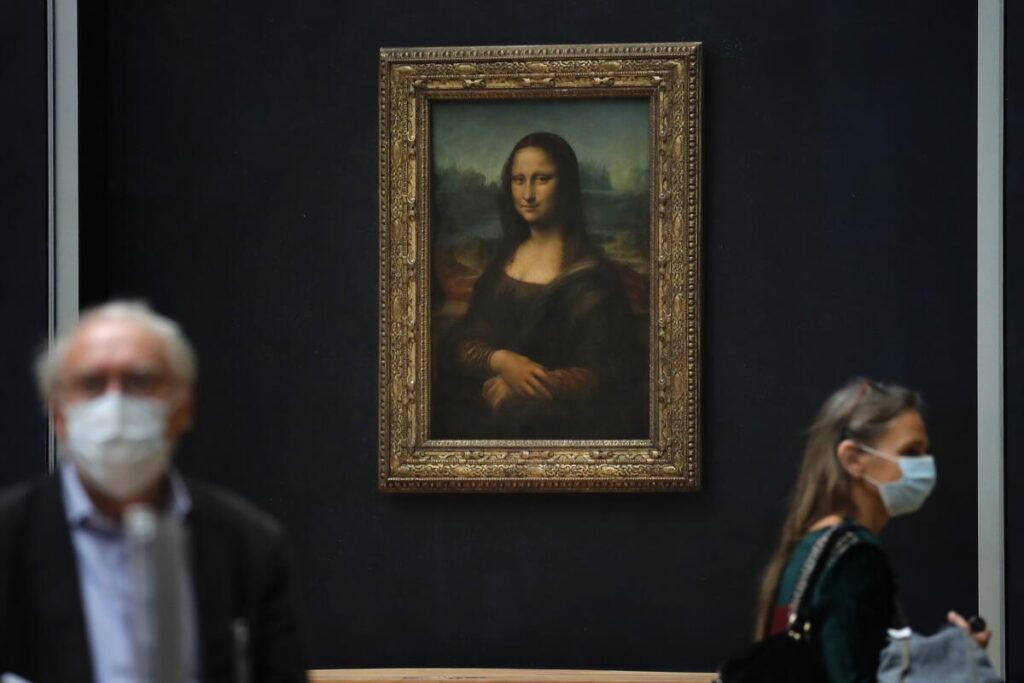
Scientists pry a secret from the `Mona Lisa’ about how Leonardo painted the masterpiece

The “Mona Lisa” has given up another secret.

Using X-rays to peer into the chemical structure of a tiny speck of the celebrated work of art, scientists have gained new insight into the techniques that Leonardo da Vinci used to paint his groundbreaking portrait of the woman with the exquisitely enigmatic smile.

The research, published Wednesday in the Journal of the American Chemical Society, suggests that the famously curious, learned and inventive Italian Renaissance master may have been in a particularly experimental mood when he set to work on the “Mona Lisa” early in the 16th century.

The oil-paint recipe that Leonardo used as his base layer to prepare the panel of poplar wood appears to have been different for the “Mona Lisa,” with its own distinctive chemical signature, the team of scientists and art historians in France and Britain discovered.

“He was someone who loved to experiment, and each of his paintings is completely different technically,” said Victor Gonzalez, the study’s lead author and a chemist at France’s top research body, the CNRS. Gonzalez has studied the chemical compositions of dozens of works by Leonardo, Rembrandt and other artists.

“In this case, it’s interesting to see that indeed there is a specific technique for the ground layer of ‘Mona Lisa,’” he said in an interview with The Associated Press.

Specifically, the researchers found a rare compound, plumbonacrite, in Leonardo’s first layer of paint. The discovery, Gonzalez said, confirmed for the first time what art historians had previously only hypothesized: that Leonardo most likely used lead oxide powder to thicken and help dry his paint as he began working on the portrait that now stares out from behind protective glass in the Louvre Museum in Paris.

Carmen Bambach, a specialist in Italian art and curator at New York’s Metropolitan Museum of Art, who was not involved in the study, called the research “very exciting” and said any scientifically proven new insights into Leonardo’s painting techniques are “extremely important news for the art world and our larger global society.”

Finding plumbonacrite in the “Mona Lisa” attests “to Leonardo’s spirit of passionate and constant experimentation as a painter – it is what renders him timeless and modern,” Bambach said by email.

The paint fragment from the base layer of the “Mona Lisa” that was analyzed was barely visible to the naked eye, no larger than the diameter of a human hair, and came from the top right-hand edge of the painting.

The scientists peered into its atomic structure using X-rays in a synchrotron, a large machine that accelerates particles to almost the speed of light. That allowed them to unravel the speck’s chemical make-up. Plumbonacrite is a byproduct of lead oxide, allowing the researchers to say with more certainty that Leonardo likely used the powder in his paint recipe.

“Plumbonacrite is really a fingerprint of his recipe,” Gonzalez said. “It’s the first time we can actually chemically confirm it.”

After Leonardo, Dutch master Rembrandt may have used a similar recipe when he was painting in the 17th century; Gonzalez and other researchers have previously found plumbonacrite in his work, too.

“It tells us also that those recipes were passed on for centuries,” Gonzalez said. “It was a very good recipe.”

Leonardo is thought to have dissolved lead oxide powder, which has an orange color, in linseed or walnut oil by heating the mixture to make a thicker, faster-drying paste.

“What you will obtain is an oil that has a very nice golden color,” Gonzalez said. “It flows more like honey.”

But the “Mona Lisa” — said by the Louvre to be a portrait of Lisa Gherardini, the wife of a Florentine silk merchant — and other works by Leonardo still have other secrets to tell.

“There are plenty, plenty more things to discover, for sure. We are barely scratching the surface,” Gonzalez said. “What we are saying is just a little brick more in the knowledge.”




About Author

dreamboy

See author's posts

Post navigation

Previous Movie Review: In ‘Anatomy of a Fall,’ a sharp courtroom drama that will end relationships
Next For Indigenous people, solar eclipse often about reverence and tradition, not revelry

Related Stories

Trump Demands Compensation from Iran Amid Strait of Hormuz Negotiations

Trump Demands Compensation from Iran Amid Strait of Hormuz Negotiations

South Koreans Beat the Heat with ‘Silent Disco’ Pool Party During Record Heat Wave

South Koreans Beat the Heat with ‘Silent Disco’ Pool Party During Record Heat Wave

The Concentration of Media Ownership in America: Six Giants Control 90% of the Market

The Concentration of Media Ownership in America: Six Giants Control 90% of the Market

Entertainment

South Koreans Beat the Heat with ‘Silent Disco’ Pool Party During Record Heat Wave 1

South Koreans Beat the Heat with ‘Silent Disco’ Pool Party During Record Heat Wave

The Concentration of Media Ownership in America: Six Giants Control 90% of the Market 2

The Concentration of Media Ownership in America: Six Giants Control 90% of the Market

The Tragic Death of Mexican TikToker Cesar Gastelum During Livestream 3

The Tragic Death of Mexican TikToker Cesar Gastelum During Livestream

Ariana Grande’s new video sets off talk about body and beauty standards — again 4

Ariana Grande’s new video sets off talk about body and beauty standards — again

Leonardo DiCaprio and Jeff Bezos lead $200M project to save 100 of globe’s most threatened species 5

Leonardo DiCaprio and Jeff Bezos lead $200M project to save 100 of globe’s most threatened species

AI-driven Ring Cycle sparks boos at 150th anniversary Wagner Festival 6

AI-driven Ring Cycle sparks boos at 150th anniversary Wagner Festival

‘Sopranos’ actor Vincent Pastore, known for playing mobsters and tough guys, dead at 80 7

‘Sopranos’ actor Vincent Pastore, known for playing mobsters and tough guys, dead at 80

Top News

Russian Attacks Kill Six in Ukraine’s Zaporizhzhia; Children’s Hospital Struck in Kyiv

Russian Attacks Kill Six in Ukraine’s Zaporizhzhia; Children’s Hospital Struck in Kyiv

Yemen’s Houthis Launch Ballistic Missile Attacks on al-Makha and Marib

Yemen’s Houthis Launch Ballistic Missile Attacks on al-Makha and Marib

Family Watches Helplessly as Magnitude 7.4 Earthquake Destroys Their Home in Colombia

Family Watches Helplessly as Magnitude 7.4 Earthquake Destroys Their Home in Colombia

Somali Referee Omar Artan to Make History at UEFA Super Cup Following World Cup Exclusion

Somali Referee Omar Artan to Make History at UEFA Super Cup Following World Cup Exclusion

  • Home
  • About Us
  • Facebook
  • Twitter
  • Instagram
  • Youtube
  • tiktok
Editor: Nur M Tofader, Office: 250 Park Avenue, 7th Floor, New York, NY 10177 & Tell: 718 893 0002 (Office), 7188441300, +1212 401 6266, e-mail: Info@millenniuamtv24.com, e-mail: Info@millenniuamnews24.com, Copyright © Millennium News 24/7 | DarkNews by AF themes.