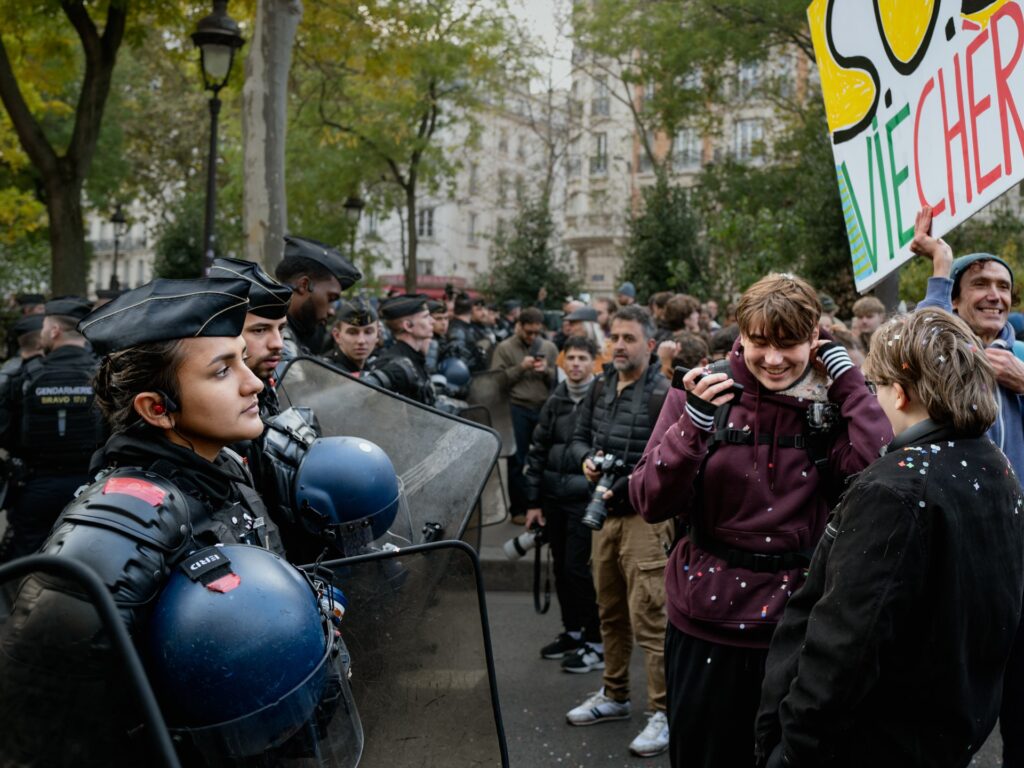
In response to ongoing widespread protests across France, the government has announced an accelerated increase in the national minimum wage. This move is part of an effort to quell public dissatisfaction and address economic grievances amid rising inflation and cost-of-living challenges.
The administration, facing mounting pressure from labor unions and citizens alike, has opted to speed up the planned wage adjustments originally scheduled for a later date. The decision aims to provide immediate financial relief to low-income workers who have been some of the hardest hit by economic fluctuations.
Despite the government’s initiative, labor unions have criticized the hike, labeling it as insufficient to meet the needs of workers struggling with rising expenses. Union leaders argue that while any increase is welcome, the current adjustment falls short of addressing the deeper issues of wage stagnation and economic inequality that fuel the protests.
The demonstrations, which began as a response to rising fuel prices and broader economic concerns, have evolved into a larger movement challenging government policies and demanding more substantial social reforms. Protesters have expressed frustration not only with economic hardships but also with perceived political indifference to their struggles.
The government’s timing of the wage increase appears strategically linked to the upcoming elections, where public sentiment will likely play a critical role. By attempting to alleviate some economic pressure through quicker wage growth, officials hope to restore confidence and reduce the intensity of social unrest.
Experts note that while wage hikes can provide short-term relief, long-term solutions require comprehensive policies that address structural issues such as employment opportunities, social welfare, and equitable economic growth. Critics suggest that the administration must engage in broader dialogue and implement more robust reforms beyond minimum wage adjustments.
In the meantime, many workers continue to advocate for higher wages that reflect the true cost of living, emphasizing that sustainable income growth is essential for economic stability and social cohesion. The situation in France remains a delicate balance between immediate economic needs and long-term political and social strategies.
As the election period approaches, the government’s actions and responsiveness to public demands are under close scrutiny. The outcomes of these measures will likely influence the political landscape and the future direction of France’s social policies.