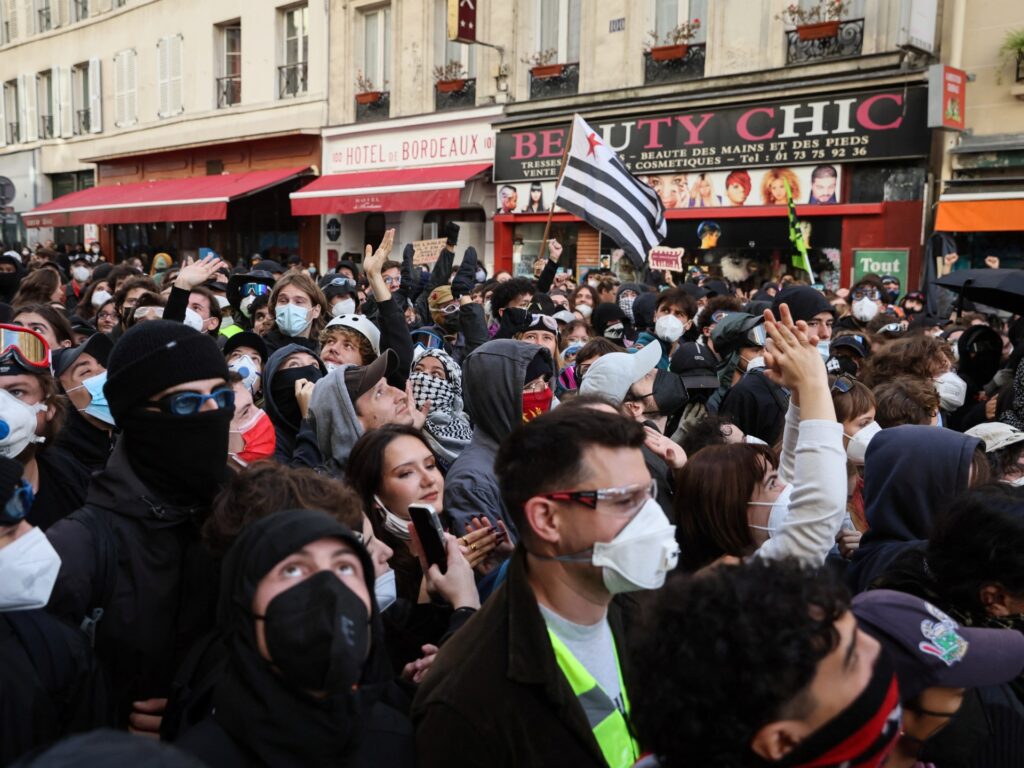
In mid-September, France became the epicenter of growing social unrest as protests that initially began at schools swiftly expanded to multiple sectors of society. The grievances, initially localized to educational concerns, have since taken on a broader dimension, reflecting widespread dissatisfaction with economic conditions and government policies.
The movement gained significant momentum with the involvement of the ‘yellow vests’ (gilets jaunes), a group that has become emblematic of the struggle against rising living costs and perceived social injustice. The ‘yellow vests’ originated from grassroots protests against fuel tax hikes but have evolved to embody the frustrations of many who feel marginalized by policy decisions.
The demonstrations have been marked by a mixture of peaceful protests and occasional clashes with law enforcement. The participants come from diverse backgrounds, including students, workers, and retirees, demonstrating a collective sense of urgency and demand for change.
Initial protests focused on education reforms and dissatisfaction with the conditions in schools, but as the movement grew, it began addressing more comprehensive issues such as wage stagnation, social inequality, and government transparency.
The spread of the protests across cities and rural areas alike indicates a nationwide mobilization. Various unions and political groups have expressed solidarity with the demonstrators, amplifying calls for the government to engage in meaningful dialogue.
Government officials have responded with a combination of conciliatory gestures and police actions aimed at maintaining order. Discussions about revising certain policies have been initiated, but demonstrators argue that more systemic changes are necessary.
Social media has played a crucial role in organizing and publicizing protest activities, allowing for rapid coordination among participants and raising international awareness of the movement.
As protests continue to gain traction, concerns about potential disruptions to daily life and economic activities have been voiced by businesses and some citizens. Nonetheless, the demonstrators remain steadfast, viewing their actions as vital steps toward securing a more equitable and just society.
The situation in France is emblematic of broader global challenges where economic pressures and social policies are coming under scrutiny, leading to increased civic engagement and calls for reform.
Looking ahead, the trajectory of the protests will likely depend on the government’s willingness to address the core issues raised and the protesters’ determination to sustain their movement. The coming weeks are expected to be pivotal in shaping France’s social and political landscape.