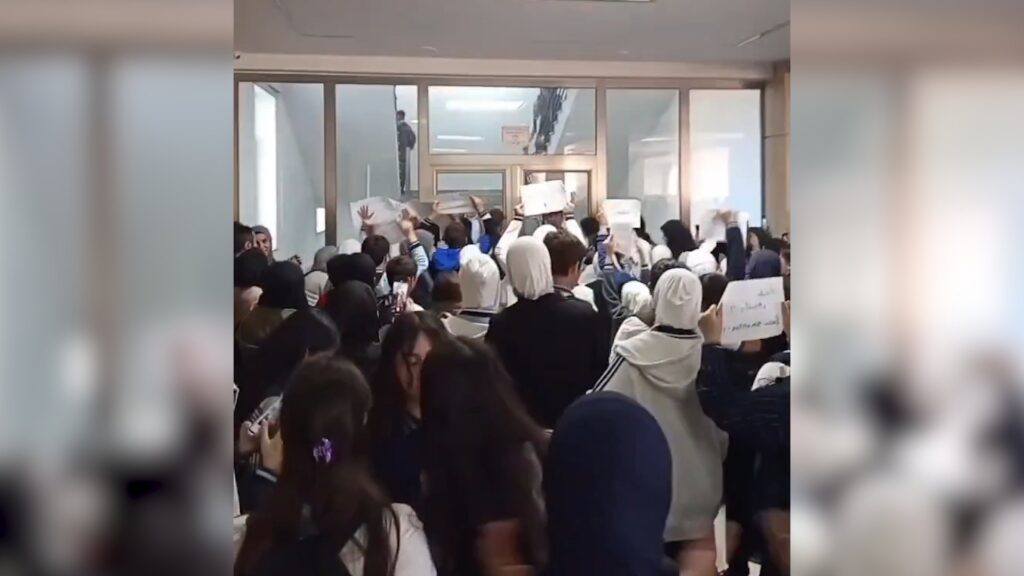
A growing controversy has emerged in Azerbaijan as new school uniform regulations have led to the barring of girls who wear hijabs from attending school. This policy has ignited protests among students, parents, and human rights activists who view the restrictions as discriminatory and a violation of personal freedoms.
The enforcement of these rules has resulted in heightened tensions, with reports of arrests following demonstrations against the hijab ban. Supporters of the protests argue that wearing a hijab is a matter of religious expression and identity, and the ban infringes upon their constitutional rights.
Public anger continues to swell as the Azerbaijani government maintains its stance, framing the rule as part of a broader effort to unify school uniforms and maintain secular principles in public education. Critics, however, contend that this justification masks underlying discrimination against Muslim communities.
International human rights organizations have begun voicing concerns over the situation, urging Azerbaijani authorities to reconsider the policy and respect freedom of religion and expression. The protests at schools have seen participation from diverse groups, including students, educators, and families, highlighting widespread opposition to the ban.
The government’s response to the protests—marked by arrests and police interventions—has escalated the crisis. Human rights advocates warn that such measures risk deepening societal divisions and undermining Azerbaijan’s commitments to human rights standards.
As the standoff continues, the international community watches closely, calling for dialogue and peaceful resolution. The developments in Azerbaijan underscore the ongoing global debate about religious dress codes, individual rights, and state authority in education systems.
The impact of the hijab ban reaches beyond schools, touching on broader issues of cultural rights, minority protections, and gender equality. Many argue that inclusive policies that accommodate diversity are essential for social cohesion and respect in multicultural societies.
Looking ahead, the situation demands careful attention and constructive engagement from all stakeholders to ensure that fundamental freedoms are upheld without compromising educational objectives. The Azerbaijani case may serve as a critical reference point for similar debates worldwide, emphasizing the importance of balancing secular governance with respect for religious diversity.
In summary, Azerbaijan’s hijab restrictions have sparked significant unrest, highlighting the complex intersections of religion, law, and education. The ongoing protests and arrests reflect deeper societal conflicts over identity and rights, calling for thoughtful solutions that honor both individual liberties and collective harmony.