India’s journey in mixed martial arts (MMA) at the Asian Games made history with the country securing its first-ever MMA medal at the prestigious event. However, the celebration was marred by a moment of controversy that has sparked debate among fans, officials, and the sports community at large.
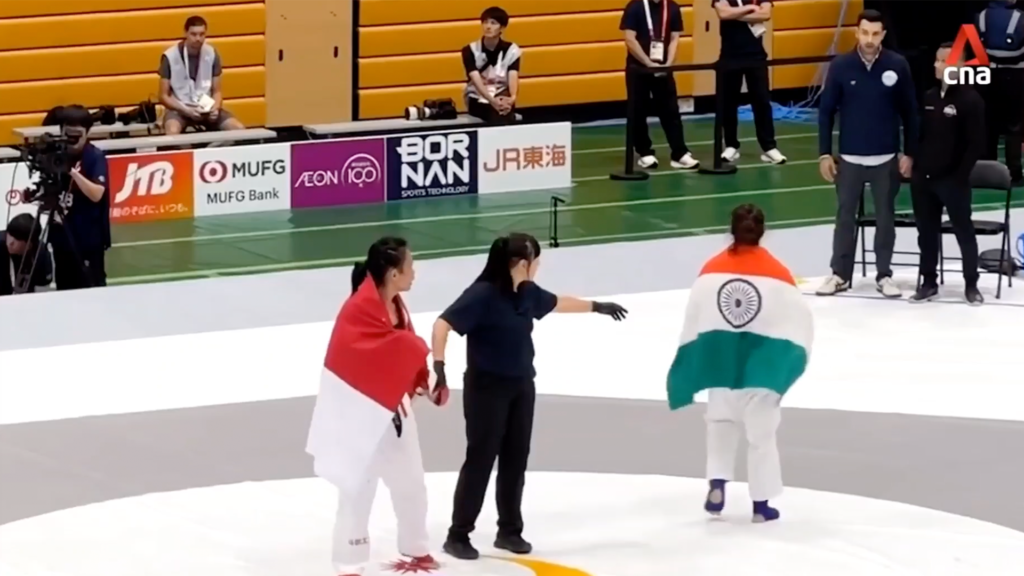
During a key match at the Asian Games, an Indian MMA fighter, who had showcased remarkable skill and determination throughout the competition, faced defeat that many found surprising and contentious. The loss not only ended the fighter’s bid for a gold medal but also ignited discussions regarding the judging and the nature of the contest.
In a moment that captured widespread attention, the Indian fighter refused to shake hands with the opponent after the decision was announced. Traditionally, a handshake in combat sports is seen as a gesture of sportsmanship and respect, signifying acceptance of the outcome and mutual respect between competitors.
The refusal to engage in this customary gesture was interpreted by many as a sign of disagreement with the judges’ decision and disappointment with the perceived fairness of the match. This incident has led to a broader conversation about the subjectivity in MMA judging, especially in high-stakes international competitions like the Asian Games.
Experts and analysts have weighed in, noting that MMA scoring can sometimes be controversial due to the complexity of the sport, which includes striking, grappling, and control—each aspect demanding careful evaluation by judges. The fighter’s reaction has been seen as an expression of frustration that resonates with many supporters who feel that the sport’s scoring systems need further refinement.
The Indian MMA community, which has been growing steadily and gaining international recognition, sees this event as a pivotal moment. It highlights the need for ongoing improvements in officiating and the importance of clear communication to athletes about scoring criteria.
Despite the unfortunate end to the match, the achievement of winning the first MMA medal at the Asian Games remains a significant milestone for India. It marks India’s emergence on the Asian MMA stage and serves as inspiration for aspiring fighters across the nation.
In response to the incident, Indian sports authorities have called for a review of the judging procedures and emphasized the importance of maintaining sportsmanship regardless of outcomes. They expressed confidence that such moments would fuel the growth and professionalization of MMA in India.
The controversy underscores the intense emotions invested in MMA and the passion of athletes and fans alike. While the handshake refusal saddened some observers, it also highlighted the competitive spirit and commitment to excellence that define the sport.
Moving forward, the Indian MMA community and officials are expected to work towards enhancing the fairness and transparency of competitions. This will ensure that future events at the international level not only celebrate athletic achievements but also uphold the highest standards of integrity and respect.
As the sport continues to evolve in India, the lessons from the Asian Games incident will be crucial in shaping its future, encouraging fair play, and inspiring a new generation of fighters dedicated to representing their country with honor and dignity.