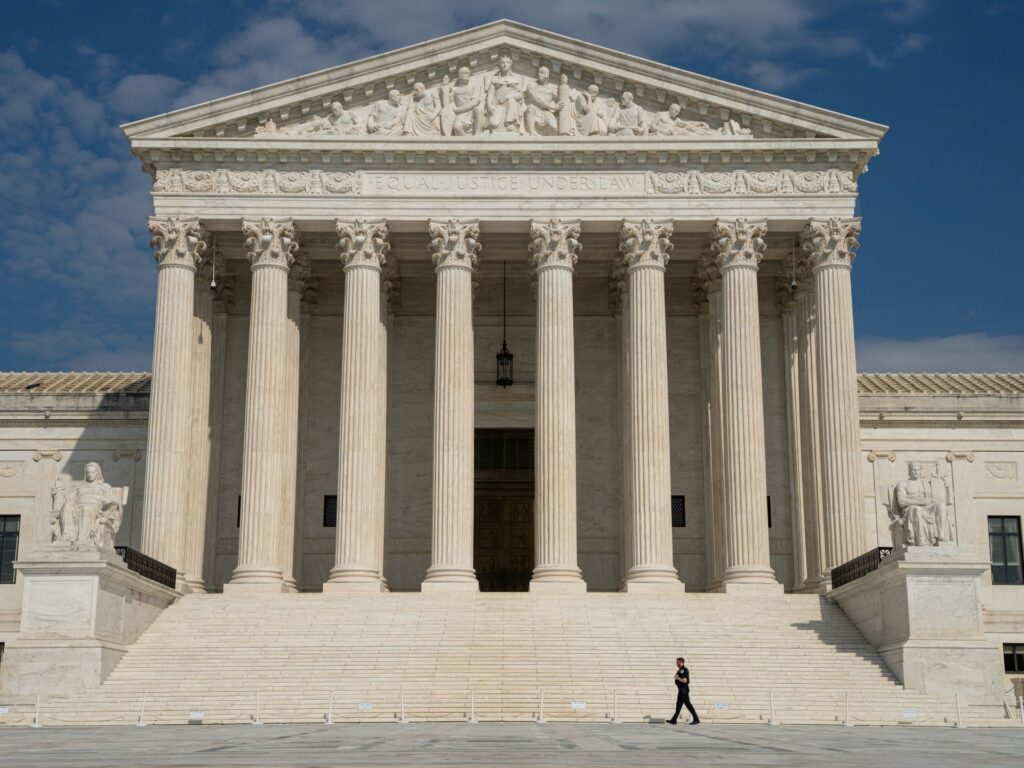
The US Supreme Court has taken the significant step of blocking a congressional map drawn by Republicans in Missouri. This decision reflects ongoing judicial scrutiny over redistricting efforts that can impact political representation and voter fairness. The rejection of the map coincides with a tense political backdrop, as a top Republican official in Missouri faces contempt charges for defying a previous lower court order related to the map.
The controversy began when the Republican Party in Missouri crafted a new congressional district map. Critics argued that the map was gerrymandered to favor the Republican Party, which has raised concerns about the fairness of the electoral process in the state. The lower courts had previously intervened, mandating changes to ensure the districts complied with legal standards for fair representation.
However, the Republican official responsible for the redistricting ignored the court’s directive, prompting legal action and contempt charges. This defiance highlights the intense clash between the judicial system and political operatives over election laws and district boundaries.
The Supreme Court’s decision to block the map underscores its role in arbitrating disputes over redistricting, especially when allegations of partisan manipulation emerge. This case adds to a broader national trend where courts are increasingly involved in assessing the legality and fairness of congressional maps post-census.
Missouri, as a politically strategic state, has significant implications for congressional power balance. The court’s intervention aims to ensure equitable representation that reflects actual demographic and political realities rather than partisan advantage.
This move could potentially affect upcoming elections by requiring the use of revised, court-approved district maps. It sends a message about adherence to judicial rulings and the importance of maintaining transparency and fairness in the redistricting process.
Legal experts note that the contempt charges against the Missouri official are a rare but powerful enforcement tool to uphold court authority in election matters. The case will likely proceed with further legal examination, and the final outcome could influence redistricting protocols in other states.
The Supreme Court has yet to rule on the long-term validity of the district maps, but its blocking of the current proposal stands as a critical check on partisan redistricting moves. The situation in Missouri exemplifies the ongoing tensions between political strategy and legal boundaries that shape American electoral politics.
As the matter unfolds, voters and political analysts will closely watch how the state’s congressional representation is determined and whether the courts continue to play a pivotal role in protecting democratic principles against partisan gerrymandering.