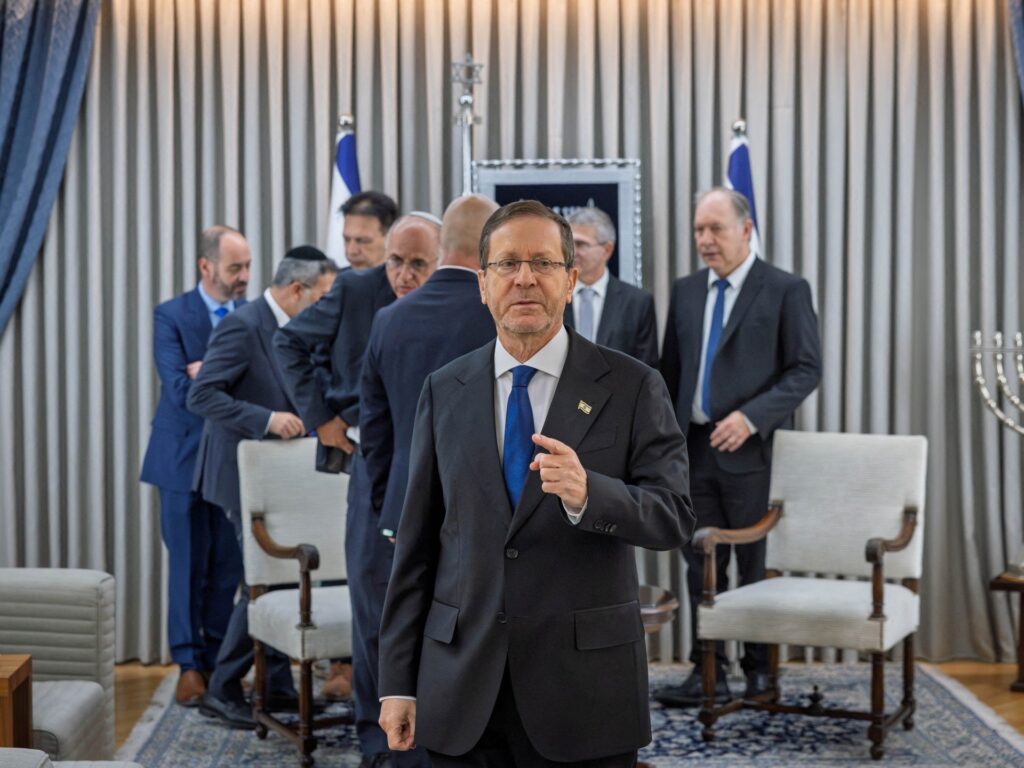
In a significant political development, Israel’s President Isaac Herzog has accepted the results of the recent elections and promptly opened talks on forming a new government. This move marks a critical step in the country’s democratic process and presents a challenge to outgoing Prime Minister Benjamin Netanyahu’s efforts to undermine the electoral outcome.
The recent elections resulted in a coalition led by Herzog, signaling a shift in power dynamics. Netanyahu and his allies, who have long held a majority, suffered losses that have prevented them from securing enough seats to form the next government. Herzog’s acceptance of the vote results affirms the legitimacy of the election and demonstrates his commitment to democratic principles.
By initiating government formation talks, Herzog is paving the way for potential collaboration among various political factions. The negotiations are expected to focus on building a stable coalition, one that can address pressing national issues and govern effectively.
Netanyahu’s attempts to discredit the elections raised concerns about political stability and democratic integrity in Israel. However, Herzog’s decisive action stabilizes the political situation and encourages confidence in the electoral process.
This transition period is seen as crucial for Israel’s future direction, with emphasis on policies related to security, economic growth, and social cohesion. The incoming government will face the challenge of uniting diverse political groups and managing domestic and international affairs.
Experts note that Herzog’s move to honor the election outcome sets a positive precedent for democratic governance in Israel. It highlights the importance of respecting voter decisions and working within constitutional frameworks.
As talks progress, the Israeli public and international observers are watching closely. The outcomes will influence Israel’s policy trajectory and its relations on the global stage.
Overall, Herzog’s acceptance of the election results and his initiation of government formation talks signify a reaffirmation of democratic values in Israel, despite challenges posed by political opposition. This development is expected to bring a new phase of governance, reflecting the electorate’s will and aiming for national progress.