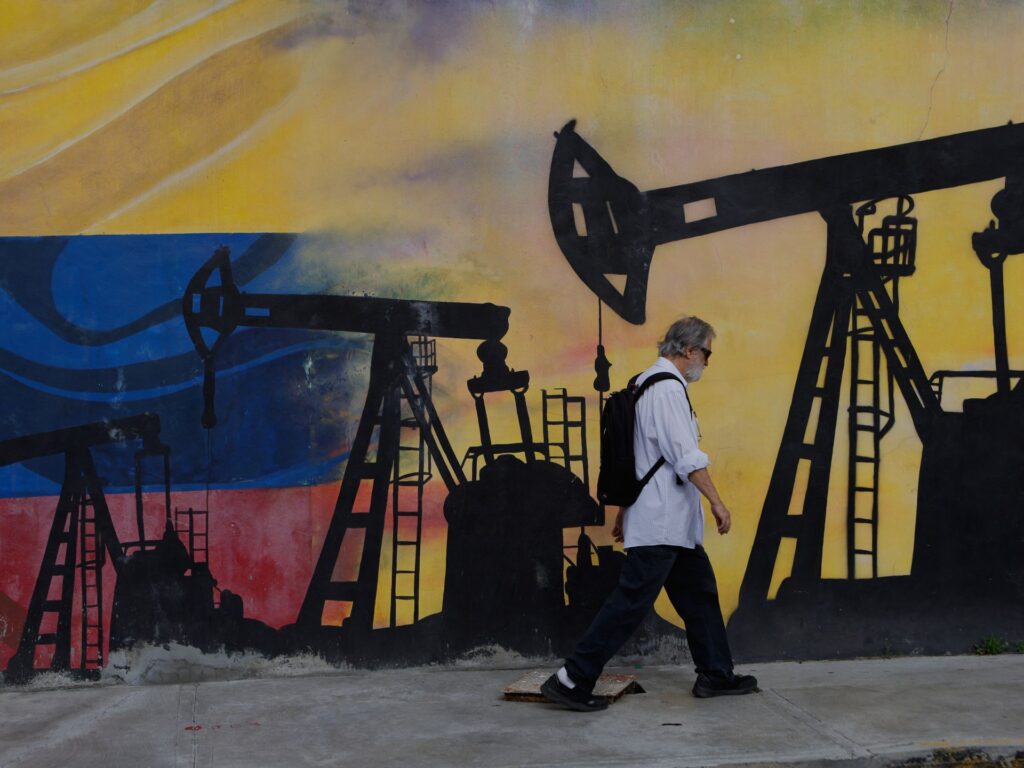
The White House has recently disclosed additional information regarding a significant oil deal involving former President Donald Trump and Venezuela. This revelation centers around an unprecedented agreement granting a U.S.-based company long-term control over Venezuelan oil assets amid the country’s ongoing political and economic turmoil.
According to the details shared, Venezuela’s interim president has authorized a new American company to manage operations across more than 17 oil fields. This deal notably includes a 100-year operational license, a move that has significant implications for the U.S., Venezuela, and global oil markets.
The backdrop to this agreement is complex. Venezuela, endowed with some of the world’s largest proven oil reserves, has faced severe economic sanctions, primarily from the U.S., aimed at pressuring the regime of Nicolás Maduro. In this context, the interim government, recognized by the U.S. and several other countries, has sought new ways to stabilize the economy and maintain oil production.
Granting such an extensive license to a U.S. firm represents a strategic pivot, providing the company with nearly century-long rights to explore, extract, and possibly export oil from these vital fields. Experts suggest that this could help revitalize Venezuela’s decimated oil industry, which has suffered from years of mismanagement and international isolation.
This deal also highlights the broader geopolitical contest between the U.S. and Venezuela’s current government. By empowering a U.S. company, the interim administration aims to assert legitimacy and foster economic recovery backed by international support.
Critics argue that the 100-year term is unusually long, potentially limiting Venezuela’s control over its own natural resources for generations. However, proponents maintain that such investment and expertise are crucial to unlocking the country’s vast oil potential and generating revenue streams necessary for humanitarian aid and reconstruction.
The White House has defended the arrangement as a pragmatic step aligned with U.S. foreign policy goals, emphasizing the importance of supporting Venezuelan democracy and economic recovery. The administration asserts that the move does not undermine sanctions but complements them by targeting legitimate authorities and encouraging investment in lawful enterprises.
Market analysts are closely watching the situation, forecasting potential shifts in global oil supply chains and pricing. Should the deal lead to increased Venezuelan oil output, it could impact OPEC dynamics and global energy security.
In conclusion, the unveiling of this deal sheds light on a novel approach by the U.S. to engage with Venezuela’s fractured political landscape through economic means. As the situation unfolds, stakeholders across political, economic, and humanitarian spheres will be assessing the long-term consequences of entrusting a century of oil production to a foreign enterprise amid ongoing challenges in Venezuela.