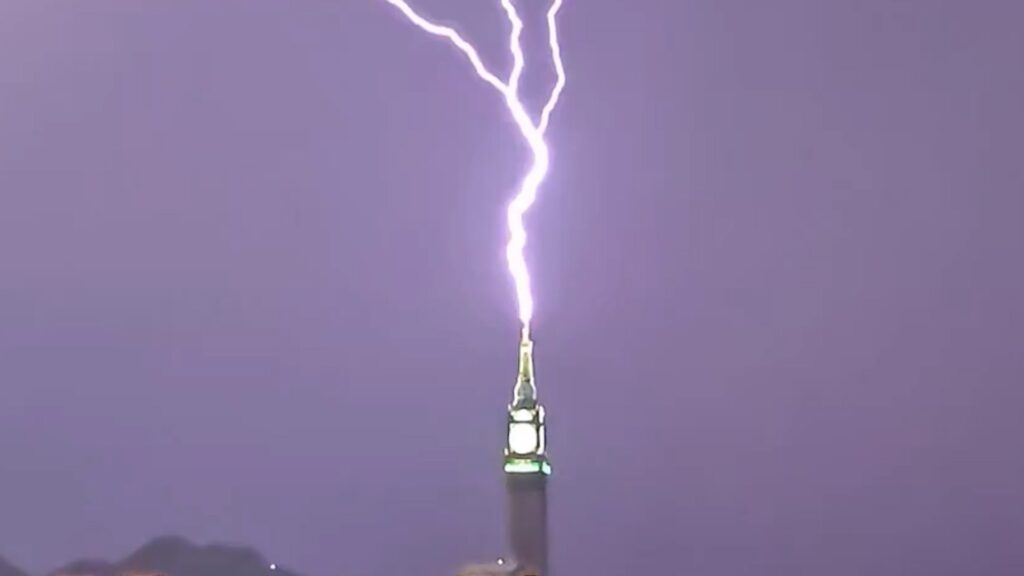
In a dramatic display of nature’s power, a lightning bolt struck the iconic clock tower in Mecca, Saudi Arabia. The clock tower, part of the Abraj Al Bait complex, is one of the tallest and most recognizable structures in the city, prominently overlooking the Masjid al-Haram, Islam’s holiest site.
The lightning strike occurred during a thunderstorm that swept across the region, causing temporary disruptions but fortunately no reported injuries. Emergency services responded promptly to assess any damages and to ensure the safety of pilgrims and visitors in the vicinity.
The clock tower, known for its massive clock faces visible from miles away, has been a symbol of modernity and spiritual significance since its completion. The strike has raised concerns regarding the tower’s lightning protection systems and the impact of extreme weather events on heritage sites.
Officials have assured that inspections are underway to evaluate the structural integrity of the tower and to perform necessary repairs. They emphasized that the safety of worshippers and visitors remains the top priority.
This event highlights the challenges faced by urban infrastructure in adapting to unpredictable natural phenomena, especially in areas with heightened religious and cultural importance. Continuous monitoring and upgrading of protective measures will be crucial to preserve the clock tower from future incidents.
The incident also attracted attention on social media, where many expressed awe at the rare and powerful display of lightning against one of Islam’s most significant landmarks. It serves as a reminder of nature’s unpredictable force and the need for vigilance in protecting key cultural monuments worldwide.
As the city returns to normalcy, authorities are working diligently to ensure that the clock tower continues to stand tall, both as a beacon of faith and a marvel of engineering for generations to come.