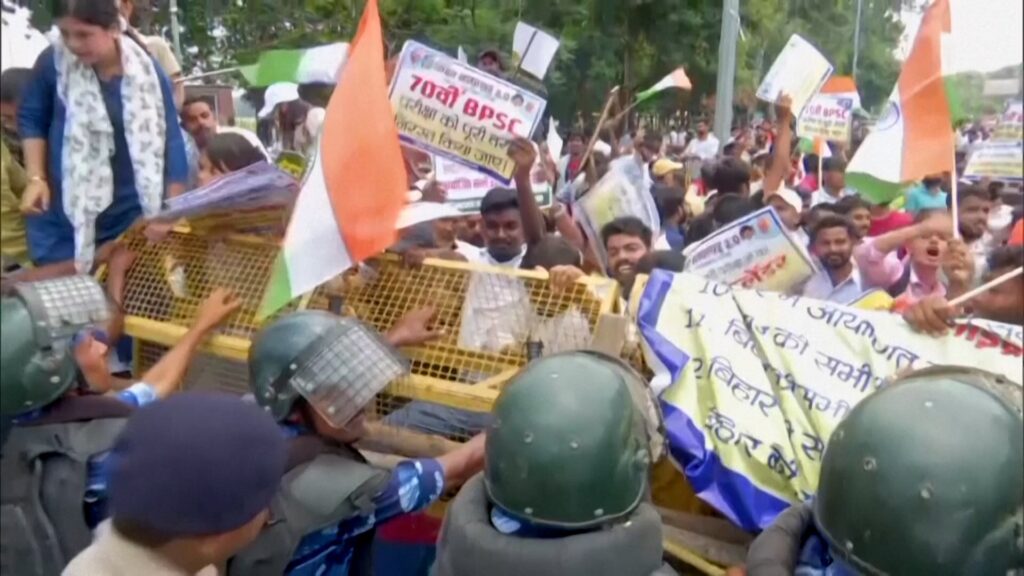
A wave of unrest swept through Bihar, India, as hundreds of students clashed with police on Tuesday. The turmoil erupted over allegations of leaked exam papers, intensifying the already volatile situation concerning the integrity of state examinations. Students accused authorities of failing to prevent the leak of examination papers, which they claim undermines the fairness and credibility of the exams that are crucial for their academic and professional futures.
The protests began in the early hours of Tuesday morning when student groups gathered outside examination centers and administrative offices demanding transparency and action against those responsible for the leaks. The situation escalated quickly as police forces were deployed to control the crowd, leading to clashes that left several injured and arrests were reported.
Bihar’s education department has come under scrutiny as students and parents alike express dismay over the recurring issue of paper leaks, which has plagued the region’s examination system for years. Authorities have promised a thorough investigation and measures to prevent future incidents, including tighter security protocols and technological safeguards.
The incident highlights a broader problem faced by many states in India where exam paper leaks have become a significant challenge, impacting the credibility of educational assessments nationwide. Students have called for reforms and greater accountability from the government and educational institutions.
Human rights organizations have also weighed in, urging law enforcement to exercise restraint and handle the protests with care, ensuring that the rights of peaceful demonstrators are respected. The Bihar government is under increasing pressure to restore confidence in its educational processes and address the grievances of its young population.
As the situation develops, the state government is considering convening a special committee to review the security measures of examination papers and to work with student representatives on ways to enhance transparency. Meanwhile, students continue to mobilize, demanding swift and decisive action to guarantee that their academic achievements are not compromised by corruption and malpractice.
This latest episode of unrest is a sobering reminder of the critical importance of maintaining integrity in educational systems and the consequences when trust is eroded. The outcome of these protests may well influence policy reforms not only in Bihar but across India, as the country grapples with issues of educational fairness and justice.