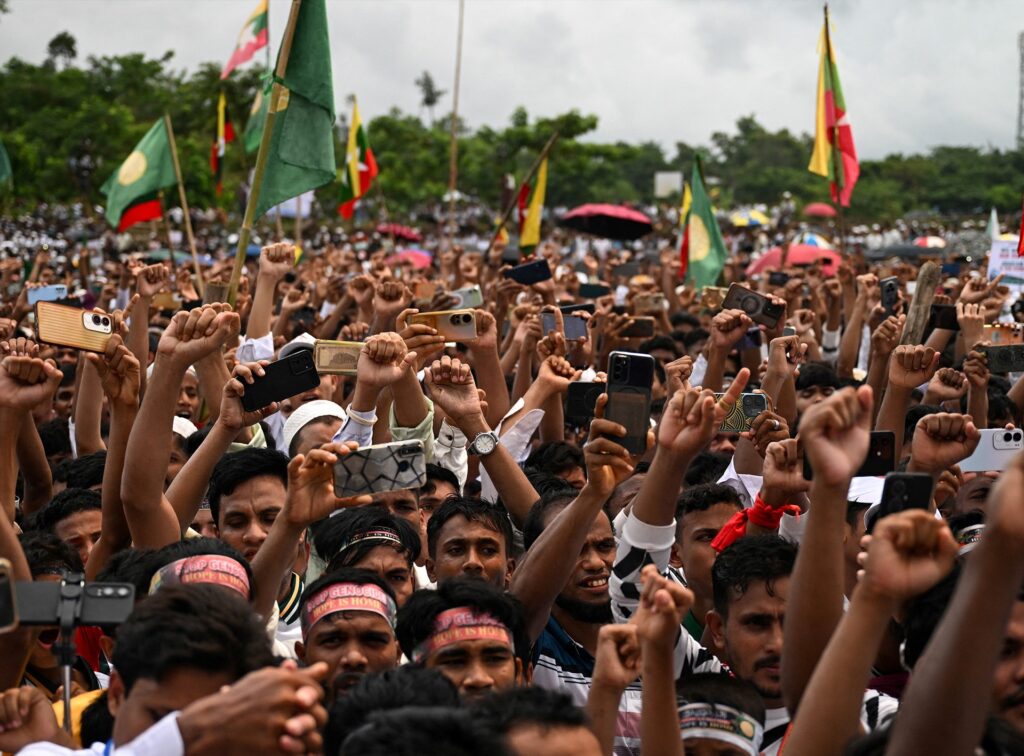
The Rohingya refugee crisis has spanned nine years, marking one of the most prolonged and severe humanitarian emergencies in recent history. Originating from the persecution of the Rohingya Muslim minority in Myanmar’s Rakhine State, the crisis escalated dramatically in August 2017, when a brutal military crackdown triggered a mass exodus of Rohingya people into neighboring Bangladesh and beyond.
The Rohingya have faced decades of systemic discrimination, statelessness, and violence in Myanmar. Denied citizenship under the 1982 Myanmar nationality law, they have been subjected to restrictions on movement, education, and employment. The 2017 military operations led to widespread allegations of ethnic cleansing, with thousands killed, villages burned, and the population forced to flee.
Today, over a million Rohingya refugees remain displaced, mostly housed in overcrowded camps in Bangladesh such as Cox’s Bazar, which is considered the largest refugee settlement in the world. Conditions in these camps remain dire, with limited access to clean water, sanitation, healthcare, and education. The vulnerability of the refugees is compounded by seasonal monsoons and the threat of diseases.
International organizations and humanitarian agencies have been working tirelessly to provide aid, but funding shortfalls and political complexities hamper comprehensive solutions. Efforts toward repatriation have stalled due to concerns about safety, citizenship rights, and ongoing tensions in Myanmar.
The crisis has also led to geopolitical challenges, as countries in the region grapple with balancing humanitarian responsibilities, security concerns, and diplomatic relations with Myanmar. The Rohingya crisis highlights the broader issues of statelessness and ethnic persecution, calling for concerted international action.
Throughout the nine years, there have been calls for justice and accountability, including investigations by the International Criminal Court and the United Nations into alleged crimes against humanity and genocide. Advocates stress the importance of protecting the rights and dignity of the Rohingya people.
In conclusion, the nine-year Rohingya refugee crisis remains a pressing global concern. Without sustainable political solutions, protection of human rights, and increased humanitarian support, the plight of the Rohingya is likely to continue, underscoring the need for a unified international response to this tragic chapter in human history.