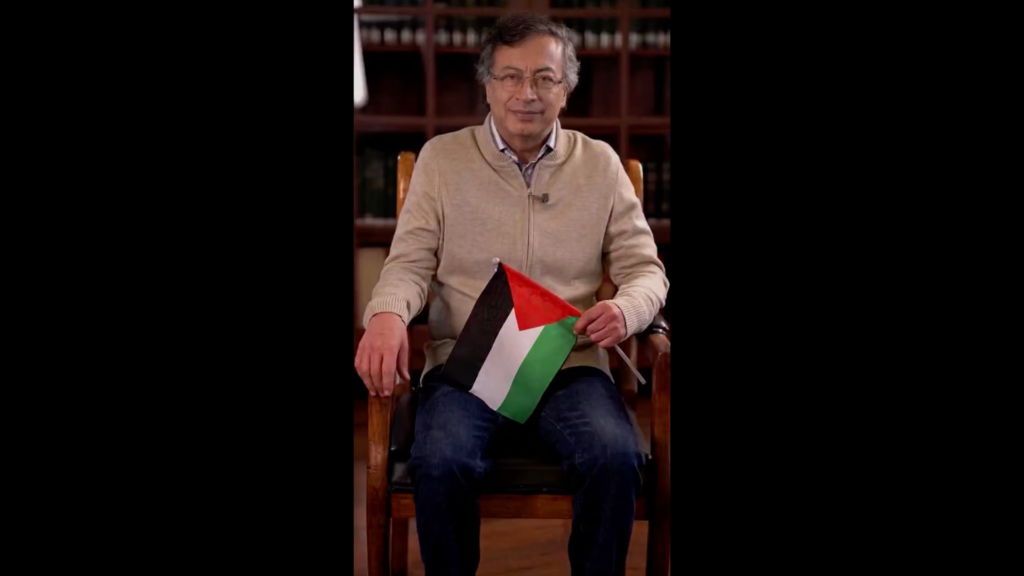
In a bold and highly controversial statement, former Colombian President Gustavo Petro has condemned the recent moves to restore diplomatic relations with Israel. Petro asserts that re-establishing these ties is equivalent to endorsing what he describes as a genocide in Gaza. This statement reflects the former president’s strong stance on the Israeli-Palestinian conflict and criticism of Israel’s policies in Gaza.
Gustavo Petro, known for his progressive and left-wing views, has often voiced his support for Palestinian rights and has been critical of Israel’s military actions in the Gaza Strip. He argues that restoring diplomatic and economic relations with Israel at this juncture sends a message of complicity or approval of Israel’s actions during periods of intense conflict.
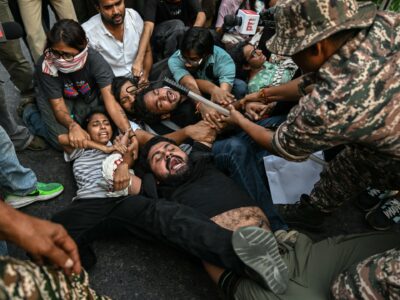
The context of his remarks comes amid heightened tensions and recurring violent clashes between Israel and Palestinian groups in Gaza, which have resulted in significant civilian casualties and destruction. International reactions to the conflict have been deeply polarized, with some countries reaffirming support for Israel’s right to defend itself, while others call for greater attention to humanitarian concerns and the protection of Palestinian civilians.
Petro’s comments have sparked debate both in Colombia and internationally. Supporters of his view see it as a principled stand against what they view as human rights violations and oppression. Critics, however, argue that such statements are overly simplistic and can hinder diplomatic efforts aimed at peace and stability in the region.
The move to restore relations with Israel usually signifies a desire to engage in dialogue, cooperation, and possibly conflict resolution. For many nations, maintaining diplomatic channels is seen as essential to fostering peace and development in the Middle East.
Petro’s framing of the relationship as applauding genocide is a strong indictment that challenges governments and international institutions to reconsider their positions on the Israeli-Palestinian conflict, particularly in light of recent events and the ongoing humanitarian crisis in Gaza.
This incident highlights the complexity and emotional intensity surrounding international politics and the Middle East conflict. It also emphasizes the challenge leaders face in balancing diplomatic relations with ethical considerations and public opinion.
As this debate continues, the international community watches closely, recognizing that actions and rhetoric by influential figures such as Gustavo Petro can greatly impact diplomatic alignments and international responses to one of the world’s most enduring and contentious conflicts.