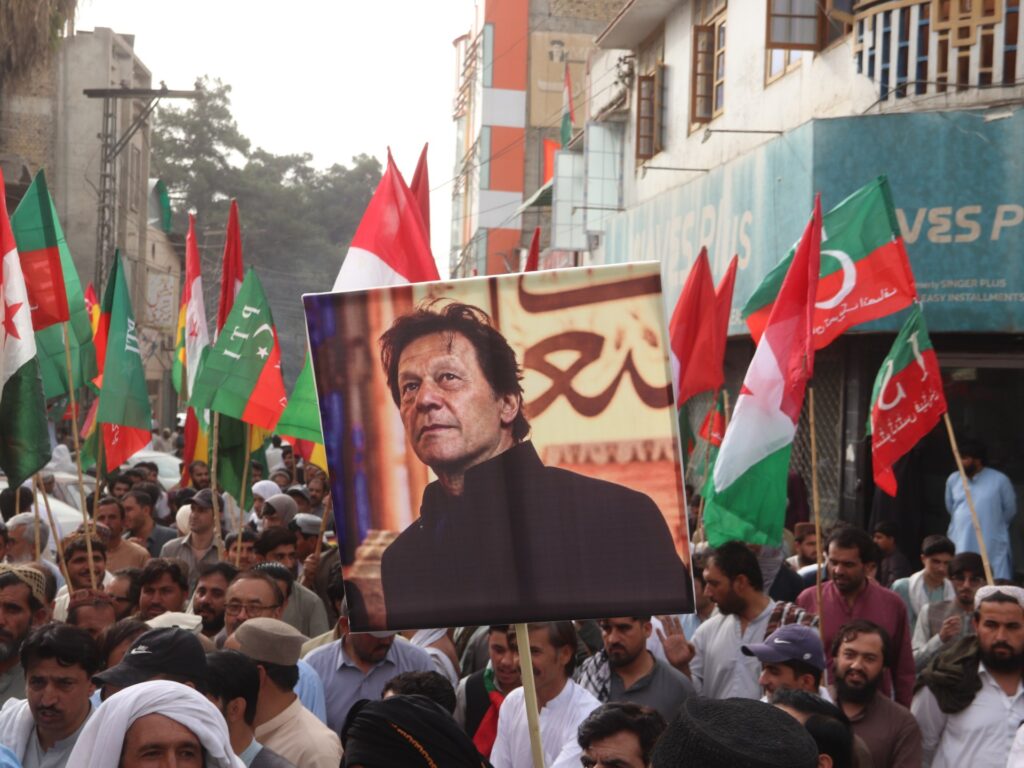
In a significant development in Pakistan’s ongoing political and legal saga, the Pakistan Tehreek-e-Insaf (PTI) party has initiated legal proceedings seeking contempt of court action following the transfer of their leader, former Prime Minister Imran Khan, to a state hospital. This move came after Khan, who is currently incarcerated, was taken to a government hospital for a medical check-up before being returned to jail.
Imran Khan, a prominent political figure and former head of the Pakistani government, was recently imprisoned on charges that have sparked considerable controversy and protests by his supporters. The PTI has vehemently opposed the legal processes against him, asserting that the actions are politically motivated.
The contentious transfer to the hospital was executed by state authorities, who cited the need for a thorough medical examination of the former prime minister. According to official sources, Khan underwent the check-up at a state hospital and was subsequently returned to prison. However, PTI officials have challenged this transfer in court, alleging that it violates terms of his detention and undermines the judiciary’s authority.
The party’s legal team has argued that the hospital move was conducted without prior approval from the judiciary, thereby constituting contempt of court. They claim that such actions damage the integrity of the judicial process and set a dangerous precedent if such unauthorized transfers are allowed.
This legal confrontation highlights the ongoing tension between Pakistan’s judiciary, security apparatus, and political factions. Khan’s supporters have organized protests and rallies demanding his release and have accused the government of using the legal system to stifle opposition.
Political analysts note that this latest episode exacerbates the already volatile environment in Pakistan. It underlines the challenges faced by the judiciary in managing high-profile cases that have significant political implications. The PTI’s insistence on taking contempt action signals their determination to fight what they perceive as an unjust treatment of their leader.
The broader context includes Khan’s arrest, which followed several court rulings linked to corruption allegations and political dissent. His imprisonment has polarized the political landscape, with his party and allies calling for judicial reforms and greater protection of political rights.
Critics of the government argue that the use of alleged legal technicalities to control political opposition undermines democratic principles in Pakistan. Meanwhile, government supporters maintain that rule of law must be upheld and that no individual is above legal scrutiny.
The case is expected to proceed swiftly through Pakistan’s legal system, with the PTI’s contempt petition closely watched by domestic and international observers. The outcome could influence the future conduct of judicial oversight in politically sensitive cases and affect Pakistan’s political stability.
In summary, PTI’s legal action against the hospital transfer of former Prime Minister Imran Khan represents a critical point in Pakistan’s political and judicial discourse. It underscores the fragile balance between law enforcement, political rivalry, and the quest for justice in a country grappling with deep divisions and a complex governance landscape.