The Democratic Republic of Congo (DR Congo) has received more than 16,000 doses of the Ervebo vaccine, marking a critical step in the country’s fight against the recent Ebola outbreak. These doses represent the initial tranche of a total 70,000 units allocated for the capital city, Kinshasa, as health officials scramble to curtail the virus’s spread.
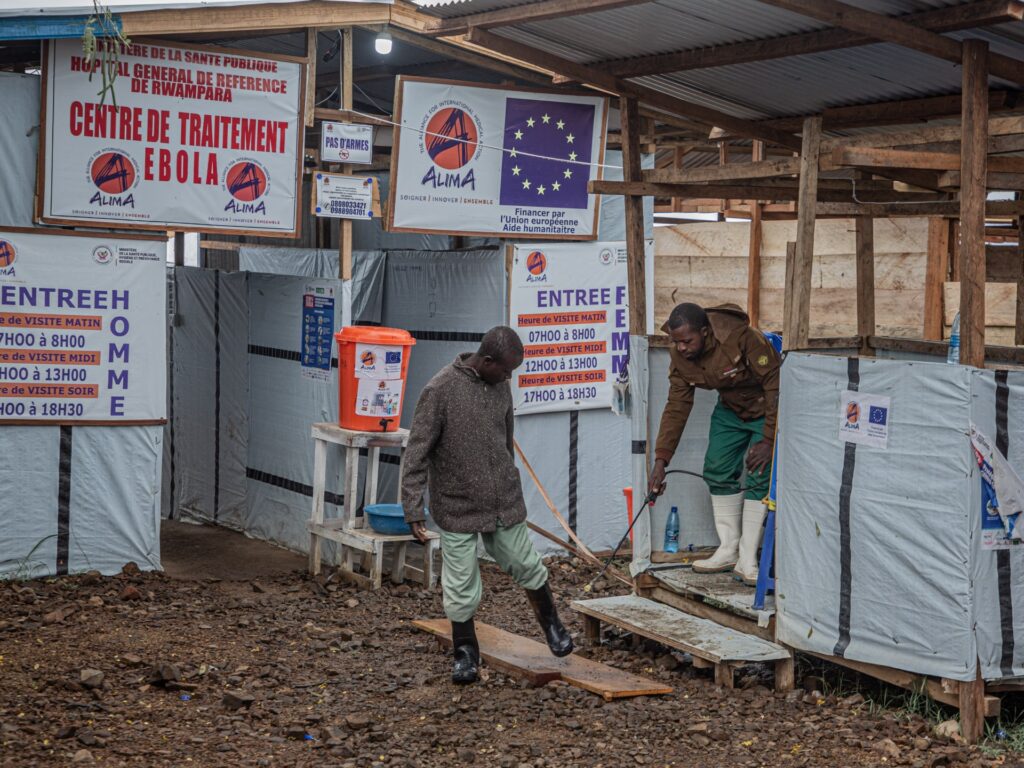
Ebola, a severe and often fatal illness caused by the Ebola virus, has once again surfaced in DR Congo, alarming both national and international health experts. The confirmation of new cases in Kinshasa, one of Africa’s most densely populated urban centers, has intensified fears about a potentially rapid and exponential spread.
The Ervebo vaccine, developed for the prevention of Ebola virus disease, is being deployed in response to this outbreak. This vaccine has previously demonstrated high efficacy in controlling the spread of the virus in affected areas.
Health authorities in DR Congo, supported by the World Health Organization (WHO) and other partners, are prioritizing vaccination campaigns to protect frontline health workers and vulnerable populations. The arrival of these vaccine doses is expected to bolster ongoing efforts to ring-fence the virus through targeted immunization.
Experts warn that the Ebola virus’s exponential spread can overwhelm healthcare systems and present significant challenges to containment efforts, especially in densely populated regions like Kinshasa. The urgency of vaccination and strict adherence to health protocols are underscored as the best means to prevent a full-scale epidemic.
The government’s swift response includes active surveillance, contact tracing, and public awareness programs aimed at reducing transmission. International aid is also being mobilized to support logistics, treatment centers, and research into containment strategies.
Community engagement is essential for the success of these initiatives. Local leaders and health workers are tasked with spreading accurate information to combat misinformation and fears that may hinder the uptake of vaccines.
While the initial batch of 16,000 doses is a significant milestone, the full shipment of 70,000 doses is crucial for a comprehensive vaccination campaign capable of addressing the outbreak in Kinshasa and potentially halting its spread nationwide.
Ebola outbreaks in DR Congo have historically posed significant public health challenges, with previous epidemics leading to high mortality rates and substantial social disruption. The introduction of effective vaccines like Ervebo marks progress in the medical response but requires timely and coordinated action.
In conclusion, the arrival of Ervebo vaccines in DR Congo represents a hopeful turning point in controlling the Ebola outbreak. Nonetheless, experts caution that vigilance, rapid deployment of vaccines, and continued preventive measures remain vital to prevent further escalation and protect vulnerable populations.