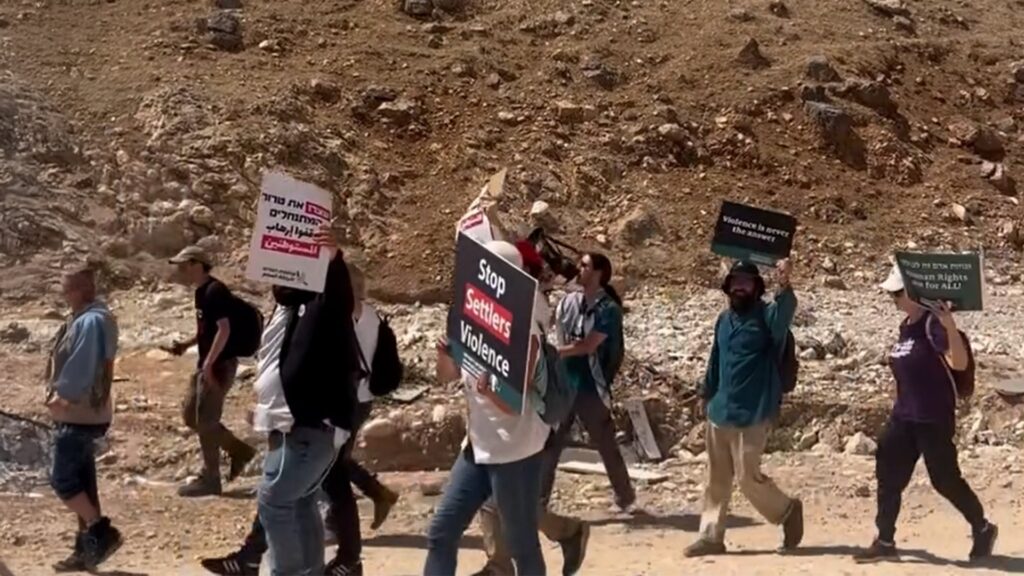
In recent months, a growing number of Jewish activists have taken a stand against the escalating violence perpetrated by Israeli settlers in parts of the Occupied West Bank. These activists, driven by a commitment to human rights and peace, have adopted a strategy of providing a “protective presence” in vulnerable Palestinian communities to deter attacks and promote coexistence.
The phenomenon represents a complex and courageous challenge within Israeli society, where settler violence against Palestinians often goes unchecked. Many of these activists belong to peace organizations and grassroots groups that oppose settlement expansion and advocate for a negotiated resolution to the Israeli-Palestinian conflict.
The protective presence involves physically accompanying Palestinian residents during daily activities such as fetching water, harvesting crops, and traveling between villages. By doing so, activists aim to reduce opportunities for harassment, intimidation, and physical violence by settlers.
Incidents of settler violence in the West Bank have included vandalism of property, destruction of farmland, arson attacks, and physical assaults. These acts not only traumatize Palestinian residents but also threaten the fragile stability of the region, fueling cycles of retaliation and insecurity.
Jewish activists engaged in this protective work often face significant risks themselves, including threats and harassment from settlers, as well as legal and political challenges. Their efforts highlight a divergence within Israeli society, demonstrating that opposition to settler aggression is not limited to Palestinians or the international community but is shared by a segment of Israeli civil society.
This movement has garnered attention from international human rights organizations and foreign governments, which have advocated for stronger protections for Palestinian communities and accountability for settler attacks. However, critics argue that the volunteers’ presence is a temporary measure addressing symptoms rather than the root causes of conflict, such as settlement expansion and occupation.
Despite these criticisms, the Jewish activists remain steadfast in their mission. They emphasize education, dialogue, and nonviolent resistance as essential components of a long-term strategy to achieve peace and justice in the region.
The efforts of these activists underscore the complexity of the Israeli-Palestinian conflict and reflect a broader struggle within Israeli society over the nation’s identity, values, and future direction. Their presence in the Occupied West Bank serves as a beacon of solidarity with Palestinian residents and a call to end violence and promote mutual respect.
As tensions persist, the role of Jewish activists in protecting Palestinian communities represents a critical, though often overlooked, dimension of the ongoing conflict. Their work challenges narratives of division and demonstrates the powerful impact of grassroots activism in confronting injustice and fostering hope amid one of the world’s most intractable conflicts.