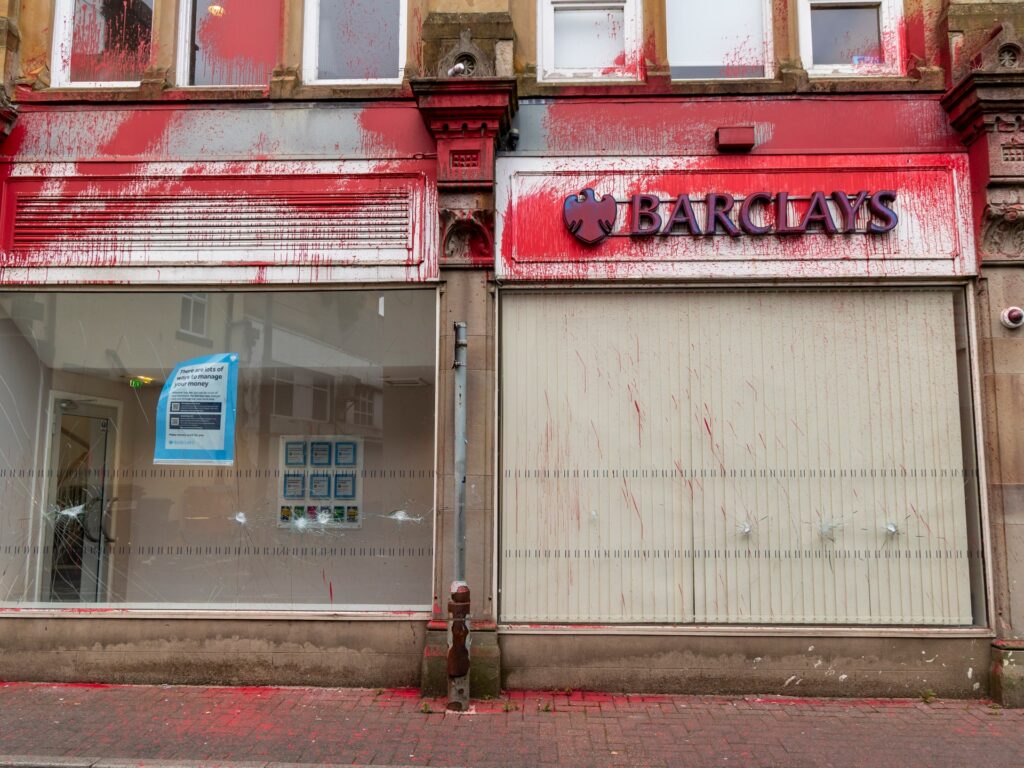
In a development stirring significant concern among human rights advocates and legal experts, five Palestine activists in the United Kingdom may be sentenced under terrorism laws for vandalising a Barclays bank. This unusual legal move has sparked widespread debate about the implications for civil liberties and protest rights.
The activists, who are part of the Palestine solidarity movement in the UK, stand accused of defacing a Barclays branch, an act they claim was intended to protest the bank’s financial dealings connected with Israeli settlements. Barclays has faced criticism and protests over its alleged funding of projects in occupied territories, which many activists argue contribute to human rights violations.
What makes this case particularly noteworthy is the possibility that the activists could face charges under the UK’s terrorism legislation. Typically, vandalism cases are handled through criminal law, but the prosecution’s decision to pursue terrorism sentencing has raised eyebrows.
Legal experts describe the situation as “very unusual.” Terrorism laws generally cover acts intended to intimidate the public or coerce governments through violence or threats. Vandalism, while illegal and punishable, does not commonly qualify as terrorism unless connected to broader violent or terroristic objectives.
The court is now tasked with determining whether the actions of these activists meet the threshold for terrorism classification. This ruling could set a significant precedent for how protest activities are treated in the future, particularly those involving politically sensitive issues such as Palestine.
Activist groups warn that classifying such protests as terrorism could have a chilling effect on free speech and the right to peaceful assembly. They argue that criminalising activism in this manner undermines democratic values and stifles legitimate dissent.
On the other hand, supporters of the terrorism charges contend that the activists’ conduct goes beyond mere protest, alleging it intends to intimidate financial institutions and disrupt economic stability.
This case unfolds amid broader global debates around the balance between national security and civil liberties. Governments worldwide have grappled with defining terrorism and calibrating responses to ensure safety without infringing on human rights.
Barclays has declined to comment directly on the court proceedings but maintains that it upholds ethical business practices and complies with all regulations.
The court’s forthcoming ruling will be closely watched by legal analysts, human rights organisations, and activist communities internationally. It will likely influence both legal interpretations of terrorism and the strategies of political advocacy groups.
In summary, this case highlights the ongoing tensions between security laws and the protection of free expression, illustrating the complex environment activists navigate when confronting powerful financial and political interests.