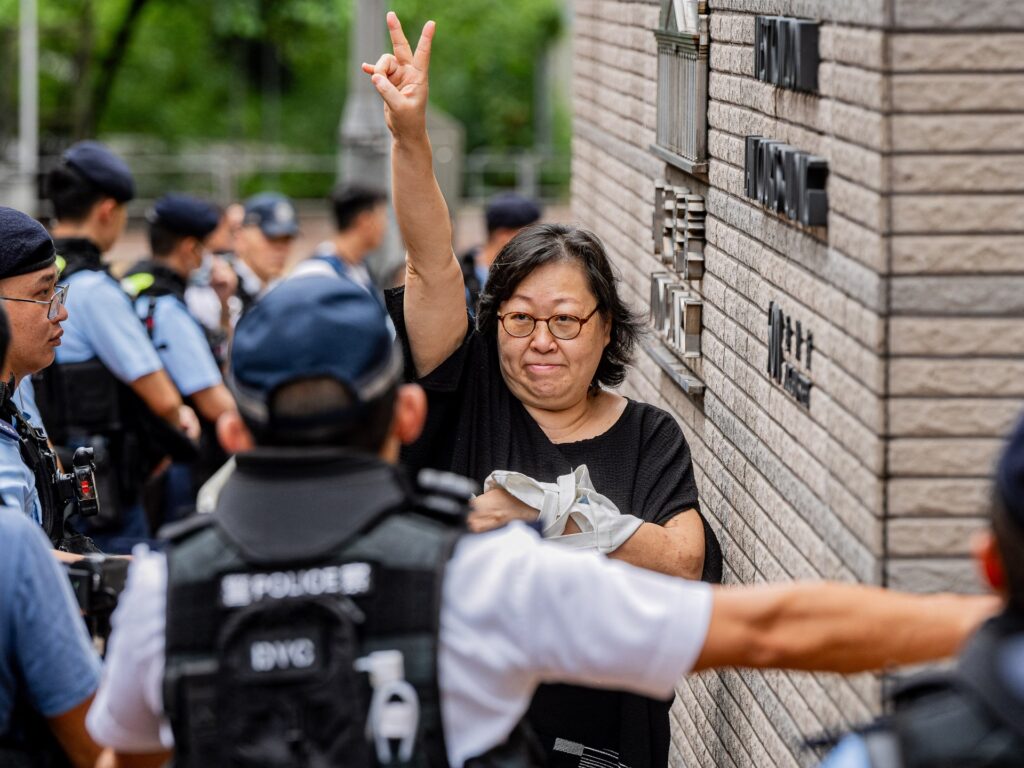
In a significant and controversial development, two Hong Kong activists associated with Tiananmen Square commemorations have been found guilty on national security charges. These charges relate to activities deemed threatening under Hong Kong’s stringent national security law, which was imposed in 2020. The activist group involved has voiced strong criticisms, asserting that the decision by the Hong Kong judiciary was predetermined, labeling the judicial process as ‘twisted’ and unfair.
The activists, who had been involved in efforts to remember the 1989 Tiananmen Square protests and massacre, were accused of acts that the authorities claimed undermined state security. Their conviction marks another instance of the increasing clampdown on political dissent and freedom of expression in Hong Kong amidst heightened fears of erosion of the city’s autonomy and freedoms.
Since the introduction of the national security law, implemented by Beijing, numerous pro-democracy advocates and activists have been arrested, charged, and convicted under broad and often criticized interpretations of the law. This particular case follows a pattern where activists who participate in or organize memorials and public gatherings commemorating events deemed sensitive by the Chinese government face legal repercussions.
The activist group representing the convicted pair released a statement condemning the verdict. They argued that the Hong Kong judicial system has long been compromised and is being used as an arm of political repression rather than upholding justice and the rule of law. The group also stressed that the convictions were not just a blow to the individuals involved, but a warning shot to all who seek to challenge the current political order in the city.
Human rights organizations and international observers have repeatedly raised concerns about the deteriorating human rights situation in Hong Kong, particularly with respect to freedoms of speech, assembly, and the press. The tightening grip on activism and dissent has led to widespread condemnation from western countries and various human rights watchdogs.
The Hong Kong government maintains that the national security law is necessary to restore stability and order, prevent chaos, and protect the city’s prosperity. However, critics argue that the law is used to silence opposition voices and curb the democratic aspirations of Hong Kongers.
This latest conviction adds to a growing list of cases where the legal system is seen to be less independent since the implementation of the national security law. The court’s decision has significant implications, potentially chilling future activism and public expression in the semi-autonomous city.
As Hong Kong continues to grapple with complex political tensions, the international community watches closely. The verdict serves as a potent reminder of the challenges facing civil liberties and the fragile state of political freedoms in the city once known for its vibrant democracy and open society.