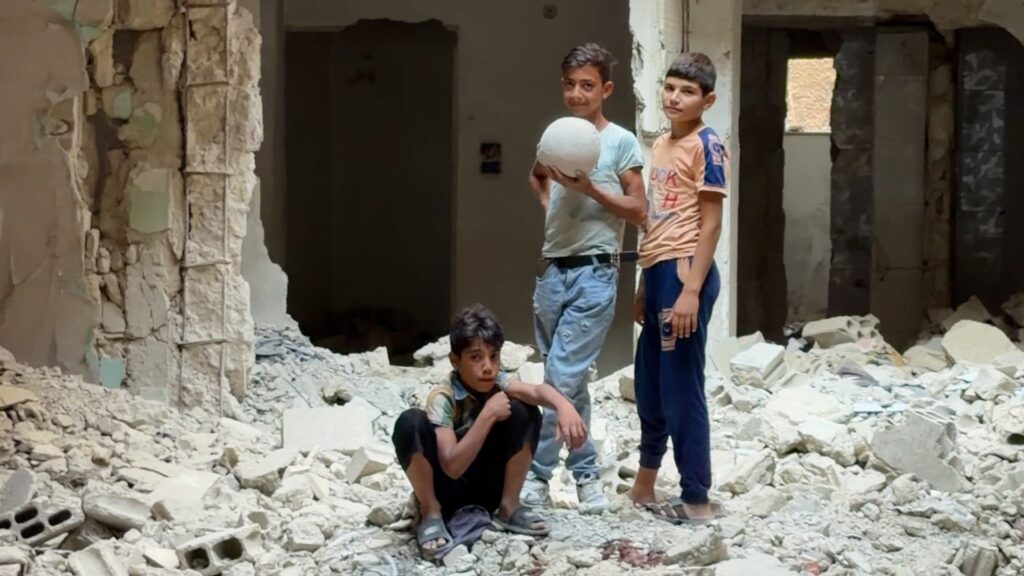
After more than a decade of devastating conflict, Syria faces an immense challenge: rebuilding the homes and lives of families torn apart by war. The destruction of residential neighborhoods across major cities and towns has left millions displaced, homeless, or living in precarious conditions. Rebuilding family homes is not only a matter of construction but also a complex process involving security, economic recovery, and social reconciliation.
Hannah Raslan, reporting from Syria for Al Jazeera, explores what rebuilding looks like for Syrian families trying to reclaim their homes and their futures. Through her on-the-ground reporting, she reveals the human stories behind the rubble and the multifaceted costs of reconstruction.
Syria’s war has reduced entire neighborhoods to rubble in cities like Aleppo, Homs, and many others. Families who once lived in tight-knit communities face the daunting reality of returning to destroyed homes or starting from scratch in new locations. Rebuilding involves significant financial expenditure, much of which is out of reach for many Syrians living in poverty or displaced abroad.
The cost of reconstruction extends beyond immediate physical repairs. Many families face challenges related to ownership documentation, which was often lost or destroyed during the conflict. Without legal proof of ownership, residents find it difficult to access government reconstruction programs or secure loans. This issue adds a layer of uncertainty and vulnerability to the rebuilding process.
Local construction experts and international aid organizations stress the importance of coordinated efforts to ensure rebuilding is sustainable. This includes not only materials and labor but also infrastructure rehabilitation such as electricity, water, and sanitation systems, which are vital to restoring normal life.
Security concerns continue to hinder reconstruction in many areas, where ongoing clashes or unexploded ordnance pose significant risks. Families are hesitant to return to areas where safety is not guaranteed, prolonging displacement and complicating efforts to restart community life.
Despite these challenges, stories of resilience emerge. Families are pooling resources, relying on extended support networks, and leveraging informal markets to rebuild incrementally. These efforts highlight the determination of Syrians to restore their homes and reclaim stability even in the face of immense adversity.
The international community plays a critical role. Funding and expertise needed for large-scale reconstruction are often tied to political considerations, complicating aid delivery. Humanitarian agencies advocate for depoliticized support to help families meet their basic housing needs.
In summary, rebuilding family homes in war-ravaged Syria is a multifaceted process that involves overcoming financial, legal, security, and social obstacles. It requires coordinated action from local communities, government bodies, and international partners to restore not just buildings but the fabric of Syrian society. Hannah Raslan’s reporting sheds light on the human cost and hope embedded in the long road to recovery for Syria’s families.