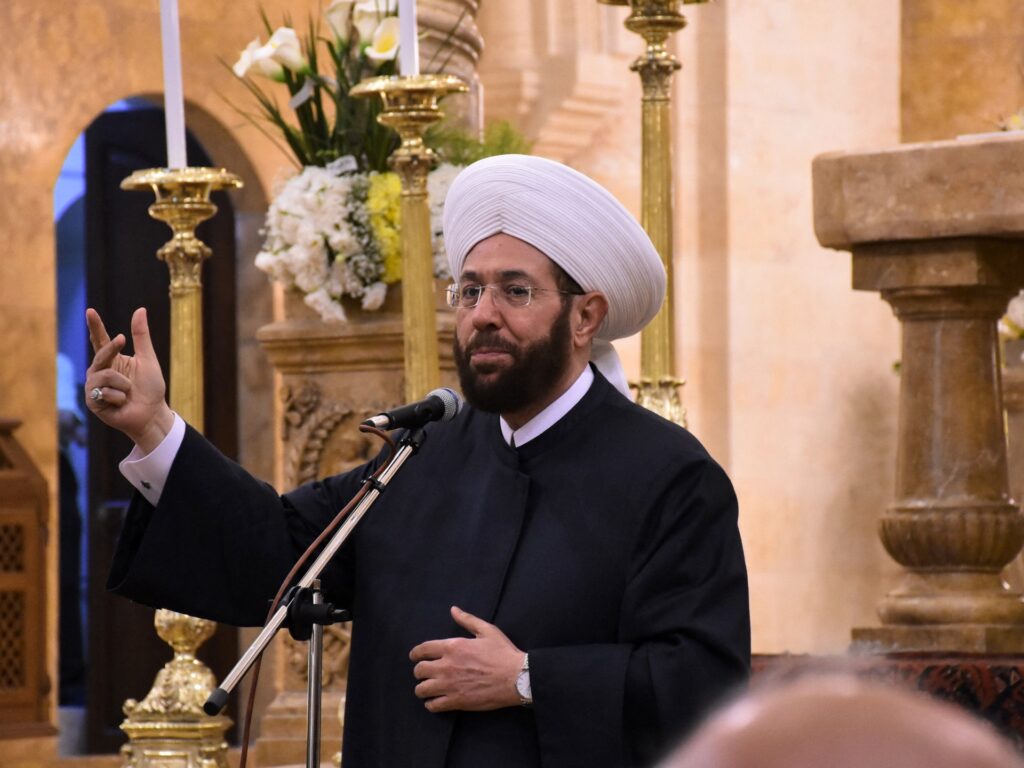
Ahmad Hassoun, often known by the epithet ‘barrel bomb mufti,’ is a prominent religious figure closely aligned with the inner circle of Syrian President Bashar al-Assad’s regime. His nickname stems from his controversial and fervent support for the Syrian government during the country’s brutal civil war, particularly endorsing the military’s use of barrel bombs — improvised explosive devices dropped from helicopters that have caused significant civilian casualties.
Hassoun has served as the Grand Mufti of Syria, the highest Sunni Muslim religious authority in the country. His role is pivotal in shaping religious discourse and influencing public opinion within the Syrian Sunni community. Despite widespread opposition to Assad’s regime among many Sunnis, Hassoun has remained a staunch supporter, providing religious justification for the government’s actions and aligning religious legitimacy with Assad’s rule.
His relationship with Assad dates back to the early days of the conflict, when Hassoun publicly defended the government’s crackdown on dissenters, portraying the rebellion as extremist and a threat to national unity. This stance has made him a controversial figure both inside Syria and internationally, where critics accuse him of complicity in the regime’s war crimes.
Recently, Ahmad Hassoun has faced legal challenges and is now subject to a court verdict in Damascus. Although details about the charges or accusations are scarce, this development highlights potential fractures within the regime’s ranks or an attempt by the government to manage public perceptions amid ongoing turmoil. His trial marks a significant point in the intersection of religion and politics in Syria, where figures like Hassoun play a critical role in legitimizing power structures.
In summary, Ahmad Hassoun remains one of the most influential yet divisive religious leaders in Syria. His close ties to the Assad regime and endorsement of harsh military tactics like barrel bombings have earned him both loyalty from supporters and sharp condemnation from opponents. As his legal situation unfolds, it will likely have implications for the political and religious landscape of Syria in the years to come.