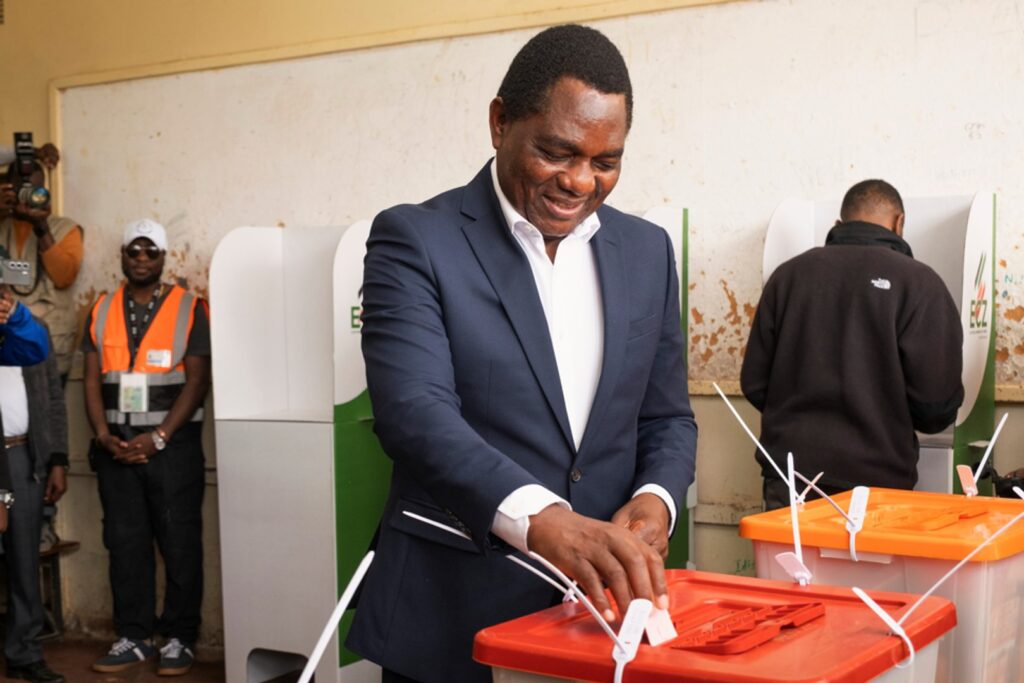
In a decisive victory, Hakainde Hichilema has won a second term as the President of Zambia, the copper-rich African nation. Garnering approximately 60% of the vote, Hichilema’s win reflects widespread support despite earlier tensions during the electoral process. The election faced disruptions when attacks on election officials briefly halted the vote count, adding an element of uncertainty. However, the situation stabilized and the official results confirmed Hichilema’s commanding lead.
Zambia, known for its significant copper reserves, plays an important role in global mineral markets. Hichilema’s administration has been closely watched for its policies on economic management and mining reforms, critical to the nation’s prosperity. His re-election suggests that a majority of Zambians endorse his leadership and are hopeful for continued economic development amid challenges.
Hichilema first came to power promising to tackle corruption, revitalize the economy, and improve governance. During his first term, efforts were made to address fiscal deficits and attract investment, particularly in the mining sector. The renewed mandate now enables him to continue these initiatives with full political backing.
Election observers noted the importance of a peaceful electoral environment to sustain democratic gains in Zambia. Despite the brief disruptions, the overall conduct of the election was seen as a positive step towards strengthening democracy in the region. The peaceful acceptance of the outcome will be crucial for political stability and social cohesion.
The opposition’s response and the political dialogue following the election results will be closely monitored, as Zambia navigates the post-election period. Analysts highlight that stable governance is vital for investor confidence and the country’s economic trajectory.
President Hichilema’s second term is expected to focus on consolidating economic reforms, enhancing infrastructure, and improving social services. The administration will also likely address challenges related to the global economy and commodity price fluctuations impacting Zambia’s copper-dependent economy.
As Zambia moves forward with renewed leadership, the international community has expressed support for the electoral process and hopes for continued progress. Hichilema’s victory sends a strong message about the resilience of democratic institutions in Zambia and the citizens’ desire for accountable governance.
This election outcome marks a significant chapter in Zambia’s political landscape, reinforcing Hichilema’s position as a pivotal leader amid the complexities of governing a resource-rich but developing nation. The coming years will be critical in translating electoral promises into tangible improvements for the Zambian people.