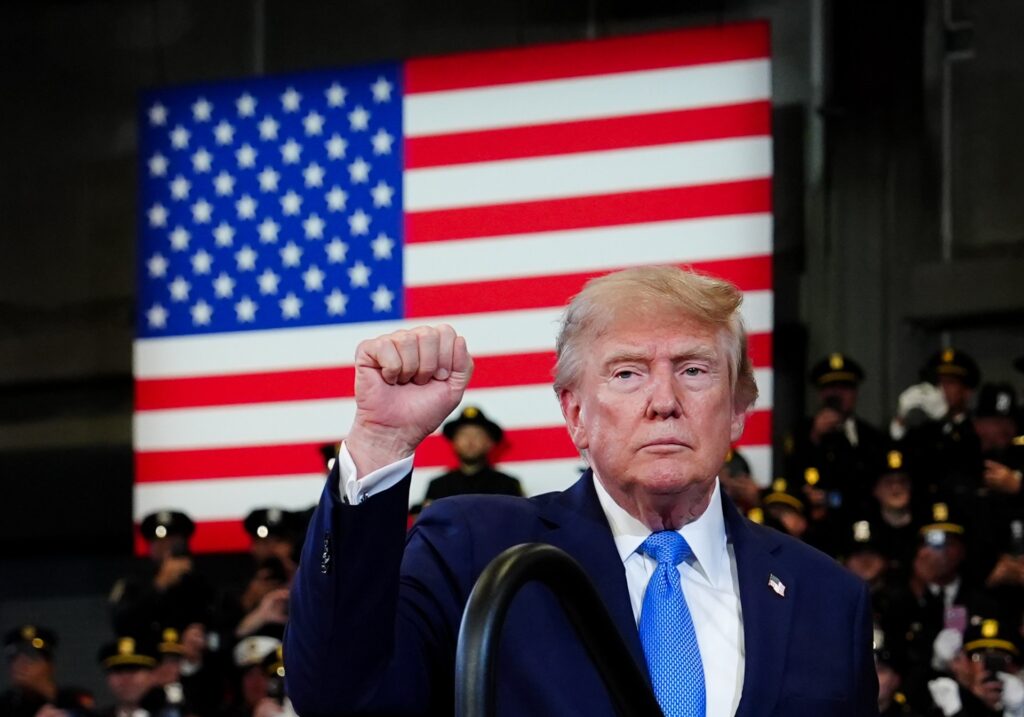
In a significant development signaling shifting dynamics in Middle Eastern security, former U.S. President Donald Trump has praised a newly forged security pact among three prominent US allies in the region. The pact, branded as the Mecca Security Pact, reflects an emergent self-reliant defense posture by these nations and raises important questions about the traditional US security umbrella in the Middle East.
For decades, the United States has been the cornerstone of Middle Eastern security, providing military support, intelligence sharing, and strategic defense commitments to a variety of partners. However, Trump’s recent calls for regional allies to enhance their own defense capabilities have found tangible expression in this pact, representing a strategic pivot.
The three countries involved—Saudi Arabia, the United Arab Emirates, and Bahrain—have long relied on the US military presence to counter threats, including terrorism and regional instability. By forming their own security alliance, they aim to jointly address mutual risks and reduce dependence on American military backing.
Trump hailed the agreement as a “positive step” during a recent speech, emphasizing that regional cooperation could “build stronger, more resilient defense frameworks without overreliance on US resources.” His administration had previously pushed for increased burden-sharing among allies to enable a leaner American military footprint.
The Mecca Security Pact includes commitments for intelligence sharing, joint training exercises, and coordinated responses to emergent threats such as missile attacks and extremist violence. It also symbolizes a broader trend of Middle East countries seeking greater autonomy in their national security affairs in the face of shifting US foreign policy priorities.
Experts suggest the pact may serve both as a complement and a potential alternative to the US security umbrella. While the US remains a key player, the ability of regional allies to act collectively could reduce America’s direct involvement in every conflict.
At the same time, some analysts caution that the pact’s success will depend on sustained political cohesion among its members and their capacity to handle complex security challenges independently. The volatile regional environment, with ongoing conflicts in Yemen and tensions with Iran, raises concerns about whether these countries can manage without robust US support.
The Mecca Security Pact represents a critical juncture in Middle Eastern geopolitics. It underscores an evolving security architecture where regional actors aspire to take charge of their destiny while still valuing strategic partnerships. Trump’s endorsement reflects a broader US discourse advocating for regional self-reliance and recalibrated defense commitments.
As this pact develops, the international community will be watching closely to see if it can effectively safeguard stability in one of the world’s most volatile regions. The outcome could redefine the nature of Middle Eastern security and the enduring role of the United States in global affairs.