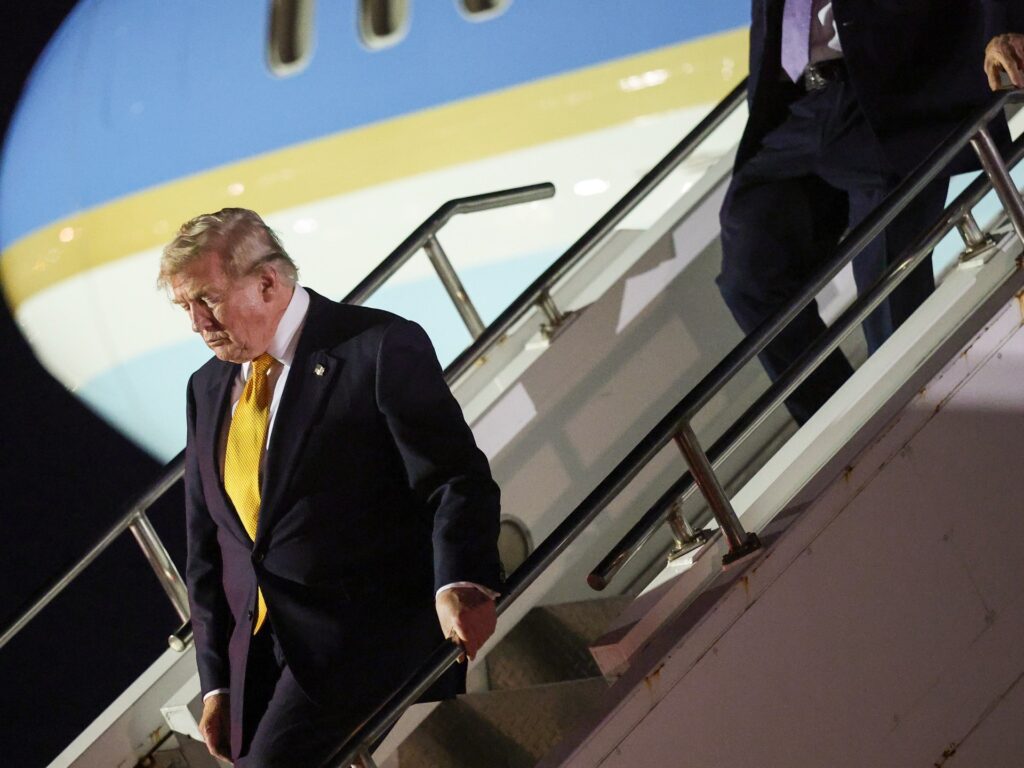
Former President Donald Trump has revealed that during a secretive flight change, the decoy plane accompanying him faced a greater risk than initially disclosed. This revelation came in the context of a carefully orchestrated security measure where multiple aircraft are used to protect the president from potential threats, including missile attacks or targeted strikes.
According to Trump’s statement, the decoy plane—which is used to confuse and avoid detection by potential adversaries—was put at an elevated risk during this change in flight plans. Despite this, Air Force One, the presidential aircraft, continued to transport journalists and top aides. This decision meant that these individuals remained exposed to the possibility of an Iranian strike or other hostile actions.
This incident highlights the ongoing security challenges faced during presidential travel, especially in regions with heightened geopolitical tensions. The use of decoy aircraft is a common tactic intended to protect the president by making it unclear which plane he is actually aboard. However, Trump’s comments suggest that even with these precautions, the risk to supporting personnel and associated planes can still be significantly high.
The secret flight adjustment illustrates the delicate balance that security teams must maintain: ensuring the president’s safety while protecting all those accompanying him. In this case, the arrangements drew public attention after Trump remarked on the increased vulnerability of his decoy plane during the operation.
Experts in presidential security note that such measures are standard protocol during times of increased threat levels. The complexity of these operations is kept under strict confidentiality to prevent adversaries from exploiting any potential weaknesses. Nonetheless, Trump’s disclosure provides a rare glimpse into the heightened stakes of presidential travel security.
The presence of journalists on Air Force One during such sensitive maneuvers underscores the challenge of balancing transparency and operational security. Journalists play a crucial role in providing coverage of the president’s activities, but their safety must also be a priority.
While specifics about the nature of the secret flight change or the perceived Iranian threats remain undisclosed, the situation underscores ongoing geopolitical tensions in the Middle East and the global implications for U.S. national security.
Going forward, the White House and the U.S. military are likely to review and possibly revise their security protocols to minimize risk to all personnel involved. Trump’s admission raises important questions about how these security operations are communicated to the public and those directly affected, such as the press and top aides.
In conclusion, Trump’s comments about the decoy plane facing greater risk during a secretive flight change shed light on the complex and risky nature of presidential security arrangements. It calls attention to the sacrifices and risks endured by those tasked with protecting the highest office in the United States during times of heightened international tension.