In a significant development concerning regional security and international maritime navigation, Iran has reiterated its firm position on the conditions surrounding the reopening of the Strait of Hormuz. This strategic waterway, critical for global oil shipments, remains a focal point of geopolitical tensions.
Iran’s top security official recently emphasized that the Strait of Hormuz will not reopen unless the United States complies fully with Tehran’s stipulated conditions. This declaration comes amidst ongoing diplomatic efforts to ease tensions in the Persian Gulf and surrounding regions.
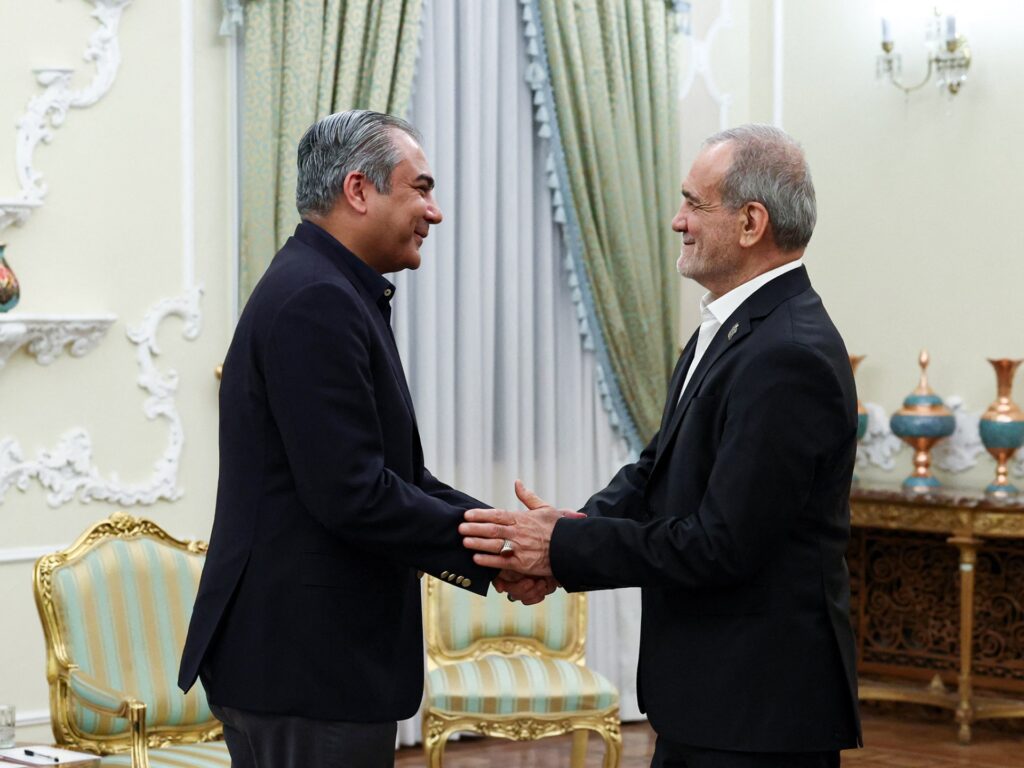
The visit of Pakistan’s Federal Minister for Religious Affairs and Interfaith Harmony, Noor-ul-Haq Qadri, commonly known as Naqvi, to Tehran marks an important step in diplomatic engagements. Pakistan has been actively involved in mediating discussions between Iran and other regional and international stakeholders to promote stability and security in the Gulf region.
During Naqvi’s visit, discussions were centered around enhancing bilateral relations, promoting peace, and addressing the contentious issue of the Strait of Hormuz. Pakistan’s role as a mediator is underscored by its geographic proximity and strategic interests in the region.
The Strait of Hormuz is a narrow passage linking the Persian Gulf with the Gulf of Oman and the Arabian Sea. Approximately one-fifth of the world’s petroleum passes through this chokepoint, making it vital for energy security worldwide. Any disruption here can have far-reaching effects on global oil prices and economic stability.
Iran’s conditions for reopening the strait include the removal of economic sanctions, cessation of military threats, and respect for Iran’s sovereignty and regional interests. Tehran argues that these conditions are critical to ensuring security and unimpeded navigation.
The United States, which maintains a significant naval presence in the region, has condemned Iran’s move and insists on freedom of navigation operations through the strait without restrictions. Washington sees Iran’s position as a challenge to international maritime law and the stability of global energy markets.
Amid these developments, regional nations and international organizations have expressed concern over potential escalation. The United Nations and several Gulf Cooperation Council (GCC) countries have called for dialogue and restraint to prevent conflict.
Pakistan’s diplomatic efforts have been appreciated by many as a constructive initiative towards peace. Islamabad advocates for peaceful resolution through dialogue and adherence to international norms.
Experts suggest that while Iran’s firm stance might be interpreted as a tactical move, it also reflects the broader geopolitical dynamics, including the Iran-U.S. tensions, sanctions, and regional power struggles.
The reopening of the Strait of Hormuz is crucial not only for Iran but for global economic stability. It remains to be seen how diplomatic negotiations will evolve and whether the involved parties can reach a mutually acceptable agreement.
In conclusion, Iran’s unwavering stance on the Strait of Hormuz conditions amid Pakistan’s diplomatic visits highlights the complexity of regional security issues. Continued dialogue, diplomatic engagement, and international cooperation are essential to ensuring the safe and open passage of this vital maritime route.