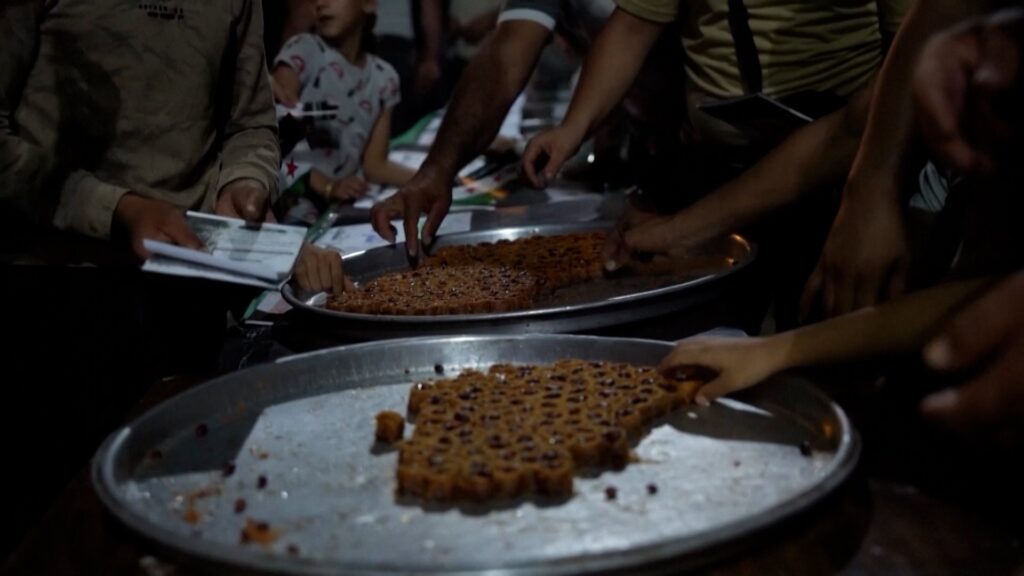
In a significant development in the ongoing Syrian conflict, residents in the Syrian revolution stronghold of Idlib gathered to celebrate after a court sentenced ousted President Bashar al-Assad to death. The sentence marks a symbolic victory for opposition forces and those who have long resisted Assad’s regime.
Idlib, known as a bastion for anti-Assad sentiment and the last major stronghold of opposition forces, witnessed jubilant scenes as news spread about the court’s decision. Crowds took to the streets waving flags and chanting slogans against the Assad regime, expressing hope that this ruling would lead to justice and potentially pave the way for political change in Syria.
The death sentence, handed down by a legal body aligned with opposition factions, serves as a stark condemnation of Assad’s years in power, during which he has been accused of widespread human rights abuses, including the brutal suppression of protests, use of chemical weapons, and war crimes amid the country’s devastating civil war.
For years, Syrians in Idlib and elsewhere have suffered from violence, displacement, and economic hardship under Assad’s rule. The celebration reflects the deep-seated resentment and demand for accountability by those who endured the harsh realities of life in a war-torn nation.
International reactions to the sentence have been mixed, with some calling it a form of symbolic justice that underscores the regime’s alleged atrocities, while others caution that such judicial decisions might complicate ongoing peace efforts. The sentence is unlikely to have practical enforcement given Assad’s control over much of Syria and support from allied foreign powers.
Nevertheless, the symbolic nature of the ruling has energized opposition supporters and underscores the persistent divisions within Syria. It serves as a reminder of the unresolved issues fueling one of the 21st century’s most protracted and complex conflicts.
As the Syrian conflict continues without a clear resolution, the death sentence against Assad highlights the enduring grievances and the formidable challenges facing any prospects for peace and national reconciliation in the country. For many in Idlib, it is a moment of emotional catharsis and a potent expression of defiance against authoritarian rule.