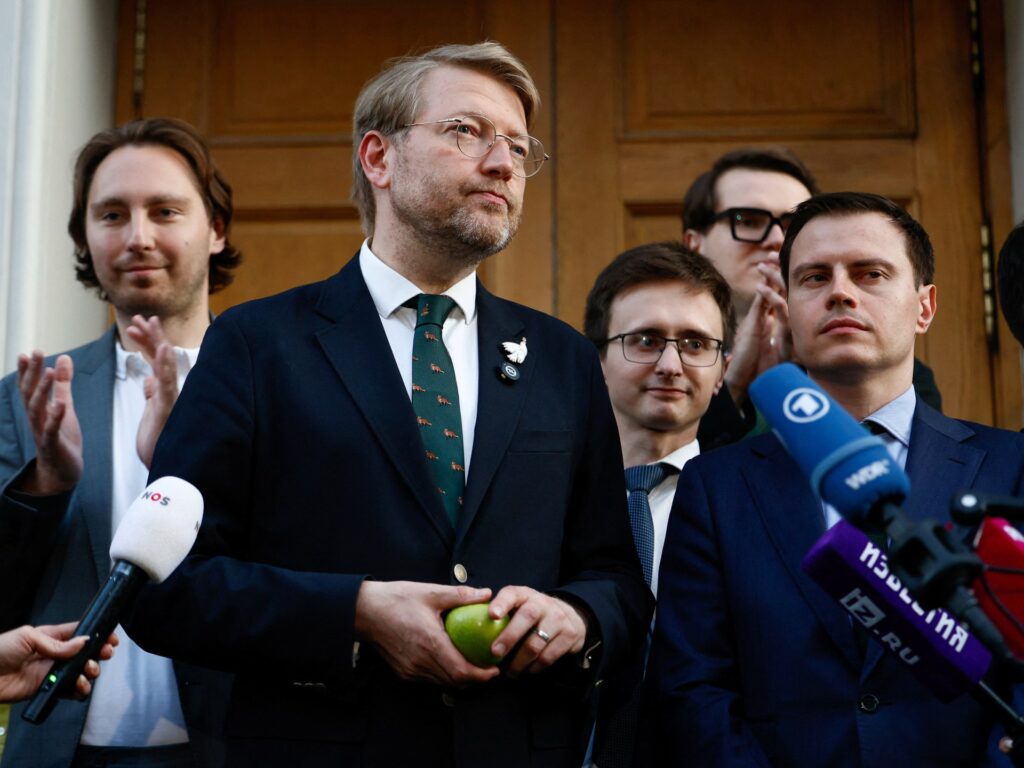
In a significant political move raising concerns about electoral fairness in Russia, the only party openly opposing the war in Ukraine, Yabloko, has been barred from participating in the upcoming parliamentary vote. This decision follows accusations from the pro-Kremlin nationalist party Rodina, which alleged that Yabloko received undeclared campaign support.
Yabloko, known for its opposition stance to the war and its criticism of Kremlin policies, has faced numerous challenges over the years in a political environment tightly controlled by the authorities. The latest exclusion from the parliamentary vote effectively removes the last major institutional voice against the war from the electoral process.
Rodina’s accusations, which accuse Yabloko of violating campaign finance laws by accepting undeclared support, were cited by electoral authorities as the reason for barring Yabloko from the ballot. However, critics argue that these charges are politically motivated and are part of a broader crackdown on dissent within Russia.
The exclusion of Yabloko has sparked condemnation from international observers and human rights groups, who see this as a step back for democratic processes in Russia. Analysts suggest that barring the only party opposing the war signals the Kremlin’s determination to suppress any form of political opposition that might challenge its narrative on the conflict in Ukraine.
This development comes amid ongoing tensions related to the war in Ukraine, with Russia facing international sanctions and increasing isolation. The domestic political climate within Russia appears increasingly restrictive, with fewer opportunities for opposition voices to participate in governance or public debate.
Yabloko had hoped to use the parliamentary platform to advocate for peace and democratic reforms, but their exclusion leaves the political landscape dominated by pro-Kremlin parties and nationalist groups like Rodina. The ban raises important questions about the state of electoral integrity and political pluralism in Russia today.
With the parliamentary vote approaching, the barring of the Yabloko party underscores the difficulties opposition groups face in Russia under the current administration. Observers will be watching closely to see how this decision impacts voter turnout and the legitimacy of the forthcoming elections.
In summary, Russia’s decision to bar Yabloko from the parliamentary vote symbolizes a tightening grip on political dissent and reflects the Kremlin’s broader strategy of controlling the domestic narrative about the war in Ukraine. The accusations from Rodina and subsequent exclusion of Yabloko highlight the challenges facing opposition parties in a political environment where supporting alternative views is increasingly risky.
As Russia continues its military campaign in Ukraine, the suppression of opposition voices within its own political system signals a consolidation of power that leaves little room for debate, dissent, or democratic engagement.