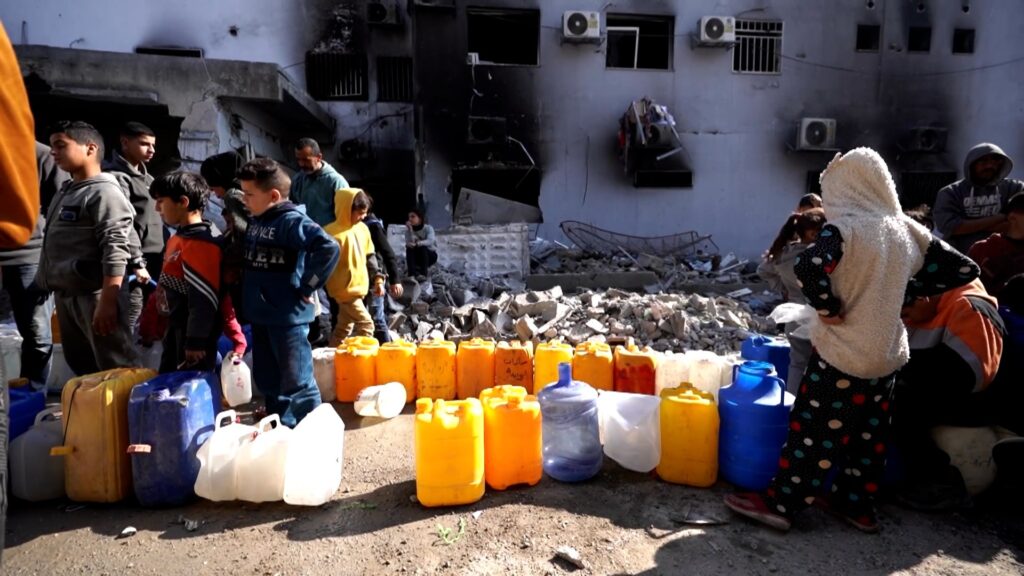
The ongoing conflict and damage in Gaza have severely impacted the region’s water infrastructure, leading to a crisis of contaminated water that is putting countless families at significant risk. Gaza’s water systems, already fragile before the recent conflicts, have suffered extensive damage, rendering much of the drinking water unsafe and unavailable in many areas.
Residents are now facing the grim reality of limited access to clean water, with many relying on compromised sources that contain harmful pollutants and pathogens. This situation has raised alarm among health officials and aid organizations who warn that the tainted water supplies are leading to widespread health problems, including outbreaks of waterborne diseases.
Families in Gaza are struggling to secure sufficient quantities of potable water for daily needs such as drinking, cooking, and hygiene. The destruction of water pipes and sewage systems exacerbates the contamination risks, increasing the presence of bacteria and viruses in what little water remains accessible.
Efforts have been made by humanitarian groups to provide emergency water supplies and filtration systems to affected communities. However, the scale of destruction and ongoing instability make consistent and reliable access difficult to achieve.
Health experts emphasize the urgency of restoring and upgrading Gaza’s water infrastructure to prevent further deterioration of public health. Without immediate intervention, the contaminated water crisis could lead to a severe humanitarian emergency, affecting vulnerable populations such as children and the elderly most acutely.
The international community is called upon to support reconstruction efforts and provide necessary resources to ensure safe water access for Gaza’s residents. Continuous monitoring and targeted aid can help mitigate the impact of this crisis, but long-term political solutions are essential to safeguard the water security of Gaza in the future.
In the interim, educational campaigns are being urged to inform the public about safe water handling and the risks associated with contaminated sources. Implementation of sanitation measures and distribution of bottled or treated water are critical steps in protecting health now.
The dire situation in Gaza reflects the broader consequences of conflict on essential services, where water—often taken for granted—is becoming a scarce and dangerous commodity. Addressing this crisis requires coordinated humanitarian response alongside infrastructural rehabilitation to restore hope and health to affected families in Gaza.