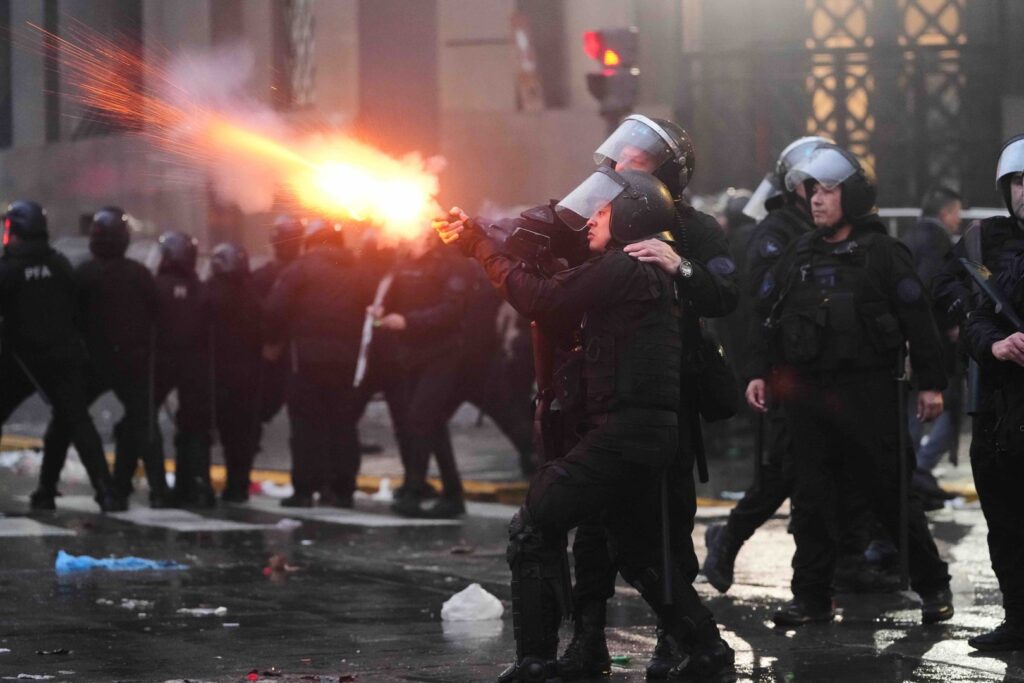
In a significant development in Buenos Aires, Argentina, the police resorted to tear gas to control and disperse thousands of protesters who gathered in the city. The demonstration saw a large number of people taking to the streets, voicing their concerns and demanding attention to their grievances. Teresa Bo, reporting for Al Jazeera from Buenos Aires, highlighted the tense atmosphere as law enforcement officials used tear gas amid the large crowd.
The protestors’ reasons for assembling were varied, reflecting a broad spectrum of social, economic, and political issues that have stirred unrest in the country. The decision by the police to deploy tear gas was met with concern and has raised questions regarding the methods used to handle public demonstrations.
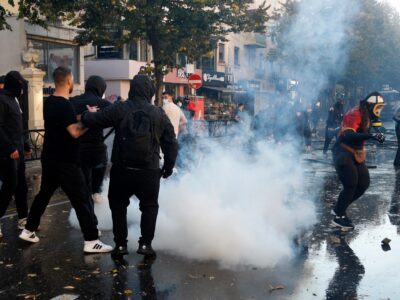
Authorities stated that the protests began peacefully but escalated when some demonstrators moved to block roads and disrupt public activities, prompting police intervention. Eyewitnesses reported scenes of chaos as thick clouds of tear gas spread through the streets, forcing many protesters to disperse and others to seek medical assistance for irritation caused by the gas.
The incident underscores ongoing challenges in Argentina related to public order, political expression, and civil rights. Human rights groups have called for restraint and urged the government to engage in dialogue with protest leaders to address underlying issues rather than resorting to force.
The government has yet to issue a detailed statement on the police actions or the specific demands of the protestors. Meanwhile, the situation in Buenos Aires remains volatile, with both police and protesters on high alert.
This event is part of a series of protests that have been taking place across various Latin American countries where citizens are increasingly mobilizing to express dissatisfaction with economic conditions and governance. The use of tear gas adds to a growing discourse on the appropriate response to civil unrest and the balance between maintaining order and respecting citizens’ rights.
As the city recovers from the day’s events, there is a spotlight on the need for peaceful resolutions and constructive communication between authorities and the populace. The international community continues to observe the developments closely, emphasizing the importance of upholding democratic values and human rights in handling protests.
Teresa Bo’s on-the-ground reportage provides crucial insight into the complexities faced by Argentina in managing its social and political landscape amid rising tensions. The story of the Buenos Aires protest demonstrates the challenges of governance in effective crisis management and the importance of dialogue in preventing escalation of conflicts.
In conclusion, the police use of tear gas in Buenos Aires has brought attention to broader national issues and the delicate balance authorities must maintain in ensuring public safety while respecting freedom of expression. The coming days will be critical in determining how these tensions evolve and whether constructive solutions can be found to address the concerns of all parties involved.