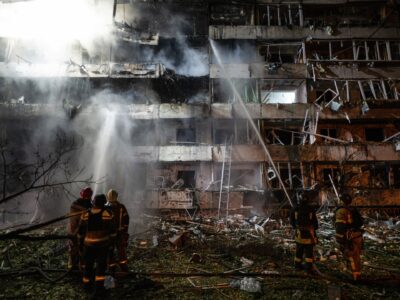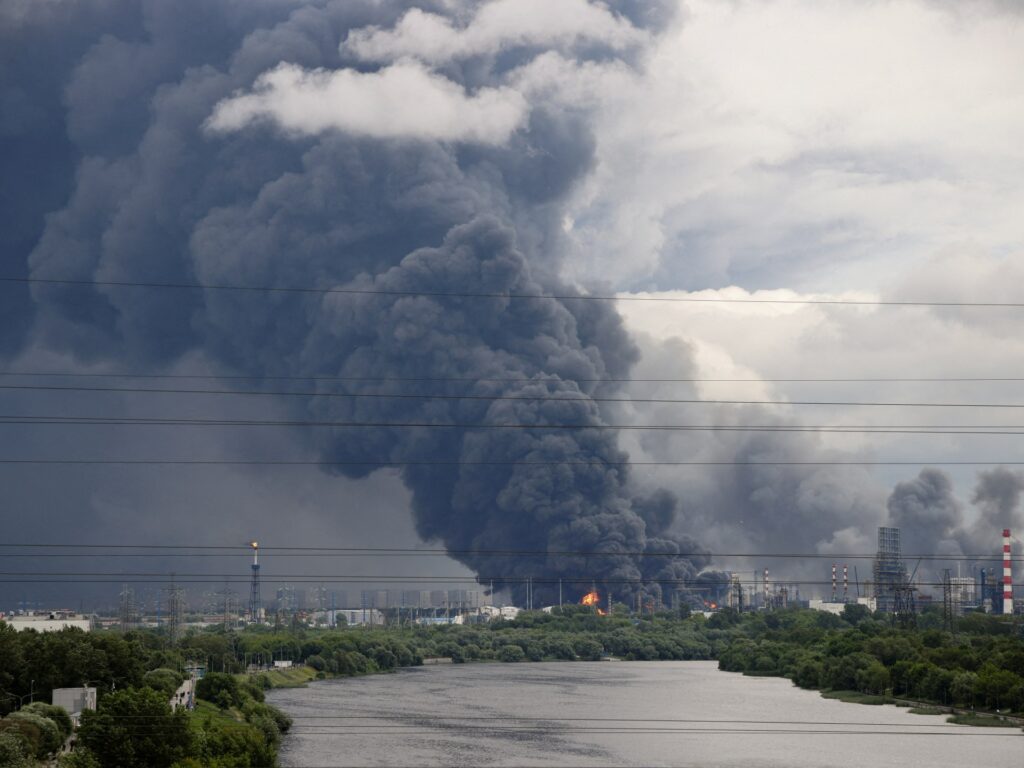
In a strategic escalation of the ongoing conflict, Ukraine has successfully targeted critical Russian oil infrastructure through coordinated drone strikes. The recent attacks involved hitting two oil tankers in the Sea of Azov, a vital waterway for Russian maritime logistics, as well as multiple oil facilities scattered across Russia. These drone operations mark a significant development in Ukraine’s offensive capabilities, demonstrating advanced use of unmanned aerial vehicles to disrupt Russian energy resources.
The drone strikes on the Sea of Azov tankers aimed to impair the transportation of oil, reflecting Ukraine’s intent to weaken Russia’s supply chain and economic resilience. By targeting oil tankers, Ukraine strategically disrupts the flow of fuel essential for Russian military and industrial functions, which could have broader consequences on Russia’s operational capacity.
Beyond maritime targets, the attacks extended to several oil production and storage facilities located within Russia’s territory. This bold move signifies an expansion of Ukraine’s operational reach and a focused attempt to diminish Russia’s energy sector, which plays a critical role in funding Moscow’s military endeavors.
Experts suggest that these drone strikes are not only tactically innovative but also psychologically impactful. The ability to strike within Russian borders challenges the perception of security among Russian domestic infrastructure, potentially affecting morale and prompting a reallocation of resources towards defense and repair.
The attacks coincided with heightened tensions in the region, underscoring the ongoing nature of the conflict and the evolving tactics employed by both sides. Ukraine’s use of drones in this manner highlights a growing trend in modern warfare, leveraging technology to achieve significant damage with minimal direct confrontation.
International observers have noted the precision and timing of the attacks, indicating that Ukraine may have developed more advanced drone capabilities with possible foreign assistance. This development could shift the dynamics of the conflict by enabling Ukraine to conduct deeper and more disruptive operations against Russian strategic assets.
While the immediate physical damage from the drone strikes affects oil transport and storage infrastructure, the broader implications pertain to economic warfare and the sustainability of Russia’s military ambitions. The strikes serve as a reminder of the vulnerability of critical infrastructure in modern conflicts and the increasing role of unmanned systems in achieving strategic objectives.
In response, Russia is expected to bolster its air defenses and security measures around energy facilities to mitigate further drone incursions. The ongoing engagements in the region continue to be closely monitored by global powers concerned about the wider implications for regional stability and energy markets.
This development marks a significant chapter in the Ukraine-Russia conflict, demonstrating how emerging technologies like drone warfare are reshaping the battlefield and impacting the conduct of modern war.