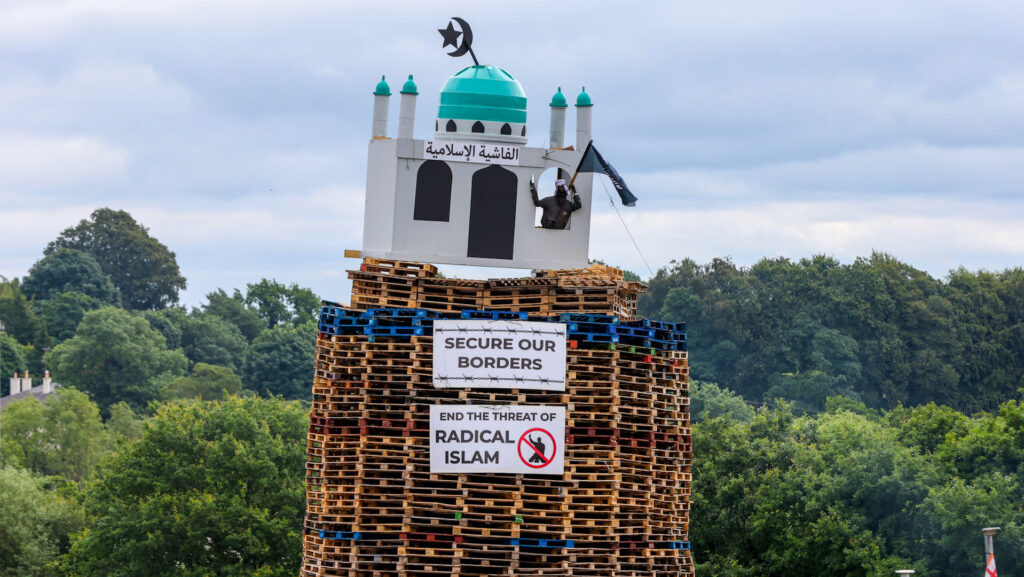
In a provocative act that has stirred significant controversy, pro-UK loyalists in Northern Ireland have placed a replica mosque atop a large bonfire scheduled to be lit during upcoming celebrations. This bonfire, part of traditional loyalist events, is intended to mark historic and cultural occasions but has in this instance sparked much debate due to the nature of the symbol used.
Bonfires in Northern Ireland are often associated with the annual Eleventh Night celebrations, when loyalist communities commemorate the Battle of the Boyne and other significant events in their history. These celebrations are deeply symbolic, reflecting political and cultural identities. However, the decision to place a mosque model at the apex of the bonfire has led to accusations of sectarianism and religious intolerance.
Critics argue that the act is intended as a direct affront to the Muslim community in Northern Ireland, raising concerns about heightening tensions among diverse communities. It has been described by many as a clear message of exclusion and hostility, which contradicts efforts to foster peace and mutual respect in the region.
Community leaders and political figures have voiced their concerns, emphasizing the importance of respect and coexistence among different faiths and backgrounds. The placement of the mosque model has been condemned as an unnecessary provocation that undermines the peace process and the progress achieved in recent years.
Supporters of the loyalists argue that the bonfire represents a long-standing tradition and a form of expression tied to political identity. They contend that the mosque model is a symbol critiquing perceived cultural and political shifts, rather than an attack on any religious group.
Authorities and peace groups have urged for calm and dialogue to prevent the situation from escalating into broader community unrest. They highlight the need for sensitivity in public celebrations, recognizing Northern Ireland’s diverse and complex social fabric.
The incident serves as a stark reminder of the ongoing challenges in Northern Ireland, where historical grievances and cultural divisions continue to shape public life. It calls attention to the delicate balance between freedom of expression and the responsibility to promote harmony in a society still healing from decades of conflict.
As the bonfire awaits ignition, many hope for a peaceful outcome and a renewed commitment to respect and understanding among Northern Ireland’s varied communities.