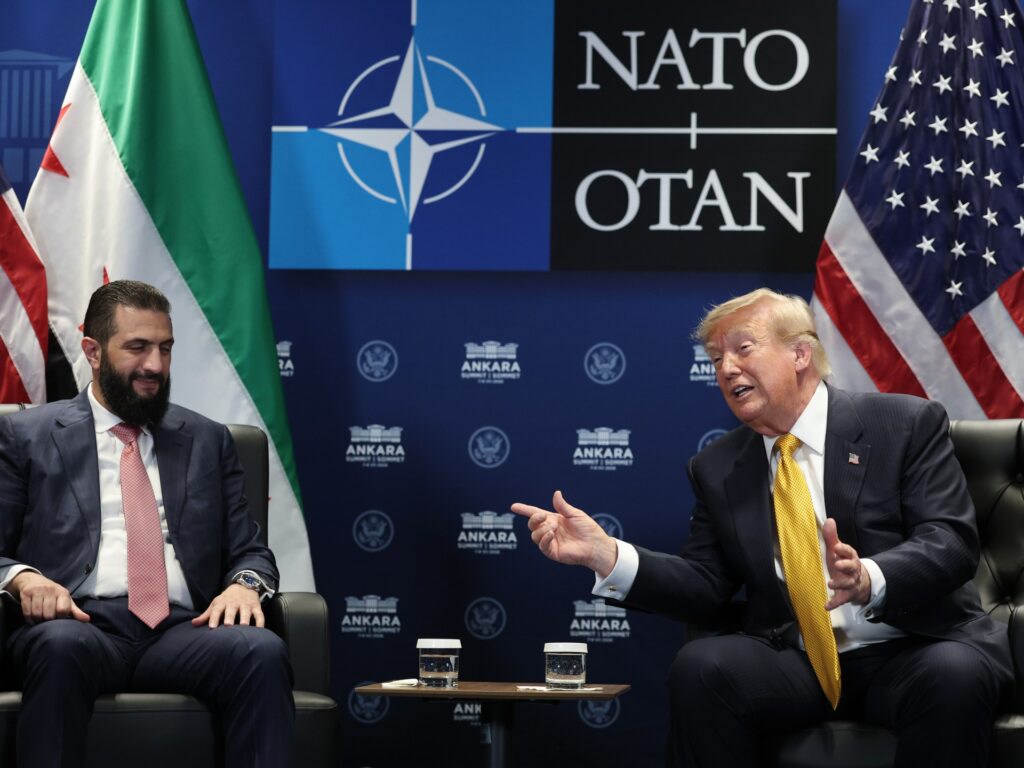
In a significant foreign policy shift, the United States government has announced its decision to remove Syria from its list of ‘state sponsors of terrorism.’ President Donald Trump made the announcement, highlighting recent political developments in Syria that have influenced this change.
The decision comes amid efforts led by Ahmed al-Sharaa, a prominent Syrian political figure, who has been working towards unifying the war-torn country. These efforts towards national reconciliation and stability have been pivotal in the US reassessing its stance on Syria.
For many years, Syria has been categorized by the US as a state sponsor of terrorism due to its support for militant groups and its role in regional conflicts. This designation imposed significant economic sanctions and diplomatic restrictions, isolating the Syrian government internationally.
President Trump’s announcement marks a notable departure from previous US policies, reflecting an optimism about Syria’s potential path to peace and political unity. The administration’s move may also open the door for re-engagement with the Syrian government on multiple fronts, including humanitarian aid and reconstruction.
Critics of the delisting argue that Syria’s record on human rights and governance remains deeply problematic, and they caution against prematurely lifting restrictions without concrete assurances of reform. Supporters, however, believe that this step could incentivize positive change and reduce the influence of extremist groups by promoting political dialogue.
The impact of this decision is expected to resonate across the Middle East, affecting regional alliances and the ongoing dynamics of the Syrian conflict. It could reshape how international actors engage with Syria, opening opportunities for collaboration and potentially helping to stabilize the region.
This move also signals a broader US strategy that balances security concerns with diplomatic engagement, seeking to address complex conflicts through a mix of pressure and incentives.
As the situation develops, the international community will be closely watching Syria’s response and the concrete outcomes that follow from this policy shift. The hope is that this change in designation will contribute to ending years of violence and fostering a sustainable peace in Syria.