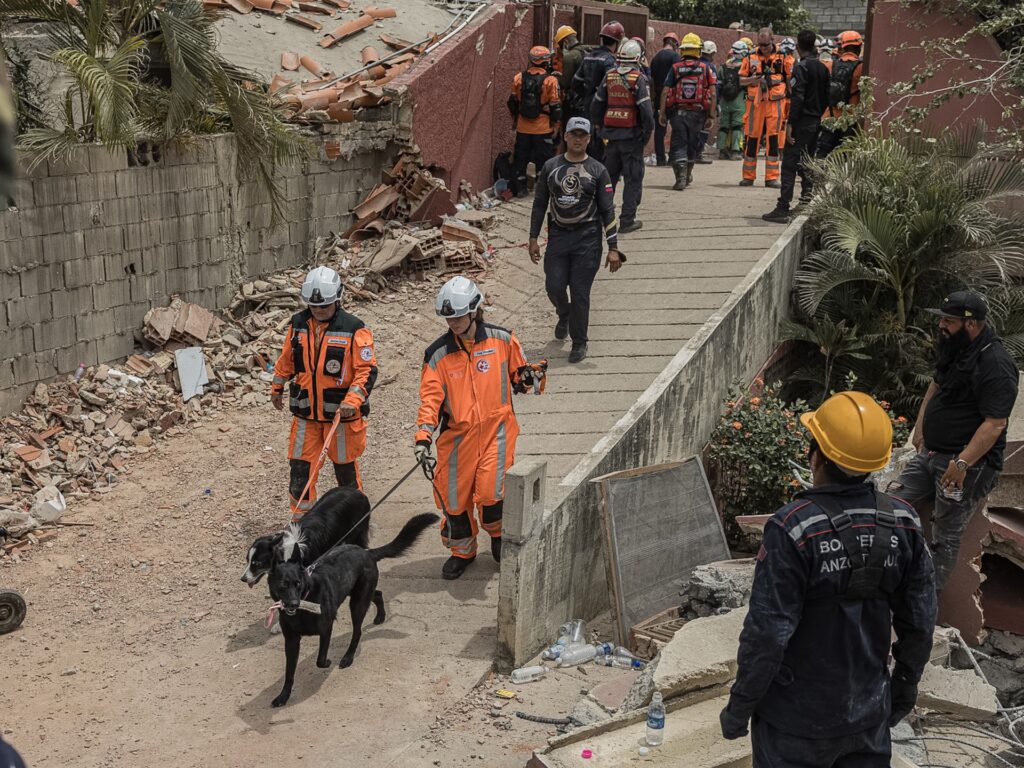
Rescue teams in Venezuela have been tirelessly working amidst the aftermath of a devastating earthquake that struck the region recently. Despite the grim situation, hopes persist as some survivors have been found, including a remarkable rescue of a 60-year-old woman who was trapped for 86 hours. However, the overall outlook remains bleak as tens of thousands are still reported missing, and the likelihood of finding more survivors diminishes with each passing day.
The earthquake, which caused widespread destruction and chaos, has left countless families shattered and communities in ruins. Rescue efforts have been hampered by the scale of the devastation, poor infrastructure, and ongoing aftershocks, complicating access to many affected areas.
Authorities and emergency responders have been deploying all available resources to reach trapped victims. The rescue of the 60-year-old woman stands as a testament to the dedication of these teams and the will to survive under the most harrowing conditions. Her survival after nearly four days trapped under rubble offers a glimmer of hope in a dire scenario.
Despite these positive stories, the scale of displacement and devastation is immense. Local government officials have reported that tens of thousands remain unaccounted for. This has led to growing fears that many may have perished or are buried under collapsed buildings, making the search efforts increasingly challenging.
The international community has been monitoring the situation closely, with several countries offering aid and technical support to bolster Venezuela’s rescue operations. Humanitarian organizations are also stepping in to provide medical care, food, water, and shelter to survivors and displaced persons.
The psychological toll on survivors and rescuers alike is immense. Many survivors face trauma from losing loved ones and witnessing destruction, while rescue workers operate under extreme stress and dangerous conditions to save lives.
Experts warn that the probability of finding additional survivors significantly decreases as time progresses, mainly due to the harsh conditions under the rubble and limited access to water, food, and medical aid. Rescue teams are now also focusing on recovery and providing aid to the wounded and displaced.
Authorities have appealed to the public and international partners for continued support. They emphasize the importance of sustained humanitarian assistance and reconstruction efforts to help communities rebuild their lives and infrastructure.
The earthquake has also sparked debates on the region’s preparedness for natural disasters, highlighting gaps in building codes, emergency response mechanisms, and infrastructure resilience.
As Venezuela grapples with this disaster, the resilience and spirit of its people shine through. The story of the trapped woman who survived 86 hours under rubble exemplifies this spirit, symbolizing hope amid tragedy.
In conclusion, while the rescue operations continue, the outlook is sobering. The diminishing hope for finding more survivors calls for increased humanitarian aid and long-term strategies to enhance disaster management and community resilience in Venezuela.