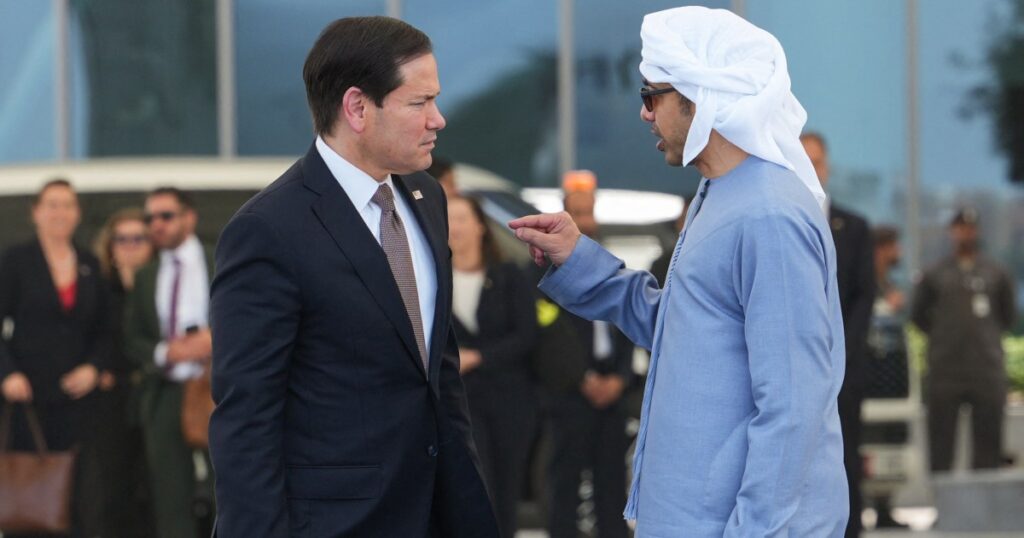
Amid rising concerns among Gulf allies about the implications of the US-Iran memorandum of understanding, Senator Marco Rubio has embarked on a diplomatic tour of the Gulf region to mitigate fears regarding regional security and political stability. Rubio’s visit comes at a critical juncture, as Gulf nations grapple with the potential consequences of renewed US-Iran engagements.
The primary objective of Rubio’s tour is to reassure Gulf allies that the United States remains committed to their security interests despite the controversial memorandum. He aims to provide detailed explanations of the deal’s provisions and dispel any misconceptions that could exacerbate regional tensions.
Gulf countries, including Saudi Arabia, the United Arab Emirates, and Bahrain, have expressed unease about what they perceive as insufficient safeguards within the US-Iran agreement. They worry that enhanced US-Iran cooperation might embolden Tehran to intensify its influence across the Middle East, destabilizing neighboring countries.
Rubio’s discussions with Gulf leaders have focused on the US strategy to balance engagement with Iran while maintaining strong alliances in the region. He emphasized that the memorandum is designed to contain Iran’s nuclear ambitions and discourage its support for militant proxy groups.
During his visits, Rubio also highlighted ongoing US military support and intelligence-sharing agreements with Gulf states that underscore America’s enduring commitment to regional defense. He assured that any collaboration with Iran would not compromise these crucial security partnerships.
Moreover, the Senator reiterated that the US would continue to monitor Iran’s activities closely and remain ready to impose sanctions should Tehran violate the terms of the understanding. This stance is intended to alleviate fears that the United States has relaxed its vigilance regarding Iran’s regional conduct.
The memorandum itself is understood to be a non-binding agreement aimed at fostering a diplomatic framework rather than a comprehensive peace treaty. It reflects an attempt to open communication channels and reduce chances of military conflict between the US and Iran.
Despite Rubio’s efforts, some Gulf officials remain skeptical, demanding clearer assurances and more transparent cooperation mechanisms. They call for greater involvement in any monitoring processes to ensure that their security concerns are not overlooked.
Rubio’s Gulf tour is part of a broader US diplomatic initiative to reassure regional partners and sustain the coalition aimed at countering extremist groups and curbing Iran’s destabilizing activities. The Senator’s engagement underscores Washington’s recognition of the Gulf’s pivotal role in Middle Eastern geopolitics.
Political analysts suggest that while the US-Iran memorandum could be a step towards reducing hostilities, the deep-rooted mistrust between Iran and the Gulf states will require ongoing diplomatic efforts and concrete confidence-building measures.
In conclusion, Senator Rubio’s diplomatic outreach seeks to balance the delicate dynamics of US foreign policy in the Middle East by promoting dialogue with Iran without alienating crucial Gulf allies. The outcome of these discussions may significantly impact the stability and security landscape of the region in the coming months.