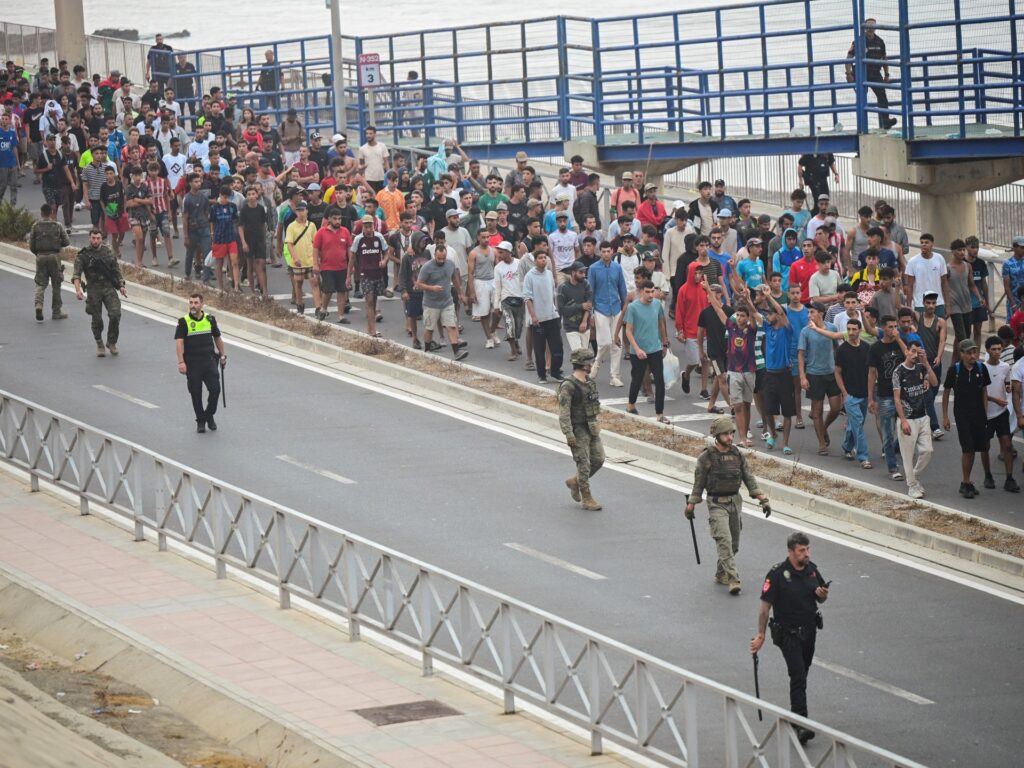
The Spanish city of Ceuta is currently grappling with a border crisis involving hundreds of migrant minors who have become stranded after crossing into the territory. These minors, many of whom traveled alone, face a dire situation as they often lack basic necessities such as food and shelter upon arrival.
Ceuta, one of the Spanish enclaves on the North African coast, serves as a key gateway for migrants attempting to enter Europe. The recent surge in arrivals has overwhelmed local resources and authorities, leading to concerns about the welfare of vulnerable individuals, particularly unaccompanied minors.
Spanish law mandates the protection and care of unaccompanied minors, including providing shelter, food, education, and legal assistance. However, the sudden influx has strained the capacity of protection services in Ceuta, resulting in many children being left in precarious conditions.
Local and international organizations have raised alarms about the humanitarian implications of the crisis. They emphasize the urgent need for expanded resources, coordinated efforts between Spain and Morocco, and increased international support to ensure the safety and well-being of these young migrants.
The minors face numerous risks, including exploitation, trafficking, and health issues, exacerbated by crowded and insufficient shelter conditions. Many authorities are working to register and relocate the children to better facilities, but the scale of the situation complicates these efforts.
Government officials have called for swift action to reinforce protection frameworks and provide emergency aid. Meanwhile, advocacy groups continue to highlight the rights of children in migration contexts, urging adherence to international standards and the prioritization of humanitarian solutions.
The Ceuta border crisis reflects broader challenges faced by Europe in managing migration flows amid political, social, and economic pressures. It underscores the importance of cooperative regional strategies and comprehensive approaches that address root causes while safeguarding fundamental human rights.
As the situation develops, monitoring and responding to the needs of migrant minors remain critical. Stakeholders stress the necessity of sustainable measures that not only provide immediate relief but also support long-term integration and protection for these vulnerable populations.
In summary, the border crisis in Ceuta has left hundreds of unaccompanied migrant minors stranded in difficult conditions, highlighting the urgent need for enhanced protection, resource allocation, and international cooperation to uphold their rights and ensure their safety.