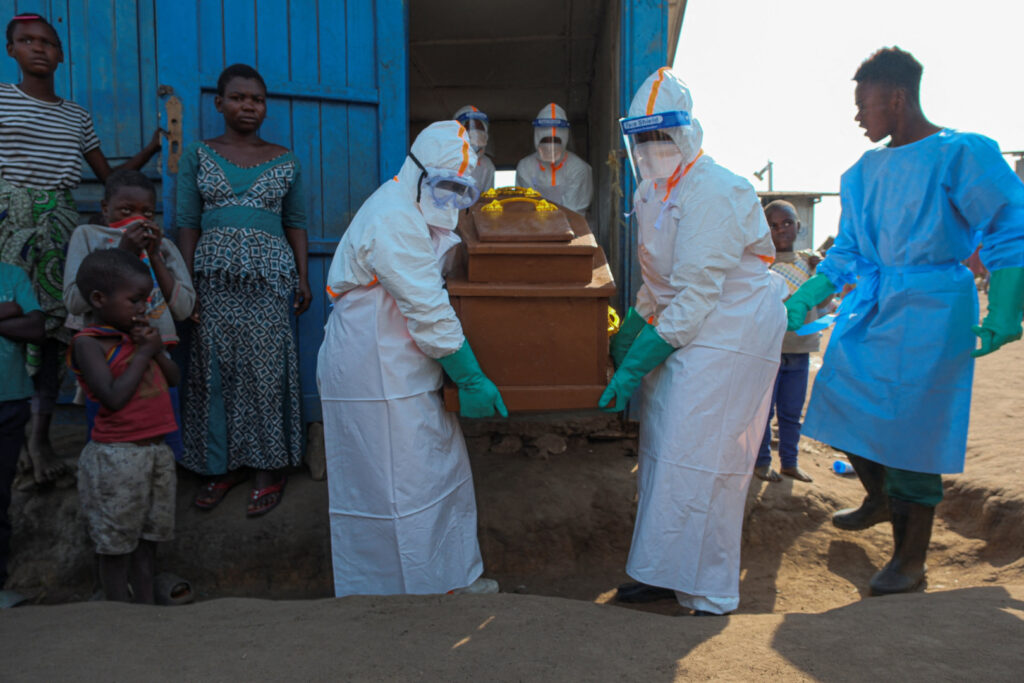
Health workers in personal protective equipment (PPE) carry a coffin of an Ebola victim from a structure used as a morgue as they prepare for burial at Nyamurongo Cemetery, one month after an outbreak was declared, in Bunia, eastern Democratic Republic of Congo, June 18, 2026. REUTERS/Gradel Muyisa Mumbere
In a tragic development in the Democratic Republic of Congo (DRC), at least 30 people have died since May in the Kigonze displacement camp. The escalating crisis at the camp comes as the threat of Ebola continues to grow in the region, compounding the dire humanitarian situation.
Kigonze displacement camp, home to thousands of internally displaced persons, is facing a severe health emergency. The deaths reported signal not only the immediate impact of poor living conditions but also underline the increasing risks posed by outbreaks such as Ebola.
The camp, which shelters families fleeing violence and instability in various parts of the DRC, has been struggling with inadequate sanitation, limited access to clean water, and insufficient healthcare infrastructure. These conditions have left its residents vulnerable to infectious diseases, including Ebola, which is known for its high fatality rate and rapid spread.
Health authorities and humanitarian organizations are raising alarms about the escalating number of deaths and the urgent need for intervention to prevent further loss of life. Efforts to contain the Ebola outbreak face enormous challenges due to the camp’s overcrowded conditions and limited resources.
The situation is further complicated by the ongoing conflict in the region, which hampers access for medical teams and complicates vaccination drives and other preventative measures. The international community is being called upon to increase support and funding to bolster healthcare responses and improve living conditions at displacement sites like Kigonze.
The deaths since May represent a somber statistic, underscoring the urgent need for comprehensive action to address both the immediate health crisis and the root causes that lead to displacement and vulnerability.
Experts warn that without swift and coordinated efforts, the mortality rate may continue to rise, and the Ebola threat could spread beyond the camp, affecting broader communities in the DRC.
In addition to medical interventions, there is a pressing call for improved infrastructure, including better sanitation systems and reliable access to clean water, which are essential in controlling the spread of infectious diseases.
The Kigonze displacement camp crisis is a stark reminder of the complex interplay between conflict, displacement, and public health emergencies, highlighting the critical importance of integrated strategies to save lives and protect vulnerable populations in the DRC.