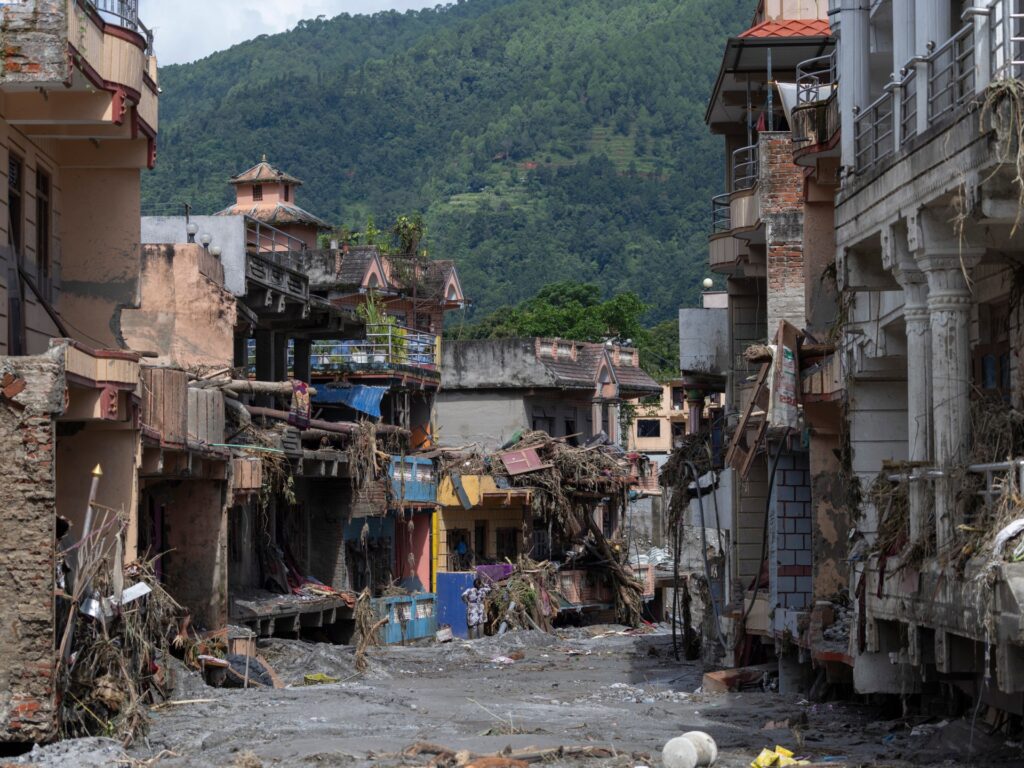
On Wednesday morning, a catastrophic flood swept through the mountainous Nepal-Tibet border region, particularly affecting the area around Bhotekoshi. This devastating natural disaster has resulted in the tragic loss of nearly 470 lives, marking it as one of the deadliest floods in recent memory for Nepal.
The Bhotekoshi flood was triggered by the sudden bursting of a glacial lake, causing an immense volume of water to rush down the mountain valleys with destructive force. The immediate impact was severe, with widespread destruction of communities, infrastructure, and agriculture along the riverbanks.
Nepal’s rescue and relief operations were quickly mobilized in response to the crisis. Government agencies, alongside the Nepal Army and various humanitarian organizations, have been actively engaged in search and rescue missions. Their primary focus has been to locate survivors trapped by floodwaters and debris, while also providing emergency medical care to those injured.
Helicopters and ground teams were deployed to remote and isolated areas, with the challenges of difficult terrain and unstable conditions hampering the speed and reach of rescue efforts. Nonetheless, the authorities have managed to evacuate thousands of people to safer locations.
Medical camps have been established to treat the injured, and temporary shelters have been set up for the displaced populations. Relief supplies including food, water, and essential medicines have been distributed, though logistical difficulties persist due to damaged roads and landslides.
Local communities have played a significant role in rescue efforts, often assisting with first-response support and helping to alert rescue teams to the most urgent cases.
International aid agencies have also responded, pledging support and resources to assist Nepal’s government in managing the disaster’s aftermath. Additional funding and emergency equipment have been requested to enhance ongoing relief operations.
Experts warn that the risk of further floods and landslides remains high, as the region continues to receive heavy monsoon rains. Authorities have issued warnings and advised residents to stay vigilant and prepared for possible evacuation orders.
The Bhotekoshi flood has underscored the vulnerability of the Himalayan region to climate change, with increasing instances of glacial lake outbursts posing severe risks to local populations.
On a hopeful note, the resilience and cooperation demonstrated by Nepal’s people and rescue teams exemplify a dedicated response to one of the nation’s most challenging natural disasters in recent memory.
Efforts are ongoing to assess the full extent of the damage, and long-term recovery plans are being developed to rebuild affected communities and enhance disaster preparedness for the future.