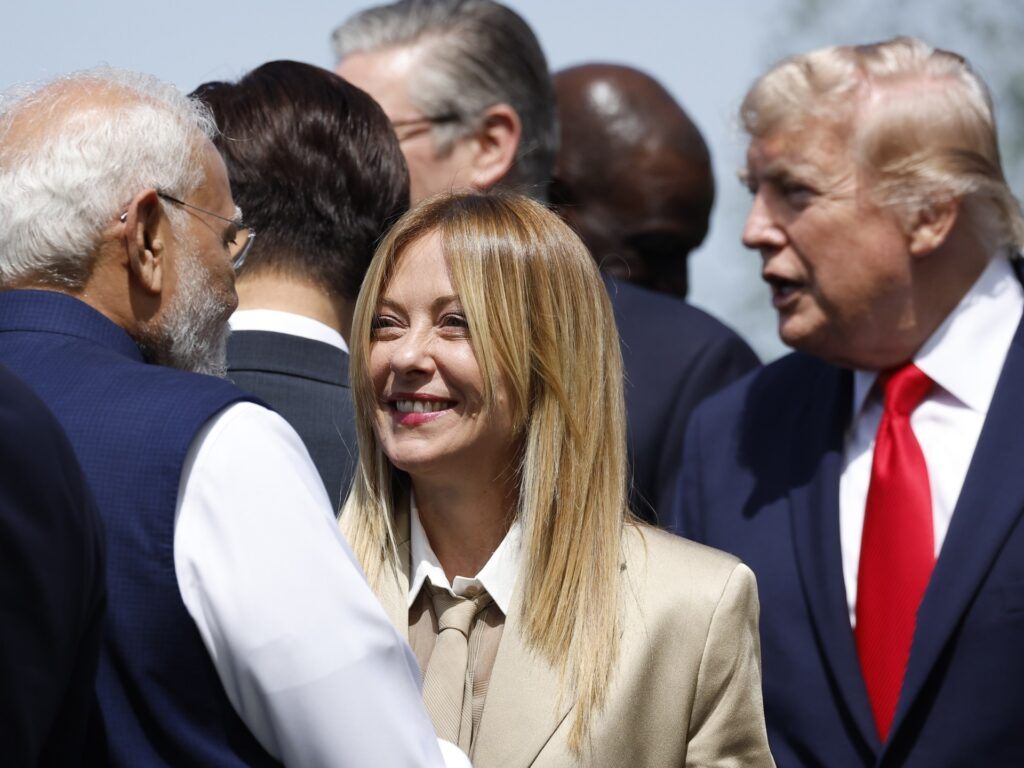
In a recent diplomatic disruption, Italy’s top diplomat has decided to cancel a planned trip to the United States after a controversy erupted involving the Italian Prime Minister Giorgia Meloni and former US President Donald Trump. The Prime Minister publicly accused Trump of fabricating a story regarding a photo opportunity at the G7 summit held in France, which has led to heightened tensions between the two nations.
The incident dates back to the G7 summit, a gathering of the world’s leading industrialized democracies, where leaders from prominent nations including Italy and the United States meet to discuss economic policies, global security, and other pressing international matters. During the event, an exchange of interactions among leaders is common, often capturing memorable moments such as group photos.
According to Prime Minister Meloni, Trump falsely claimed that she had “begged” him for a photo opportunity during the summit. Meloni sharply rejected this assertion, labeling it as completely invented and damaging to her reputation. She emphasized that such misrepresentations distort the image of their diplomatic engagements and undermine the seriousness of international cooperation.
The accusation quickly escalated into a diplomatic issue, prompting Italy’s foreign ministry to take a firm stance. The cancellation of the Italian diplomat’s visit to the US is seen as a direct response to this incident, signaling dissatisfaction with how the matter was handled by Trump and his representatives.
This episode comes at a delicate time for transatlantic relations, which have been undergoing adjustments due to shifting political landscapes both in Europe and the United States. The Italian government has expressed a firm commitment to maintain strong and respectful ties with its American counterparts but insists that mutual respect must be upheld in all diplomatic interactions.
Political analysts suggest that the fallout from this event may have wider implications, potentially influencing collaboration on strategic issues such as NATO contributions, trade agreements, and joint responses to global crises like the ongoing climate change challenges and security threats.
Meanwhile, in the US, reactions to Meloni’s statements and the subsequent diplomat cancellation vary, with some political commentators criticizing Trump for what they perceive as self-serving narratives that complicate international diplomacy. Others point to the incident as an indication of the complex nature of personal dynamics among world leaders and the impact these can have on formal state matters.
As the situation develops, diplomats and officials on both sides have expressed hope for a resolution that will restore normalcy and trust. Behind the scenes, efforts are reportedly underway to manage the fallout, with discussions focused on clarifying misunderstandings and reaffirming commitment to cooperative relationships.
This diplomatic spat underscores the sensitive interplay between personal politics and international relations, highlighting how statements made by influential figures can resonate far beyond their immediate audiences and affect broader geopolitical stability.
Italy and the United States remain key partners on many fronts, and both nations are aware that maintaining open channels of communication is crucial for addressing future global challenges effectively. The coming weeks will be critical in determining whether this incident proves to be a temporary setback or a more enduring strain on bilateral ties.