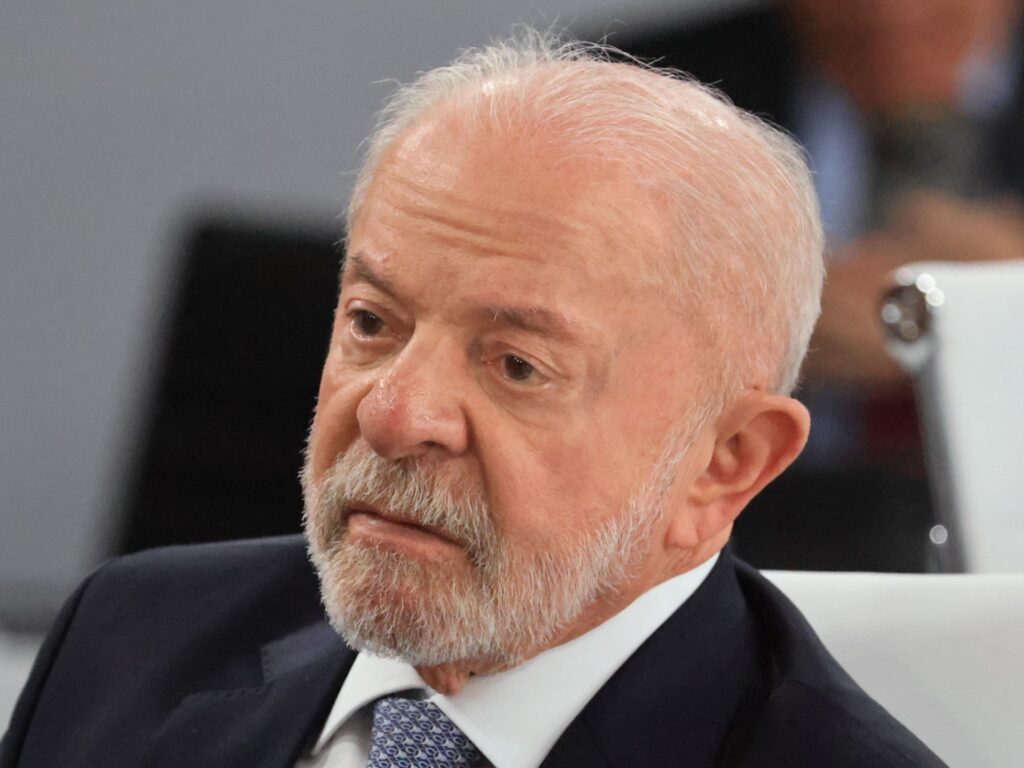
In the heated political atmosphere of Brazil’s upcoming elections, former President Luiz Inácio Lula da Silva (Lula) has publicly called on former U.S. President Donald Trump to abstain from interfering in the country’s electoral process. Lula, who is seeking re-election, is engaged in a closely contested race against right-wing candidate Flavio Bolsonaro, the son of Brazil’s former President Jair Bolsonaro and a known ally of Trump.
Lula, a prominent figure in Latin American politics and a symbol of Brazil’s left-wing resurgence, has emphasized the importance of Brazil’s electoral sovereignty. He urged foreign powers, particularly influential figures like Trump, to respect Brazil’s democratic processes and refrain from meddling or making inflammatory statements that could destabilize the political environment.
This appeal comes amid rising tensions and a polarized electorate. Lula’s campaign has been marked by critical discussions on social welfare, economic recovery, and environmental stewardship, contrasting with Flavio Bolsonaro’s focus on conservative policies, law and order, and continuation of his father’s political legacy.
The presence of Trump-linked endorsements has added complexity to the election, highlighting the transnational influence that global political figures can exert. Trump and Bolsonaro share ideological similarities, particularly in their nationalism and conservative agendas, which have resonated with certain segments of Brazil’s electorate.
Lula’s message resonates strongly with voters who fear that foreign interference might compromise the integrity of Brazil’s democratic institutions. There is particular concern over misinformation and external influence tactics, which have been observed to disrupt elections worldwide.
Experts note that Brazil’s democracy, being one of the largest in Latin America, serves as a critical example for the region. The outcome of the election will not only shape Brazil’s future but will also signal the robustness of democratic norms in the face of populist and foreign pressures.
Analysts highlight that Lula’s strong appeal among working-class and progressive voters contrasts with Flavio Bolsonaro’s base, which largely includes conservative and nationalist supporters. The election is closely watched both domestically and internationally, given Brazil’s prominent role in regional politics and global economic dynamics.
Lula’s call for Trump to stay out of the election underscores a broader demand for respect of national sovereignty and democratic fairness. This stance may rally undecided voters who are wary of external influences impacting Brazil’s political destiny.
As Brazil approaches election day, the political situation remains highly dynamic. Lula continues to emphasize policies that aim for social inclusion and economic progress, while Bolsonaro’s camp seeks to consolidate its conservative agenda with support from international allies.
The international community is closely monitoring developments, recognizing that Brazil’s election results could have significant implications for global diplomatic relations and economic partnerships. Lula’s request for non-interference reflects a wider concern about preserving democratic values amid rising global political polarization.
In summary, Lula’s call to Donald Trump to refrain from meddling in Brazil’s elections highlights the broader issues of foreign influence, democracy, and political sovereignty. It reflects the high stakes involved in this pivotal election, where the direction of Brazil’s future hangs in the balance.