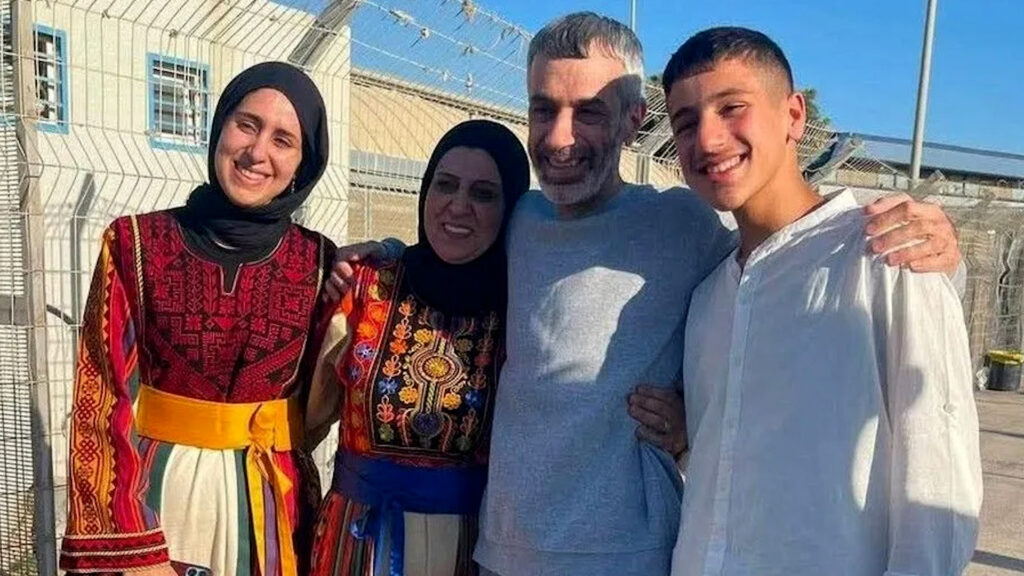
In a poignant moment filled with emotion and hope, Abdul Karim al-Rimawi, a Palestinian man who spent 25 years in Israeli prisons, finally embraced his son Majd for the first time. Majd was conceived using sperm that was smuggled out of prison during al-Rimawi’s long incarceration.
Al-Rimawi was imprisoned by Israeli authorities and held for a quarter of a century, separated from his family and the outside world. Despite the hardships of imprisonment, he and his family kept hope alive during the long years apart.
During his detention, al-Rimawi took extraordinary measures to ensure that family life and legacy could continue despite his physical absence. Through the ingenuity and determination of his loved ones, sperm samples were smuggled out of prison to enable artificial insemination. This allowed his wife to conceive their son Majd while he remained behind bars.
The reunion between father and son was a deeply emotional event, symbolizing resilience, love, and the unbreakable bond of family. After 25 years of separation, al-Rimawi finally met Majd, who had grown up hearing stories about his father and eagerly awaited the day they could meet.
This story has resonated widely among Palestinians and observers around the world, highlighting the human spirit’s strength in the face of adversity and the innovative ways families try to maintain unity under difficult circumstances.
The case also sheds light on the broader issues faced by Palestinian prisoners including the emotional toll on families and the lengths to which they go to sustain their connections.
Al-Rimawi’s story is a powerful testament to hope and human endurance, showing that even in confinement and hardship, life can continue and bonds can be preserved. As he spends time with Majd and rebuilds the relationship with his family, there is an inspiring message of perseverance and the importance of family ties.
The reunion received significant media attention and sparked discussions on the conditions of incarceration and the humane rights of prisoners. It also drew attention to the unique challenges faced by Palestinians under such circumstances.
As Abdul Karim al-Rimawi begins a new chapter of freedom with his son and family, his story offers a compelling narrative of survival, love, and the quest for dignity amid prolonged adversity. Majd’s existence and the reunion are a beacon of hope for all those separated by conflict and imprisonment, underscoring the resilience of human connections.